


Wydawcy
Katalog tematyczny
- Archeologia (109)
- Ekonomia, finanse, business (13704)
- Filozofia (1445)
- Historia (3040)
- Języki i językoznawstwo (2356)
- Lifestyle, hobby i rozrywka (475)
- Medycyna (9704)
- Nauki humanistyczne (4)
- Nauki o Ziemi i środowisku (2638)
- Nauki ścisłe (20412)
- Nauki społeczne (8486)
- Nauki techniczne (13450)
- Budownictwo lądowe (1045)
- Chemia przemysłowa (2258)
- Elektronika i telekomunikacja (3287)
- Energetyka (1122)
- Inne nauki stosowane (363)
- Inżynieria biochemiczna (507)
- Inżynieria transportu (232)
- Mechanika i materiały (3316)
- Nauka o środowisku (321)
- Rolnictwo (507)
- Technika, ogólnie (475)
- Prawo (1696)
- Publikacje informacyjne i interdyscyplinarne (1288)
- Religia i wierzenia (917)
- Technika komputerowa (4067)
- Zdrowie, relacje międzyludzkie i rozwój osobisty (657)





Informacje szczegółowe o książce
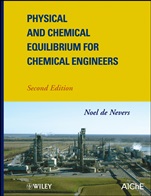
Physical and Chemical Equilibrium for Chemical Engineers
ISBN 9780470927106
Autor: Noel de Nevers
Wydawca: Wiley
Dostępność: 3-6 tygodni
Cena: 668,85 zł
Przed złożeniem zamówienia prosimy o kontakt mailowy celem potwierdzenia ceny.
ISBN13: |
9780470927106 |
ISBN10: |
0470927100 |
Autor: |
Noel de Nevers |
Oprawa: |
Hardback |
Rok Wydania: |
2012-04-10 |
Numer Wydania: |
2nd Edition |
Ilość stron: |
384 |
Wymiary: |
286x219 |
Tematy: |
TDCB |
The most readable, understandable, and intuitively satisfyingbook on the thermodynamics of physical and chemicalequilibrium
Physical and chemical equilibrium and the calculation of thethermodynamic properties of mixtures is a topic of greatinterest and importance to engineers, but it is notalways easy to master. Using the simplest mathematics possible, andproviding extensive discussion of the theory and practice ofequilibrium calculations, the Second Edition of Physical andChemical Equilibrium for Chemical Engineers provides rigorousbut readable, understandable, and intuitively satisfying coverage,showing the reader how to solve common and advanced problems byhand, and by using spreadsheets, and then explains how suchproblems are solved in computer process design programs.
Fully revised and expanded, this new edition explores physicaland chemical equilibrium in detail, including a new appendix on theBridgman Table and its uses, a new chapter on Equilibrium inBiochemical Reactions, and new sections on minimum work, eutecticsand hydrates, adsorption, buffers, and the charge–balance method ofcomputing them. Its appendix on Calculation of Fugacities fromPressure–Explicit EOSs clearly shows how modern computerequilibrium programs actually do their work using the SRK andrelated equations.
Providing a concise and highly accessible guide to thethermodynamic properties of a wide range of mixtures, and how theseproperties control physical and chemical equilibrium, this book isof interest not only to chemical, but also environmental and civilengineers. Large numbers of problems and examples worked indetail help the reader integrate the material in this bookinto his/her working technical toolkit. Physical and ChemicalEquilibrium for Chemical Engineers is a must–have for anyonewanting to understand and then apply this important branch ofthermodynamics.
Preface xiii
About the Author xv
Nomenclature xvii
1 Introduction to Equilibrium 1
1.1 Why Study Equilibrium?, 1
1.2 Stability and Equilibrium, 4
1.3 Time Scales and the Approach to Equilibrium, 5
1.4 Looking Ahead, Gibbs Energy, 5
1.5 Units, Conversion Factors, and Notation, 6
1.6 Reality and Equations, 8
1.7 Phases and Phase Diagrams, 8
1.8 The Plan of this Book, 10
1.9 Summary, 10
References, 11
2 Basic Thermodynamics 13
2.1 Conservation and Accounting, 13
2.2 Conservation of Mass, 14
2.3 Conservation of Energy; the First Law of Thermodynamics,15
2.4 The Second Law of Thermodynamics, 17
2.4.1 Reversibility, 17
2.4.2 Entropy, 18
2.5 Convenience Properties, 19
2.6 Using the First and Second Laws, 19
2.7 Datums and Reference States, 21
2.8 Measurable and Immeasurable Properties, 22
2.9 Work and Heat, 22
2.10 The Property Equation, 23
2.11 Equations of State (EOS), 24
2.11.1 EOSs Based on Theory, 25
2.11.2 EOSs Based on Pure Data Fitting, 25
2.12 Corresponding States, 26
2.13 Departure Functions, 28
2.14 The Properties of Mixtures, 28
2.15 The Combined First and Second Law Statement; ReversibleWork, 29
2.16 Summary, 31
References, 33
3 The Simplest Phase Equilibrium Examples and Some SimpleEstimating Rules 35
3.1 Some General Statements About Equilibrium, 35
3.2 The Simplest Example of Phase Equilibrium, 37
3.2.1 A Digression, the Distinction between Vapor and Gas,37
3.2.2 Back to the Simplest Equilibrium, 37
3.3 The Next Level of Complexity in Phase Equilibrium, 37
3.4 Some Simple Estimating Rules: Raoult s andHenry s Laws , 39
3.5 The General Two–Phase Equilibrium Calculation, 43
3.6 Some Simple Applications of Raoult s and Henry sLaws, 43
3.7 The Uses and Limits of Raoult s and Henry sLaws, 46
3.8 Summary, 46
References, 48
4 Minimization of Gibbs Energy 49
4.1 The Fundamental Thermodynamic Criterion of Phase andChemical Equilibrium, 49
4.2 The Criterion of Equilibrium Applied to Two NonreactingEquilibrium Phases, 51
4.3 The Criterion of Equilibrium Applied to Chemical Reactions,53
4.4 Simple Gibbs Energy Diagrams, 54
4.4.1 Comparison with Enthalpy and Entropy, 55
4.4.2 Gibbs Energy Diagrams for Pressure–Driven Phase Changes,55
4.4.3 Gibbs Energy Diagrams for Chemical Reactions, 57
4.5 Le Chatelier s Principle, 58
4.6 Summary, 58
References, 60
5 Vapor Pressure, the Clapeyron Equation, and Single PureChemical Species Phase Equilibrium 61
5.1 Measurement of Vapor Pressure, 61
5.2 Reporting Vapor–Pressure Data, 61
5.2.1 Normal Boiling Point (NBP), 61
5.3 The Clapeyron Equation, 62
5.4 The Clausius Clapeyron Equation, 63
5.5 The Accentric Factor, 64
5.6 The Antoine Equation and Other Data–Fitting Equations,66
5.6.1 Choosing a Vapor–Pressure Equation, 67
5.7 Applying the Clapeyron Equation to Other Kinds ofEquilibrium, 67
5.8 Extrapolating Vapor–Pressure Curves, 68
5.9 Vapor Pressure of Solids, 69
5.10 Vapor Pressures of Mixtures, 69
5.11 Summary, 69
References, 72
6 Partial Molar Properties 73
6.1 Partial Molar Properties, 73
6.2 The Partial Molar Equation, 74
6.3 Tangent Slopes, 74
6.4 Tangent Intercepts, 77
6.5 The Two Equations for Partial Molar Properties, 78
6.6 Using the Idea of Tangent Intercepts, 79
6.7 Partial Mass Properties, 80
6.8 Heats of Mixing and Partial Molar Enthalpies, 80
6.8.1 Differential Heat of Mixing, 80
6.8.2 Integral Heat of Mixing, 81
6.9 The Gibbs Duhem Equation and the CounterintuitiveBehavior of the Chemical Potential, 82
6.10 Summary, 84
References, 87
7 Fugacity, Ideal Solutions, Activity, Activity Coefficient89
7.1 Why Fugacity?, 89
7.2 Fugacity Defined, 89
7.3 The Use of the Fugacity, 90
7.4 Pure Substance Fugacities, 90
7.4.1 The Fugacity of Pure Gases, 91
7.4.2 The Fugacity of Pure Liquids and Solids, 94
7.5 Fugacities of Species in Mixtures, 95
7.6 Mixtures of Ideal Gases, 95
7.7 Why Ideal Solutions?, 95
7.8 Ideal Solutions Defined, 96
7.8.1 The Consequences of the Ideal Solution Definition, 96
7.9 Why Activity and Activity Coefficients?, 98
7.10 Activity and Activity Coefficients Defined, 98
7.11 Fugacity Coefficient for Pure Gases and Gas Mixtures,100
7.12 Estimating Fugacities of Individual Species in GasMixtures, 100
7.12.1 Fugacities from Gas PvT Data, 100
7.12.2 Fugacities from an EOS for Gas Mixtures, 102
7.12.3 The Lewis and Randall (L–R) Fugacity Rule, 102
7.12.4 Other Mixing Rules, 103
7.13 Liquid Fugacities from Vapor–Liquid Equilibrium, 104
7.14 Summary, 104
References, 105
8 Vapor Liquid Equilibrium (VLE) at Low Pressures107
8.1 Measurement of VLE, 107
8.2 Presenting Experimental VLE Data, 110
8.3 The Mathematical Treatment of Low–Pressure VLE Data, 110
8.3.1 Raoult s Law Again, 111
8.4 The Four Most Common Types of Low–Pressure VLE, 112
8.4.1 Ideal Solution Behavior (Type I), 114
8.4.2 Positive Deviations from Ideal Solution Behavior (TypeII), 114
8.4.3 Negative Deviations from Ideal Solution Behavior (TypeIII), 115
8.4.4 Azeotropes, 117
8.4.5 Two–Liquid Phase or Heteroazeotropes (Type IV), 118
8.4.6 Zero Solubility and Steam Distillation, 120
8.4.7 Distillation of the Four Types of Behavior, 121
8.5 Gas Liquid Equilibrium, Henry s Law Again,122
8.6 The Effect of Modest Pressures on VLE, 122
8.6.1 Liquids, 123
8.6.2 Gases, the L–R Rule, 123
8.7 Standard States Again, 124
8.8 Low–Pressure VLE Calculations, 125
8.8.1 Bubble–Point Calculations, 127
8.8.1.1 Temperature–Specified Bubble Point, 127
8.8.1.2 Pressure–Specified Bubble Point, 128
8.8.2 Dew–Point Calculations, 129
8.8.2.1 Temperature–Specified Dew Point, 129
8.8.2.2 Pressure–Specified Dew Point, 129
8.8.3 Isothermal Flashes (T– and P–Specified Flashes), 130
8.8.4 Adiabatic Flashes, 131
8.9 Traditional K–Factor Methods, 132
8.10 More Uses for Raoult s Law, 132
8.10.1 Nonvolatile Solutes, Boiling–Point Elevation, 132
8.10.2 Freezing–Point Depression, 135
8.10.3 Colligative Properties of Solutions, 136
8.11 Summary, 136
References, 143
9 Correlating and Predicting Nonideal VLE 145
9.1 The Most Common Observations of Liquid–Phase ActivityCoefficients, 145
9.1.1 Why Nonideal Behavior?, 145
9.1.2 The Shapes of ln, gx Curves, 146
9.2 Limits on Activity Coefficient Correlations, theGibbs Duhem Equation, 147
9.3 Excess Gibbs Energy and Activity Coefficient Equations,148
9.4 Activity Coefficients at Infinite Dilution, 150
9.5 Effects of Pressure and Temperature on Liquid–Phase ActivityCoefficients, 151
9.5.1 Effect of Pressure Changes on Liquid–Phase ActivityCoefficients, 151
9.5.2 Effect of Temperature Changes on Liquid–Phase ActivityCoefficients, 152
9.6 Ternary and Multispecies VLE, 153
9.6.1 Liquid–Phase Activity Coefficients for Ternary Mixtures,154
9.7 Vapor–Phase Nonideality, 155
9.8 VLE from EOS, 158
9.9 Solubility Parameter, 158
9.10 The Solubility of Gases in Liquids, Henry s LawAgain, 160
9.11 Summary, 163
References, 167
10 Vapor Liquid Equilibrium (VLE) at High Pressures169
10.1 Critical Phenomena of Pure Species, 169
10.2 Critical Phenomena of Mixtures, 170
10.3 Estimating High–Pressure VLE, 174
10.3.1 Empirical K–Value Correlations, 175
10.3.2 Estimation Methods for Each Phase Separately, Not Basedon Raoult s Law, 175
10.3.3 Estimation Methods Based on Cubic EOSs, 176
10.4 Computer Solutions, 178
10.5 Summary, 178
References, 179
11 Liquid Liquid, Liquid Solid, andGas Solid Equilibrium 181
11.1 Liquid Liquid Equilibrium (LLE), 181
11.2 The Experimental Determination of LLE, 181
11.2.1 Reporting and Presenting LLE Data, 182
11.2.2 Practically Insoluble Liquid Pairs at 25C, 183
11.2.3 Partially Soluble Liquid Pairs at 25C, 183
11.2.4 Miscible Liquid Pairs at 25C, 183
11.2.5 Ternary LLE at 25C, 184
11.2.6 LLE at Temperatures Other Than 25C, 186
11.3 The Elementary Theory of LLE, 187
11.4 The Effect of Pressure on LLE, 190
11.5 Effect of Temperature on LLE, 191
11.6 Distribution Coefficients, 194
11.7 Liquid Solid Equilibrium (LSE), 195
11.7.1 One–Species LSE, 195
11.7.2 The Experimental Determination of LSE, 195
11.7.3 Presenting LSE Data, 195
11.7.4 Eutectics, 197
11.7.5 Gas Hydrates (Clathrates), 199
11.8 The Elementary Thermodynamics of LSE, 200
11.9 Gas Solid Equilibrium (GSE) at Low Pressures, 202
11.10 GSE at High Pressures, 203
11.11 Gas Solid Adsorption, Vapor Solid Adsorption,204
11.11.1 Langmuir s Adsorption Theory, 205
11.11.2 Vapor–solid Adsorption, BET Theory, 207
11.11.3 Adsorption from Mixtures, 208
11.11.4 Heat of Adsorption, 209
11.11.5 Hysteresis, 210
11.12 Summary, 211
References, 215
12 Chemical Equilibrium 217
12.1 Introduction to Chemical Reactions and ChemicalEquilibrium, 217
12.2 Formal Description of Chemical Reactions, 217
12.3 Minimizing Gibbs Energy, 218
12.4 Reaction Rates, Energy Barriers, Catalysis, andEquilibrium, 219
12.5 The Basic Thermodynamics of Chemical Reactions and ItsConvenient Formulations, 220
12.5.1 The Law of Mass Action and Equilibrium Constants, 222
12.6 Calculating Equilibrium Constants from Gibbs Energy Tablesand then Using Equilibrium Constants to Calculate EquilibriumConcentrations, 223
12.6.1 Change of Reactant Concentration, Reaction Coordinate,224
12.6.2 Reversible and Irreversible Reactions, 227
12.7 More on Standard States, 227
12.8 The Effect of Temperature on Chemical Reaction Equilibrium,229
12.9 The Effect of Pressure on Chemical Reaction Equilibrium,234
12.9.1 Ideal Solution of Ideal Gases, 235
12.9.2 Nonideal Solution, Nonideal Gases, 236
12.9.3 Liquids and Solids, 237
12.10 The Effect of Nonideal Solution Behavior, 238
12.10.1 Liquid–Phase Nonideality, 238
12.11 Other Forms of K, 238
12.12 Summary, 239
References, 242
13 Equilibrium in Complex Chemical Reactions 243
13.1 Reactions Involving Ions, 243
13.2 Multiple Reactions, 244
13.2.1 Sequential Reactions, 244
13.2.2 Simultaneous Reactions, 245
13.2.3 The Charge Balance Calculation Method and Buffers,246
13.3 Reactions with More Than One Phase, 249
13.3.1 Solubility Product, 249
13.3.2 Gas–Liquid Reactions, 249
13.4 Electrochemical Reactions, 252
13.5 Chemical and Physical Equilibrium in Two Phases, 255
13.5.1 Dimerization (Association), 255
13.6 Summary, 257
References, 262
14 Equilibrium with Gravity or Centrifugal Force, OsmoticEquilibrium, Equilibrium with Surface Tension 265
14.1 Equilibrium with Other Forms of Energy, 265
14.2 Equilibrium in the Presence of Gravity, 266
14.2.1 Centrifuges, 268
14.3 Semipermeable Membranes, 269
14.3.1 Osmotic Pressure, 270
14.4 Small is Interesting! Equilibrium with Surface Tension,271
14.4.1 Bubbles, Drops and Nucleation, 271
14.4.2 Capillary Condensation, 275
14.5 Summary, 275
References, 278
15 The Phase Rule 279
15.1 How Many Phases Can Coexist in a Given EquilibriumSituation?, 279
15.2 What Does the Phase Rule Tell Us? What Does It Not TellUs?, 280
15.3 What is a Phase?, 280
15.4 The Phase Rule is Simply Counting Variables, 281
15.5 More On Components, 282
15.5.1 A Formal Way to Find the Number ofIndependent Equations, 285
15.6 The Phase Rule for One– and Two–Component Systems, 285
15.7 Harder Phase Rule Problems, 288
15.8 Summary, 288
References, 291
16 Equilibrium in Biochemical Reactions 293
16.1 An Example, the Production of Ethanol from Sugar, 293
16.2 Organic and Biochemical Reactions, 293
16.3 Two More Sweet Examples, 294
16.4 Thermochemical Data for Biochemical Reactions, 295
16.5 Thermodynamic Equilibrium in Large Scale Biochemistry,296
16.6 Translating between Biochemical and Chemical EngineeringEquilibrium Expressions, 296
16.6.1 Chemical and Biochemical Equations, 297
16.6.2 Equilibrium Constants, 297
16.6.3 pH and Buffers, 298
16.6.4 Ionic Strength, 298
16.7 Equilibrium in Biochemical Separations, 298
16.8 Summary, 299
References, 300
Appendix A Useful Tables and Charts 303
A.1 Useful Property Data for Corresponding States Estimates,303
A.2 Vapor–Pressure Equation Constants, 305
A.3 Henry s Law Constants, 306
A.4 Compressibility Factor Chart (z Chart), 307
A.5 Fugacity Coefficient Charts, 307
A.6 Azeotropes, 308
A.7 Van Laar Equation Constants, 312
A.8 Enthalpies and Gibbs Energies of Formation from the Elementsin the Standard States, at T ¼ 298.15 K ¼ 25C, and P¼ 1.00 bar, 313
A.9 Heat Capacities of Gases in the Ideal Gas State, 317
Appendix B Equilibrium with other Restraints, Other Approachesto Equilibrium 319
Appendix C The Mathematics of Fugacity, Ideal Solutions,Activity and Activity Coefficients 323
C.1 The Fugacity of Pure Substances, 323
C.2 Fugacities of Components of Mixtures, 324
C.3 The Consequences of the Ideal Solution Definition, 326
C.4 The Mathematics of Activity Coefficients, 326
Appendix D Equations of State for Liquids and Solids Well Belowtheir Critical Temperatures 329
D.1 The Taylor Series EOS and Its Short Form, 329
D.2 Effect of Temperature on Density, 330
D.3 Effect of Pressure on Density, 331
D.4 Summary, 332
References, 333
Appendix E Gibbs Energy of Formation Values 335
E.1 Values From the Elements , 335
E.2 Changes in Enthalpy, Entropy, and Gibbs Energy, 335
E.2.1 Enthalpy Changes, 335
E.2.2 Entropy Changes, 336
E.3 Ions, 337
E.4 Presenting these Data, 337
References, 337
Appendix F Calculation of Fugacities from Pressure–Explicit EOSs339
F.1 Pressure–Explicit and Volume–Explicit EOSs, 339
F.2 f /P of Pure Species Based on Pressure–Explicit EOSs,339
F.3 Cubic Equations of State, 340
F.4 fi /Pyi for Individual Species in Mixtures, Based onPressure–Explicit EOSs, 342
F.5 Mixing Rules for Cubic EOSs, 343
F.6 VLE Calculations with a Cubic EOS, 344
F.7 Summary, 345
References, 346
Appendix G Thermodynamic Property Derivatives and the BridgmanTable 347
References, 350
Appendix H Answers to Selected Problems 351
Index 353
NOEL de NEVERS, PhD, followed five years of working for Chevron with thirty–seven years as a Professor in the Chemical Engineering Department of the University of Utah. His textbooks (and research papers) are in fluid mechanics, thermodynamics, and air pollution control engineering. He regularly consults as an expert on explosions, fires, and toxic exposures.
In addition to technical work, he has three "de Nevers′s Laws" in a Murphy′s Laws compilation and won the title "Poet Laureate of Jell–O Salad" in a Salt Lake City competition, with three limericks and a quatrain. He has climbed the Grand Teton, Mt. Rainier, Mt. Whitney, Kala Pattar, and Mt. Kilimanjaro, and is the official discoverer of Private Arch in Arches National Park.
Koszyk
Książek w koszyku: 0 szt.
Wartość zakupów: 0,00 zł
Informacje


Kontakt
Gambit
Centrum Oprogramowania
i Szkoleń Sp. z o.o.
Al. Pokoju 29b/22-24
31-564 Kraków
Siedziba Księgarni
ul. Kordylewskiego 1
31-542 Kraków
+48 12 410 5991
+48 12 410 5987
+48 12 410 5989
Subskrypcje
Administratorem danych osobowych jest firma Gambit COiS Sp. z o.o. Na podany adres będzie wysyłany wyłącznie biuletyn informacyjny.
Autoryzacja płatności

Informacje na temat autoryzacji płatności poprzez PayU.

© Copyright 2012: GAMBIT COiS Sp. z o.o. Wszelkie prawa zastrzeżone.
Projekt i wykonanie: Alchemia Studio Reklamy