


Wydawcy
Katalog tematyczny
- Archeologia (109)
- Ekonomia, finanse, business (13704)
- Filozofia (1445)
- Historia (3040)
- Języki i językoznawstwo (2356)
- Lifestyle, hobby i rozrywka (475)
- Medycyna (9704)
- Nauki humanistyczne (4)
- Nauki o Ziemi i środowisku (2638)
- Nauki ścisłe (20412)
- Nauki społeczne (8486)
- Nauki techniczne (13450)
- Budownictwo lądowe (1045)
- Chemia przemysłowa (2258)
- Elektronika i telekomunikacja (3287)
- Energetyka (1122)
- Inne nauki stosowane (363)
- Inżynieria biochemiczna (507)
- Inżynieria transportu (232)
- Mechanika i materiały (3316)
- Nauka o środowisku (321)
- Rolnictwo (507)
- Technika, ogólnie (475)
- Prawo (1696)
- Publikacje informacyjne i interdyscyplinarne (1288)
- Religia i wierzenia (917)
- Technika komputerowa (4067)
- Zdrowie, relacje międzyludzkie i rozwój osobisty (657)





Informacje szczegółowe o książce
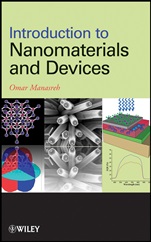
Introduction to Nanomaterials and Devices
ISBN 9780470927076
Autor: Omar Manasreh
Wydawca: Wiley
Dostępność: 3-6 tygodni
Cena: 592,20 zł
Przed złożeniem zamówienia prosimy o kontakt mailowy celem potwierdzenia ceny.
ISBN13: |
9780470927076 |
ISBN10: |
0470927070 |
Autor: |
Omar Manasreh |
Oprawa: |
Hardback |
Rok Wydania: |
2012-01-06 |
Ilość stron: |
488 |
Wymiary: |
241x159 |
Tematy: |
TG |
An invaluable introduction to nanomaterials and theirapplications
Offering the unique approach of applying traditional physicsconcepts to explain new phenomena, Introduction to Nanomaterialsand Devices provides readers with a solid foundation on the subjectof quantum mechanics and introduces the basic concepts ofnanomaterials and the devices fabricated from them. Discussionbegins with the basis for understanding the basic properties ofsemiconductors and gradually evolves to cover quantumstructures including single, multiple, and quantumwells and the properties of nanomaterial systems, such asquantum wires and dots.
Written by a renowned specialist in the field, this bookfeatures:
An introduction to the growth of bulk semiconductors,semiconductor thin films, and semiconductor nanomaterials
Information on the application of quantum mechanics tonanomaterial structures and quantum transport
Extensive coverage of Maxwell–Boltzmann, Fermi–Dirac, andBose–Einstein stastistics
An in–depth look at optical, electrical, and transportproperties
Coverage of electronic devices and optoelectronic devices
Calculations of the energy levels in periodic potentials,quantum wells, and quantum dots
Introduction to Nanomaterials and Devices provides essentialgroundwork for understanding the behavior and growth ofnanomaterials and is a valuable resource for students andpractitioners in a field full of possibilities for innovation andinvention.
Preface xiii
Fundamental Constants xvii
1 Growth of Bulk, Thin Films, and Nanomaterials 1
1.1 Introduction, 1
1.2 Growth of Bulk Semiconductors, 5
1.2.1 Liquid–Encapsulated Czochralski (LEC) Method, 5
1.2.2 Horizontal Bridgman Method, 11
1.2.3 Float–Zone Growth Method, 14
1.2.4 Lely Growth Method, 16
1.3 Growth of Semiconductor Thin Films, 18
1.3.1 Liquid–Phase Epitaxy Method, 19
1.3.2 Vapor–Phase Epitaxy Method, 20
1.3.3 Hydride Vapor–Phase Epitaxial Growth of Thick GaN Layers,22
1.3.4 Pulsed Laser Deposition Technique, 25
1.3.5 Molecular Beam Epitaxy Growth Technique, 27
1.4 Fabrication and Growth of Semiconductor Nanomaterials,46
1.4.1 Nucleation, 47
1.4.2 Fabrications of Quantum Dots, 55
1.4.3 Epitaxial Growth of Self–Assembly Quantum Dots, 56
1.5 Colloidal Growth of Nanocrystals, 61
1.6 Summary, 63
Problems, 64
Bibliography, 67
2 Application of Quantum Mechanics to Nanomaterial Structures68
2.1 Introduction, 68
2.2 The de Broglie Relation, 71
2.3 Wave Functions and Schr¨odinger Equation, 72
2.4 Dirac Notation, 74
2.4.1 Action of a Linear Operator on a Bra, 77
2.4.2 Eigenvalues and Eigenfunctions of an Operator, 78
2.4.3 The Dirac –Function, 78
2.4.4 Fourier Series and Fourier Transform in Quantum Mechanics,81
2.5 Variational Method, 82
2.6 Stationary States of a Particle in a Potential Step, 83
2.7 Potential Barrier with a Finite Height, 88
2.8 Potential Well with an Infinite Depth, 92
2.9 Finite Depth Potential Well, 94
2.10 Unbound Motion of a Particle (E > V0) in aPotential Well With a Finite Depth, 98
2.11 Triangular Potential Well, 100
2.12 Delta Function Potentials, 103
2.13 Transmission in Finite Double Barrier Potential Wells,108
2.14 Envelope Function Approximation, 112
2.15 Periodic Potential, 117
2.15.1 Bloch s Theorem, 119
2.15.2 The Kronig Penney Model, 119
2.15.3 One–Electron Approximation in a Periodic Dirac –Function, 123
2.15.4 Superlattices, 126
2.16 Effective Mass, 130
2.17 Summary, 131
Problems, 132
Bibliography, 134
3 Density of States in Semiconductor Materials 135
3.1 Introduction, 135
3.2 Distribution Functions, 138
3.3 Maxwell Boltzmann Statistic, 139
3.4 Fermi Dirac Statistics, 142
3.5 Bose Einstein Statistics, 145
3.6 Density of States, 146
3.7 Density of States of Quantum Wells, Wires, and Dots, 152
3.7.1 Quantum Wells, 152
3.7.2 Quantum Wires, 155
3.7.3 Quantum Dots, 158
3.8 Density of States of Other Systems, 159
3.8.1 Superlattices, 160
3.8.2 Density of States of Bulk Electrons in the Presence of aMagnetic Field, 161
3.8.3 Density of States in the Presence of an Electric Field,163
3.9 Summary, 168
Problems, 168
Bibliography, 170
4 Optical Properties 171
4.1 Fundamentals, 172
4.2 Lorentz and Drude Models, 176
4.3 The Optical Absorption Coefficient of the InterbandTransition in Direct Band Gap Semiconductors, 179
4.4 The Optical Absorption Coefficient of the InterbandTransition in Indirect Band Gap Semiconductors, 185
4.5 The Optical Absorption Coefficient of the InterbandTransition in Quantum Wells, 186
4.6 The Optical Absorption Coefficient of the InterbandTransition in Type II Superlattices, 189
4.7 The Optical Absorption Coefficient of the IntersubbandTransition in Multiple Quantum Wells, 191
4.8 The Optical Absorption Coefficient of the IntersubbandTransition in GaN/AlGaN Multiple Quantum Wells, 196
4.9 Electronic Transitions in Multiple Quantum Dots, 197
4.10 Selection Rules, 201
4.10.1 Electron Photon Coupling of IntersubbandTransitions in Multiple Quantum Wells, 201
4.10.2 Intersubband Transition in Multiple Quantum Wells,202
4.10.3 Interband Transition, 202
4.11 Excitons, 204
4.11.1 Excitons in Bulk Semiconductors, 205
4.11.2 Excitons in Quantum Wells, 211
4.11.3 Excitons in Quantum Dots, 213
4.12 Cyclotron Resonance, 214
4.13 Photoluminescence, 220
4.14 Basic Concepts of Photoconductivity, 225
4.15 Summary, 229
Problems, 230
Bibliography, 232
5 Electrical and Transport Properties 233
5.1 Introduction, 233
5.2 The Hall Effect, 237
5.3 Quantum Hall and Shubnikov–de Haas Effects, 241
5.3.1 Shubnikov–de Haas Effect, 243
5.3.2 Quantum Hall Effect, 246
5.4 Charge Carrier Transport in Bulk Semiconductors, 249
5.4.1 Drift Current Density, 249
5.4.2 Diffusion Current Density, 254
5.4.3 Generation and Recombination, 257
5.4.4 Continuity Equation, 259
5.5 Boltzmann Transport Equation, 264
5.6 Derivation of Transport Coefficients Using the BoltzmannTransport Equation, 268
5.6.1 Electrical Conductivity and Mobility in n–typeSemiconductors, 270
5.6.2 Hall Coefficient, RH, 273
5.7 Scattering Mechanisms in Bulk Semiconductors, 274
5.7.1 Scattering from an Ionized Impurity, 276
5.7.2 Scattering from a Neutral Impurity, 277
5.7.3 Scattering from Acoustic Phonons: Deformation Potential,277
5.7.4 Scattering from Acoustic Phonons: Piezoelectric Potential,278
5.7.5 Optical Phonon Scattering: Polar and Nonpolar, 278
5.7.6 Scattering from Short–Range Potentials, 279
5.7.7 Scattering from Dipoles, 281
5.8 Scattering in a Two–Dimensional Electron Gas, 281
5.8.1 Scattering by Remote Ionized Impurities, 283
5.8.2 Scattering by Interface Roughness, 285
5.8.3 Electron Electron Scattering, 286
5.9 Coherence and Mesoscopic Systems, 287
5.10 Summary, 293
Problems, 294
Bibliography, 297
6 Electronic Devices 298
6.1 Introduction, 298
6.2 Schottky Diode, 301
6.3 Metal Semiconductor Field–Effect Transistors(MESFETs), 305
6.4 Junction Field–Effect Transistor (JFET), 314
6.5 Heterojunction Field–Effect Transistors (HFETs), 318
6.6 GaN/AlGaN Heterojunction Field–Effect Transistors (HFETs),322
6.7 Heterojunction Bipolar Transistors (HBTs), 325
6.8 Tunneling Electron Transistors, 328
6.9 The p n Junction Tunneling Diode, 329
6.10 Resonant Tunneling Diodes, 334
6.11 Coulomb Blockade, 338
6.12 Single–Electron Transistor, 340
6.13 Summary, 353
Problems, 354
Bibliography, 357
7 Optoelectronic Devices 359
7.1 Introduction, 359
7.2 Infrared Quantum Detectors, 361
7.2.1 Figures of Merit, 361
7.2.2 Noise in Photodetectors, 366
7.2.3 Multiple Quantum Well Infrared Photodetectors (QWIPs),369
7.2.4 Infrared Photodetectors Based on Multiple Quantum Dots,380
7.3 Light–Emitting Diodes, 387
7.4 Semiconductor Lasers, 392
7.4.1 Basic Principles, 392
7.4.2 Semiconductor Heterojunction Lasers, 399
7.4.3 Quantum Well Edge–Emitting Lasers, 403
7.4.4 Vertical Cavity Surface–Emitting Lasers, 406
7.4.5 Quantum Cascade Lasers, 409
7.4.6 Quantum Dots Lasers, 412
7.5 Summary, 416
Problems, 418
Bibliography, 419
Appendix A Derivation of Heisenberg Uncertainty Principle420
Appendix B Perturbation 424
Bibliography, 428
Appendix C Angular Momentum 429
Appendix D Wentzel–Kramers–Brillouin (WKB) Approximation431
Bibliography, 436
Appendix E Parabolic Potential Well 437
Bibliography, 441
Appendix F Transmission Coefficient in Superlattices442
Appendix G Lattice Vibrations and Phonons 445
Bibliography, 455
Appendix H Tunneling Through Potential Barriers 456
Bibliography, 461
Index 463
Omar Manasreh, PhD, is a Full Professor of Electrical Engineering at the University of Arkansas. Dr. Manasreh has received several awards, including a Science and Technology Achievement Award presented by the Air Force Materiel Command at Wright–Patterson Air Force Base and the Aubrey E. Harvey Graduate Research Award presented by the University of Arkansas chapter of Sigma Xi. He has published more than 130 papers in technical journals, presented over fifty papers at national and international meetings, and has participated in over sixty invited talks. Dr. Manasreh is a member of the IEEE, American Physical Society, and the Materials Research Society.
Koszyk
Książek w koszyku: 0 szt.
Wartość zakupów: 0,00 zł
Informacje


Kontakt
Gambit
Centrum Oprogramowania
i Szkoleń Sp. z o.o.
Al. Pokoju 29b/22-24
31-564 Kraków
Siedziba Księgarni
ul. Kordylewskiego 1
31-542 Kraków
+48 12 410 5991
+48 12 410 5987
+48 12 410 5989
Subskrypcje
Administratorem danych osobowych jest firma Gambit COiS Sp. z o.o. Na podany adres będzie wysyłany wyłącznie biuletyn informacyjny.
Autoryzacja płatności

Informacje na temat autoryzacji płatności poprzez PayU.

© Copyright 2012: GAMBIT COiS Sp. z o.o. Wszelkie prawa zastrzeżone.
Projekt i wykonanie: Alchemia Studio Reklamy