


Wydawcy
Katalog tematyczny
- Archeologia (109)
- Ekonomia, finanse, business (13704)
- Filozofia (1445)
- Historia (3040)
- Języki i językoznawstwo (2356)
- Lifestyle, hobby i rozrywka (475)
- Medycyna (9704)
- Nauki humanistyczne (4)
- Nauki o Ziemi i środowisku (2638)
- Nauki ścisłe (20412)
- Astronomia (294)
- Biologia (5119)
- Biochemia (575)
- Biologia człowieka (14)
- Biologia komórkowa (377)
- Biologia molekularna (398)
- Biologia rozwoju (130)
- Biologia, ogólnie (1277)
- Botanika (280)
- Hydrobiologia (92)
- Mikrobiologia (363)
- Mykologia (22)
- Zoologia (303)
- Chemia (6540)
- Fizyka (3309)
- Matematyka (4574)
- Nauki ścisłe, ogólnie (503)
- Nauki społeczne (8486)
- Nauki techniczne (13450)
- Prawo (1696)
- Publikacje informacyjne i interdyscyplinarne (1288)
- Religia i wierzenia (917)
- Technika komputerowa (4067)
- Zdrowie, relacje międzyludzkie i rozwój osobisty (657)





Informacje szczegółowe o książce
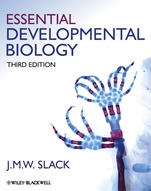
Essential Developmental Biology
ISBN 9780470923511
Autor: Jonathan M. W. Slack
Wydawca: Wiley
Dostępność: 3-6 tygodni
Cena: 523,95 zł
Przed złożeniem zamówienia prosimy o kontakt mailowy celem potwierdzenia ceny.
ISBN13: |
9780470923511 |
ISBN10: |
0470923512 |
Autor: |
Jonathan M. W. Slack |
Oprawa: |
Paperback |
Rok Wydania: |
2012-11-16 |
Numer Wydania: |
3rd Edition |
Ilość stron: |
496 |
Wymiary: |
276x220 |
Tematy: |
PS |
Essential Developmental Biology is a comprehensive, richly illustrated introduction to developmental biology. Written in a clear and accessible style, the third edition of this popular textbook has been expanded and updated to include: Numerous full color photographs of developmental biology specimens A new concise summary of “How Development Works” New chapters on “Techniques for Studying Organogenesis” and “Applications of Pluripotent Stem Cells” Expanded treatment of human development, tissue renewal, stem cells, growth, aging, and regeneration. In addition, the accompanying website provides useful materials for both student and instructor, including animated developmental processes and all artwork in downloadable format. From review of the second edition: “The second edition is a must have for anyone interested in development biology. New fi ndings in hot fi elds such as stem cells, regeneration, and aging should make it attractive to a wide readership. Overall, the book is concise, well structured, and illustrated. I can highly recommend it.”— Peter Gruss, Max Planck Society
Preface, ix About the companion website, xii Section N: Groundwork, 1 N The excitement of developmental biology, 3 Where the subject came from, 3 Impact of developmental biology, 4 Future impact, 4 Further reading, 5 O How development works, 7 Ultrashort summary, 7 Gametogenesis, 10 Early development, 12 Morphogenetic processes, 19 Growth and death, 23 Further reading, 25 P Approaches to development: developmental genetics, 27 Developmental mutants, 27 Sex chromosomes, 29 Maternal and zygotic, 29 Genetic pathways, 29 Genetic mosaics, 32 Screening for mutants, 33 Cloning of genes, 34 Gain– and loss–of–function experiments, 34 Gene duplication, 38 Limitations of developmental genetics, 39 Further reading, 40 Q Approaches to development: experimental embryology, 42 Normal development, 42 Developmental commitment, 45 Criteria for proof, 51 Further reading, 52 R Approaches to development: cell and molecular biology techniques, 54 Microscopy, 54 Study of gene expression by molecular biology methods, 58 Study of gene expression by in situ methods, 61 Microinjection, 65 Cell–labeling methods, 66 Further reading, 68 Section O: Major model organisms, 71 S Model organisms, 73 The big six, 73 Access and micromanipulation, 75 Genetics and genome maps, 75 Relevance and tempo, 76 Other organisms, 76 Further reading, 78 T Xenopus, 80 Oogenesis, maturation, and fertilization, 80 Normal development, 82 Experimental methods, 87 Processes of regional specification, 92 Inductive interactions, 95 Further reading, 104 U The zebrafish, 106 Normal development, 106 Genetics, 110 Embryological and molecular techniques, 114 Regional specification, 115 Other uses for the zebrafish, 118 Further reading, 120 V The chick, 121 Normal development, 122 Regional specifi cation of the early embryo, 127 Description of organogenesis in the chick, 133 Further reading, 140 NM The mouse, 141 Mammalian fertilization, 141 Normal development, 145 Regional specifi cation, 153 Human early development, 158 Mouse developmental genetics, 159 Other topics in mouse development, 164 Further reading, 169 NN Drosophila, 171 Insects, 171 Normal development, 173 Drosophila developmental genetics, 178 The developmental program, 181 Further reading, 197 NO Caenorhabditis elegans, 198 Adult anatomy, 198 Embryonic development, 200 Analysis of postembryonic development, 208 Further reading, 215 Section 3: Organogenesis, 217 NP Techniques for studying organogenesis and postnatal development, 219 Genetics, 219 Clonal analysis, 223 Tissue and organ culture, 226 Cell separation methods, 228 Further reading, 230 NQ Development of the nervous system, 231 Overall structure and cell types, 231 Anteroposterior patterning of the neural plate, 234 Dorsoventral patterning of the neural tube, 238 Neurogenesis and gliogenesis, 240 The neural crest, 246 Development of neuronal connectivity, 250 Further reading, 257 NR Development of mesodermal organs, 259 Somitogenesis and myogenesis, 259 The kidney, 266 Germ cell and gonadal development, 269 Limb development, 274 Blood and blood vessels, 284 The heart, 287 Further reading, 293 NS Development of endodermal organs, 296 Normal development, 296 Experimental analysis of endoderm development, 301 The pancreas, 307 Further reading, 312 NT Drosophila imaginal discs, 314 Metamorphosis, 314 Disc development, 318 Further reading, 328 Section Q: Growth, regeneration, evolution, 331 NU Tissue organization and stem cells, 333 Types of tissue, 333 Tissue renewal, 336 Stem cells, 339 Further reading, 360 NV Growth, aging and cancer, 362 Growth: control of size and proportion, 362 Aging, 371 Cancer, 374 Further reading, 382 OM Regeneration of missing parts, 384 Distribution of regenerative capacity, 384 Planarian regeneration, 385 Insect limb regeneration, 388 Vertebrate limb regeneration, 390 General properties of regeneration, 399 Further reading, 400 ON Applications of pluripotent stem cells, 401 Cell transplantation therapy, 401 Embryonic stem cells, 403 Personalized pluripotent stem cells, 406 Proposed cell transplantation therapies using pluripotent stem cells, 411 Further reading, 417 OO Evolution and development, 419 Macroevolution, 420 The primordial animal, 424 What really happened in evolution?, 429 Further reading, 438 Appendix: Key molecular components, 440 Genes, 440 Transcription factor families, 442 Signaling systems, 443 Inducing factor families, 445 Cytoskeleton, 449 Cell adhesion molecules, 451 Extracellular matrix components, 452 Further Reading, 452 Glossary, 454 Index, 467
PROFESSOR JONATHAN SLACK has worked in London, Oxford and Bath and is currently Director of the Stem Cell Institute at the University of Minnesota, USA. He is a member of the European Molecular Biology Organization and a Fellow of the Academy of Medical Sciences. He has published numerous research papers on developmental biology as well as three other books, of which the most recent is Stem Cells: A Very Short Introduction .
Koszyk
Książek w koszyku: 0 szt.
Wartość zakupów: 0,00 zł
Informacje


Kontakt
Gambit
Centrum Oprogramowania
i Szkoleń Sp. z o.o.
Al. Pokoju 29b/22-24
31-564 Kraków
Siedziba Księgarni
ul. Kordylewskiego 1
31-542 Kraków
+48 12 410 5991
+48 12 410 5987
+48 12 410 5989
Subskrypcje
Administratorem danych osobowych jest firma Gambit COiS Sp. z o.o. Na podany adres będzie wysyłany wyłącznie biuletyn informacyjny.
Autoryzacja płatności

Informacje na temat autoryzacji płatności poprzez PayU.

© Copyright 2012: GAMBIT COiS Sp. z o.o. Wszelkie prawa zastrzeżone.
Projekt i wykonanie: Alchemia Studio Reklamy