


Wydawcy
Katalog tematyczny
- Archeologia (109)
- Ekonomia, finanse, business (13704)
- Filozofia (1445)
- Historia (3040)
- Języki i językoznawstwo (2356)
- Lifestyle, hobby i rozrywka (475)
- Medycyna (9704)
- Nauki humanistyczne (4)
- Nauki o Ziemi i środowisku (2638)
- Nauki ścisłe (20412)
- Nauki społeczne (8486)
- Nauki techniczne (13450)
- Budownictwo lądowe (1045)
- Chemia przemysłowa (2258)
- Elektronika i telekomunikacja (3287)
- Energetyka (1122)
- Inne nauki stosowane (363)
- Inżynieria biochemiczna (507)
- Inżynieria transportu (232)
- Mechanika i materiały (3316)
- Nauka o środowisku (321)
- Rolnictwo (507)
- Technika, ogólnie (475)
- Prawo (1696)
- Publikacje informacyjne i interdyscyplinarne (1288)
- Religia i wierzenia (917)
- Technika komputerowa (4067)
- Zdrowie, relacje międzyludzkie i rozwój osobisty (657)





Informacje szczegółowe o książce
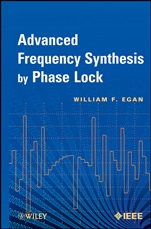
Advanced Frequency Synthesis by Phase Lock
ISBN 9780470915660
Autor: William F. Egan
Wydawca: Wiley
Dostępność: 3-6 tygodni
Cena: 584,85 zł
Przed złożeniem zamówienia prosimy o kontakt mailowy celem potwierdzenia ceny.
ISBN13: |
9780470915660 |
ISBN10: |
0470915668 |
Autor: |
William F. Egan |
Oprawa: |
Hardback |
Rok Wydania: |
2011-07-15 |
Ilość stron: |
312 |
Wymiary: |
244x158 |
Tematy: |
TJ |
The latest frequency synthesis techniques, includingsigma–delta, Diophantine, and all–digital
Sigma–delta is a frequency synthesis technique that has risen inpopularity over the past decade due to its intensely digital natureand its ability to promote miniaturization. A continuation of thepopular Frequency Synthesis by Phase Lock, Second Edition, thistimely resource provides a broad introduction to sigma–delta bypairing practical simulation results with cutting–edge research.Advanced Frequency Synthesis by Phase Lock discusses bothsigma–delta and fractional–n the still–in–use forerunner tosigma–delta employing Simulink® models and detailedsimulations of results to promote a deeper understanding.
After a brief introduction, the book shows how spurs areproduced at the synthesizer output by the basic process anddifferent methods for overcoming them. It investigates how variousdefects in sigma–delta synthesis contribute to spurs or noise inthe synthesized signal. Synthesizer configurations are analyzed,and it is revealed how to trade off the various noise sources bychoosing loop parameters. Other sigma–delta synthesis architecturesare then reviewed.
The Simulink simulation models that provided data for thepreceding discussions are described, providing guidance in makinguse of such models for further exploration. Next, another methodfor achieving wide loop bandwidth simultaneously with fineresolution the Diophantine Frequency Synthesizer isintroduced. Operation at extreme bandwidths is also covered,further describing the analysis of synthesizers that push theirbandwidths close to the sampling–frequency limit. Lastly, the bookreviews a newly important technology that is poised to becomewidely used in high–production consumerelectronics all–digital frequency synthesis.
Detailed appendices provide in–depth discussion on variousstages of development, and many related resources are available fordownload, including Simulink models, MATLAB® scripts,spreadsheets, and executable programs. All these features make thisauthoritative reference ideal for electrical engineers who want toachieve an understanding of sigma–delta frequency synthesis and anawareness of the latest developments in the field.
Preface.
Symbols List and Glossary.
1 Introduction.
1.1 Phase–Locked Synthesizer.
1.2 Fractional–N Frequency Synthesis.
1.3 Representing a Change in Divide Number.
1.4 Units.
1.5 Representing Phase Noise.
1.6 Phase Noise at the Synthesizer Output.
1.7 Observing the Output Spectrum.
2 Fractional–N and Basic EA Synthesizers.
2.1 First–Order Fractional–N.
2.2 Second–Order Fractional–N.
2.3 Higher–Order Fractional–N.
2.4 Spectrums with Constant Sampling Rate.
2.5 Summary of Spectrums.
2.6 Summary.
3 Other Spurious Reduction Techniques.
3.1 LSB Dither.
3.2 Maximum Sequence Length.
3.3 Shortened Accumulators and Lower Primes.
3.4 Long Sequence.
3.5 Summary.
4 Defects in EA Synthesis.
4.1 Noise Models.
4.2 Levels of Other Noise in EA Synthesizers.
4.3 Noise Sources, Equivalent Input Noise.
4.4 Discrete Sidebands.
4.5 Summary.
5 Other EA Architectures.
5.1 Stability.
5.2 Feedback.
5.3 Feed–forward.
5.4 Quantizer Offset.
5.5MASH–n1n2n3.
5.6 Cancellation of Quantization Noise in the GeneralModulator.
5.7 Fractional Swallows.
5.8 Hardware Reduction.
6 Simulation.
6.1 SandH.mdl.
6.2 SandHreverse.mdl.
6.3 CPandI.mdl.
6.4 Dither.mdl.
6.5 HandK.mdl.
6.6 SimplePD.mdl.
6.7 CPandIplus.mdl.
6.8 CPandITrunc.mdl.
6.9 Adapting a Model.
6.10 EFeedback.mdl.
6.11 FeedForward.mdl.
6.12 MASH modulator scripts.
6.13 SYnStep——.mdl.
6.14 Other Methods.
7 Diophantine Synthesizer.
7.1 Two–Loop Synthesizer.
7.2 Multi–Loop Synthesizers.
7.3 MATLAB Scripts.
7.4 Signal Mixing.
7.5 Reference–Frequency Coupling.
7.6 Center Frequencies.
8 Operation at Extreme Bandwidths.
8.1 Determining the Effects of Sampling.
8.2 A Particular Case.
8.3 When Are Sampling Effects Important?
8.4 Computer Program.
8.5 Sampling Effects in S? Synthesizers.
9 All–Digital Frequency Synthesizers.
9.1 The Flying Adder Synthesizer.
9.2 The ADPLL Synthesizer.
Appendix A All Digital.
A.1 Flying Adder Circuits.
A.2 ADPLL Synthesizer.
Appendix C Fractional Cancellation.
C.1 Modulator Details.
C.2 First Accumulator.
C.3 Second Accumulator.
C.4 Additional Accumulators.
C.5 Accumulator Without Input Register.
Appendix E Excess PPSD.
E.1 Development of Eq.
E.2 Approximating kp.
E.3 Approximation in Eq.
Appendix F References to FS2.
Appendix G Using Gsmp1.
G.1 Open–Loop Transfer Function.
G.2 Close–Loop Responses.
G.3 Saving Results.
G.4 Version Number.
G.5 Example Session.
G.6 Generating Analysis Plots.
G.7 Verification of Gardner s Stability Limits.
G.8 The Nyquist Plot.
Appendix H Sample and Hold Circuit.
H.1 Transient Performance.
H.2 Filter Capacitor Before Sampler.
Appendix L Loop Response.
L.1 Primary Loop.
L.2 Damped Loop.
Appendix M MASH PSD.
M.1 MASH Modulator, First Stage.
M.2 MASH Modulator, Second–Order.
M.3 MASH Modulator, Higher Order.
M.4 Variances.
M.5 Some Parameters of Sf.
M.6 Previous Development.
M.7 Some MASH Modulator Characteristics.
M.8 Characteristics of MATLAB Scripts mashone andmashall—.
Appendix N Sampled Noise.
N.1 Case 1, Wn fref.
N.2 Case 2, 1/T >> Wn>> fref.
N.3 Case 3, Wn >>1/T >> fref.
N.4 Variance of Sampled Noise (1/T >>fref).
N.5 Convolution of PSDs.
N.6 Representing Squared PSDs.
Appendix O Oscillator Spectrums.
Appendix P Phase Detectors.
Appendix Q Quantization PPSD.
Q.1 Development of Eq.
Q.2 Superposition.
Q.3 New Synthesized Frequency.
Q.4 Loop Response.
Q.5 Verification of the Effect of Sampling on the Loop.
Appendix R Reference–Frequency Spurs.
R.1 Leakage Current.
R.2 Pulse Offset.
R.3 EA Modulation.
R.4 Effect of EA Modulation on Pulse Offset Spurs.
R.5 Effect of EA Modulation on Leakage Spurs.
R.6 Effects of Resampling.
Appendix S Spectrum Analysis.
S.1 Spectrums.
S.2 The Spectrum Analyzer.
S.3 The Window Function.
S.4 Density and Discrete Spurs.
S.5 Control Parameters.
S.6 Frequency Conversion in an Analyzer.
S.7 Displaying L, FPSD, and PPSD.
S.8 Spectral Overlaps.
S.9 Anomalous Spurs.
Appendix T Toolboxes.
Appendix U Noise Produced by Charge–Pump Current Unbalance(Mismatch).
Appendix W Getting Files from the Wiley InternetSite.
Appendix X Some Tables.
X.1 Accumulator Shortening.
X.2 Sequence Lengths.
Endnotes.
References.
Index.
William F. Egan, PhD, is a lecturer in electrical engineering at Santa Clara University, California. Formerly, he was a principal engineer at TRW ESL and a senior technologist at GTE Government Systems.
Koszyk
Książek w koszyku: 0 szt.
Wartość zakupów: 0,00 zł
Informacje


Kontakt
Gambit
Centrum Oprogramowania
i Szkoleń Sp. z o.o.
Al. Pokoju 29b/22-24
31-564 Kraków
Siedziba Księgarni
ul. Kordylewskiego 1
31-542 Kraków
+48 12 410 5991
+48 12 410 5987
+48 12 410 5989
Subskrypcje
Administratorem danych osobowych jest firma Gambit COiS Sp. z o.o. Na podany adres będzie wysyłany wyłącznie biuletyn informacyjny.
Autoryzacja płatności

Informacje na temat autoryzacji płatności poprzez PayU.

© Copyright 2012: GAMBIT COiS Sp. z o.o. Wszelkie prawa zastrzeżone.
Projekt i wykonanie: Alchemia Studio Reklamy