


Wydawcy
Katalog tematyczny
- Archeologia (109)
- Ekonomia, finanse, business (13704)
- Filozofia (1445)
- Historia (3040)
- Języki i językoznawstwo (2356)
- Lifestyle, hobby i rozrywka (475)
- Medycyna (9704)
- Nauki humanistyczne (4)
- Nauki o Ziemi i środowisku (2638)
- Nauki ścisłe (20412)
- Nauki społeczne (8486)
- Nauki techniczne (13450)
- Prawo (1696)
- Publikacje informacyjne i interdyscyplinarne (1288)
- Religia i wierzenia (917)
- Technika komputerowa (4067)
- Zdrowie, relacje międzyludzkie i rozwój osobisty (657)





Informacje szczegółowe o książce
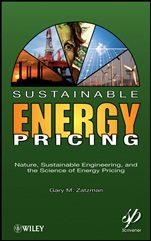
Sustainable Energy Pricing: Nature, Sustainable Engineering, and the Science of Energy Pricing
ISBN 9780470901632
Autor: Gary M. Zatzman
Wydawca: Wiley
Dostępność: 3-6 tygodni
Cena: 844,20 zł
Przed złożeniem zamówienia prosimy o kontakt mailowy celem potwierdzenia ceny.
ISBN13: |
9780470901632 |
ISBN10: |
0470901632 |
Autor: |
Gary M. Zatzman |
Oprawa: |
Hardback |
Rok Wydania: |
2012-02-28 |
Ilość stron: |
608 |
Wymiary: |
239x157 |
Tematy: |
HB |
This is the first book to address the issues of affordable power,sustainable energy, and reduced environmental impact through thescience of energy pricing. Looking at the availability of naturalresources from an engineering perspective, and determining how theycan be priced to achieve sustainability in the energy sector, isthe aim of this groundbreaking new work.
Most current models used in energy pricing are based on linearanalyses. While these models work well for targeted scenarioswithin a short time frame, they do not provide one with ascientific tool that can include many facets of the informationage. The existing models do not include environmentalsustainability in an integrated fashion. This is mainly becauseenvironmental costs are still considered to be intangible, andintractable with conventional economic analysis tools. Though oneexisting model acknowledges some possible theoretical truth toconcerns expressed about the onset of ′peak oil′ the periodin which new oil production must begin a decline of unknown andindefinite duration this model has little or nothing to sayabout continuing practices in the extraction and production offossil fuel that are themselves based on denying any significanceor role for such thinking in the immediate future.
A serious limitation of that discourse is its insistence onpolarizing opinions "for" or "against" environmentalsustainability, peak oil, and affordable energy prices. This bookproceeds instead to isolate the absence of any agreed criteria forwhat would constitute inherently sustainable development andexamines the main outlines of the history and political economy ofenergy resource exploration and development since the 1850s fromthis standpoint. It proposes specific directions in which to takesome of the leading alternatives and amendments to current energypricing practices (as well as some of the most promising energydevelopment alternatives) in order to fulfill the time criteriarequired for an inherently sustainable trend.
The author shows how, and why, identifying unsustainablepractices and consequences can make a case for closing downparticular oil and gas production operations, while averting thetime–wasting approach of trying to fix what really has gone beyondfixing. However, it is possible, necessary, and actually far betterto replace these methods with newer, scientifically based methodsfor achieving overall energy sustainability.
This groundbreaking new volume:
Explores new scientific principles on which sustainabilitywithin the energy sector can be achieved Uses pricing and valuation of resources as a tool to present anew methodology for reducing waste and environmental impact in theenergy industry while achieving sustainability for affordableenergy Investigates Return On Investment (ROI), including itsrelationships to project evaluation and the pricing of outputs, touncover how global energy prices and markets are affected bytheoretical misunderstanding and practical misrepresentation Offers a reconsideration of criminal case histories, likeEnron, as signal teachers by negative example of the change ofdirection needed in how energy pricing has often been done in thepast, in order to become sustainable.Acknowledgements xiii
Preface xv
Introduction 1
0.1 Requirements of a Sustainable Energy Pricing Model 9
0.2 Outline of the Contents of this Volume 30
1. Fundamental Notions 37
1.1 "Energy Crunch" or: The Problems and Issues of Modeling anEnergy Price 39
1.2 Matter, Energy, and Efficiency from Scientific Standpoint66
1.3 Truth as a Scientific Frame of Reference 69
1.4 Phenomenally–based Sustainability: The Nature–scienceCriterion 80
1.5 Value Assessment, Value Addition and Phenomenally–basedEnergy Pricing 94
1.6 Newtonian ′Mechanism′ and Mystification of How Value isTransformed into Price 104
1.7 Risk Assessment & Management and Aphenomenal EnergyPricing 107
1.8 The Temporal Criterion of Long–term Sustainability and itsImplications 116
2. Newtonian Mechanism and Deconstruction of ScientificDisinformation 137
2.1 Introduction 139
2.2 Einstein′s Relativity and Newton′s Mechanism Compared140
2.3 Newton′s First Assumption 142
2.4 Fundamental Assumptions of Electromagnetic Theory 153
2.5 The Engineering Approach and Its Significance 175
2.6 First Conclusions 182
2.7 Continuity and Linearity 182
3. Offshore Networks of Control: Providing Short–TermMulti–Entity International Oil and Gas Plays with a Guarantee209
4. Current Energy Pricing Models" Origins & Problems223
4.1 Consumption without Production 226
4.2 Imposed Energy Pricing 246
4.3 Inherent Features of the Current Energy–Pricing Model:Matters Affecting Individuals′ Daily Existence 256
4.4 Societal Implications of the Current Energy–Pricing Modelfor the Long Term 269
4.5 Long–term vs Short–term Returns–on–investment [ROI] FromEnergy Exploration & Development 296
4.6 Resource "Renewability" and ′Sustainable Negative Rent′304
5. The Role of Coal in the Modern Evolution of Energy Pricing309
5.1 Introduction 309
5.2 Significance of Commodifying Labor–time & All MaterialProduction –– Including its Energy Source 313
5.3 From "Law of Supply & Demand" (at the margin) to"Consumption without Production" 335
6. Carbon Emission Credits –– Theory & Practice341
6.1 Introduction 341
7. "Peak Oil" and Other Fits of Pique Among ResourceEconomists 435
7.1 Introduction 435
7.2 Human Factor Social Consciousness & "AbstractingAbsence" 453
Bibliography 477
Appendix –Disinformation in the Social & HistoricalSciences: Concerning Time Functions and Sustainability of ResourceDevelopment 521
Index 575
Gary M. Zatzman is a researcher with the EEC Research Organisation, in Halifax NS, Canada, a multinational community of researchers from various fields in engineering, social science, and the natural sciences researching ways for industry to become sustainable, both from an economic and environmental standpoint. With this latest work, the author synthesizes decades of industry and teaching experience and dozens of papers and books into a work that breaks new ground in the discussion of sustainability in the energy sector.
The book will be invaluable to engineers,managers, economists, and scientists working in the energy industryand economists and engineers working on sustainability, whether inindustry or research. (Chemistry &Industry, 1 January 2013)
Koszyk
Książek w koszyku: 0 szt.
Wartość zakupów: 0,00 zł
Informacje


Kontakt
Gambit
Centrum Oprogramowania
i Szkoleń Sp. z o.o.
Al. Pokoju 29b/22-24
31-564 Kraków
Siedziba Księgarni
ul. Kordylewskiego 1
31-542 Kraków
+48 12 410 5991
+48 12 410 5987
+48 12 410 5989
Subskrypcje
Administratorem danych osobowych jest firma Gambit COiS Sp. z o.o. Na podany adres będzie wysyłany wyłącznie biuletyn informacyjny.
Autoryzacja płatności

Informacje na temat autoryzacji płatności poprzez PayU.

© Copyright 2012: GAMBIT COiS Sp. z o.o. Wszelkie prawa zastrzeżone.
Projekt i wykonanie: Alchemia Studio Reklamy