


Wydawcy
Katalog tematyczny
- Archeologia (109)
- Ekonomia, finanse, business (13704)
- Filozofia (1445)
- Historia (3040)
- Języki i językoznawstwo (2356)
- Lifestyle, hobby i rozrywka (475)
- Medycyna (9704)
- Nauki humanistyczne (4)
- Nauki o Ziemi i środowisku (2638)
- Nauki ścisłe (20412)
- Astronomia (294)
- Biologia (5119)
- Chemia (6540)
- Chemia analityczna (361)
- Chemia fizyczna (346)
- Chemia nieorganiczna (137)
- Chemia organiczna (535)
- Krystalografia (27)
- Minerologia (46)
- Fizyka (3309)
- Matematyka (4574)
- Nauki ścisłe, ogólnie (503)
- Nauki społeczne (8486)
- Nauki techniczne (13450)
- Prawo (1696)
- Publikacje informacyjne i interdyscyplinarne (1288)
- Religia i wierzenia (917)
- Technika komputerowa (4067)
- Zdrowie, relacje międzyludzkie i rozwój osobisty (657)





Informacje szczegółowe o książce
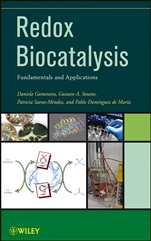
Redox Biocatalysis: Fundamentals and Applications
ISBN 9780470874202
Autor: Daniela Gamenara, Gustavo Seoane, Patricia Saenz Méndez, Pablo Domínguez de María
Wydawca: Wiley
Dostępność: 3-6 tygodni
Cena: 746,55 zł
Przed złożeniem zamówienia prosimy o kontakt mailowy celem potwierdzenia ceny.
ISBN13: |
9780470874202 |
ISBN10: |
0470874201 |
Autor: |
Daniela Gamenara, Gustavo Seoane, Patricia Saenz Méndez, Pablo Domínguez de María |
Oprawa: |
Hardback |
Rok Wydania: |
2012-11-16 |
Ilość stron: |
548 |
Wymiary: |
239x162 |
Tematy: |
PN |
Paves the way for new industrial applications using redox biocatalysis
Increasingly, researchers rely on the use of enzymes to perform redox processes as they search for novel industrial synthetic routes. In order to support and advance their investigations, this book provides a comprehensive and current overview of the use of redox enzymes and enzyme–mediated oxidative processes, with an emphasis on the role of redox enzymes in chemical transformations. The authors examine the full range of topics in the field, from basic principles to new and emerging research and applications. Moreover, they explore everything from laboratory–scale procedures to industrial manufacturing.
Redox Biocatalysis begins with a discussion of the biochemical features of redox enzymes as well as cofactors and cofactor regeneration methods. Next, the authors present a variety of topics and materials to the research and development of full–scale industrial applications, including:
Biocatalytic applications of redox enzymes such as dehydrogenases, oxygenases, oxidases, and peroxidases Enzyme–mediated oxidative processes based on biocatalytic promiscuity All the steps from enzyme discovery to robust industrial processes, including directed evolution, high–throughput screening, and medium engineering Case studies tracing the development of industrial applications using biocatalytic redox reactionsEach chapter ends with concluding remarks, underscoring the key scientific principles and processes. Extensive references serve as a gateway to the growing body of research in the field.
Researchers in both academia and industry will find this book an indispensable reference for redox biotransformations, guiding them from underlying core principles to new discoveries and emerging industrial applications.
PREFACE ix
1. Enzymes Involved in Redox Reactions: Natural Sources andMechanistic Overview 1
1.1 Motivation: Green Chemistry and Biocatalysis 1
1.2 Sources of Biocatalysts 2
1.2.1 Plants and Animals as Sources of Redox Biocatalysts 3
1.2.2 Wild–Type Microorganisms 7
1.2.2.1 Yeasts 7
1.2.2.2 Fungi 8
1.2.2.3 Bacteria 8
1.2.3 Metagenomic Assessments 9
1.3 Overview of Redox Enzymes 10
1.3.1 Dehydrogenases 13
1.3.1.1 Zn–Dependent Dehydrogenases 14
1.3.1.2 Flavin–Dependent Dehydrogenases 15
1.3.1.3 Pterin–Dependent Dehydrogenases 16
1.3.1.4 Quinoprotein Dehydrogenases 17
1.3.1.5 Dehydrogenases without Prosthetic Group 18
1.3.2 Oxygenases 19
1.3.2.1 Monooxygenases 20
1.3.2.2 Dioxygenases 38
1.3.3 Oxidases 50
1.3.3.1 Iron–Containing Oxidases 50
1.3.3.2 Copper–Containing Oxidases 51
1.3.3.3 Flavin–Dependent Oxidases 56
1.3.4 Peroxidases 61
1.4 Concluding Remarks 64
References 64
2. Natural Cofactors and Their Regeneration Strategies86
2.1 Types of Natural Cofactors Mechanisms 86
2.2 Cofactor Regeneration 88
2.2.1 Enzymatic Regeneration of Reduced Cofactors 88
2.2.1.1 Substrate–Assisted Method 88
2.2.1.2 Enzyme–Assisted Method 89
2.2.2 Enzymatic Regeneration of Oxidized Cofactors 92
2.2.3 Chemical Regeneration of Cofactors 94
2.2.4 Electrochemical Regeneration of Cofactors 95
2.2.5 Photochemical Regeneration of Cofactors 96
2.3 Concluding Remarks 97
References 98
3. Reactions Involving Dehydrogenases 101
3.1 General Considerations 101
3.2 Reduction of Carbonyl Groups 105
3.2.1 Reduction of Aliphatic and Aromatic Ketones 106
3.2.2 Reduction of – and –keto Esters andDerivatives 119
3.2.3 Reduction of Diketones 126
3.2.4 Reduction of Aldehydes 128
3.3 Racemization and Deracemization Reactions 130
3.4 Preparation of Amines 135
3.5 Reduction of C C Double Bonds 142
3.6 Oxidation Reactions 152
3.7 Dehydrogenase–Catalyzed Redox Reactions in Natural Products159
3.8 Concluding Remarks 164
References 165
4. Reactions Involving Oxygenases 180
4.1 Monooxygenase–Catalyzed Reactions 180
4.1.1 Hydroxylation of Aliphatic Compounds 181
4.1.2 Hydroxylation of Aromatic Compounds 187
4.1.3 Baeyer Villiger Reactions 189
4.1.3.1 Classification and Metabolic Role of BVMOs 192
4.1.3.2 Isolated Enzymes versus Whole–Cell Systems (Wild–Typeand Recombinant Microorganisms) 194
4.1.3.3 Substrate Profile of Available Baeyer VilligerMonooxygenases 195
4.1.3.4 Synthetic Applications of BVMOs 201
4.1.4 Epoxidation of Alkenes 240
4.2 Dioxygenase–Catalyzed Reactions 251
4.2.1 Aromatic Dioxygenases 251
4.2.1.1 Dihydroxylation of Aromatic Compounds 251
4.2.1.2 Other Oxidation Reactions Performed by AromaticDioxygenases 274
4.2.2 Miscellaneous Dioxygenases 279
4.2.2.1 Lipoxygenase 279
4.3 Concluding Remarks 285
References 286
5. Reactions Involving Oxidases and Peroxidases 303
5.1 Oxidase–Catalyzed Reactions 304
5.1.1 Oxidases Acting on C O Bonds 304
5.1.1.1 Galactose Oxidase 304
5.1.1.2 Pyranose Oxidase 308
5.1.1.3 Alcohol Oxidase 311
5.1.1.4 Glucose Oxidase 313
5.1.1.5 Glycolate Oxidase 313
5.1.2 Laccases and Tyrosinases (Phenol Oxidases) 315
5.1.2.1 Laccase 315
5.1.2.2 Tyrosinase and Other Polyphenol Oxidases 352
5.1.3 Oxidases Acting on C N Bonds 361
5.1.3.1 d–Amino Acid Oxidase 361
5.1.3.2 l–Amino Acid Oxidase 368
5.1.3.3 Monoamine Oxidase 368
5.1.3.4 Copper Amine Oxidases 371
5.1.4 Miscellaneous 371
5.1.4.1 Cholesterol Oxidase 372
5.1.4.2 Vanillyl Alcohol Oxidase 373
5.1.4.3 Alditol Oxidase 373
5.2 Peroxidase–Catalyzed Reactions 375
5.2.1 Peroxidase Mediated Transformations 379
5.2.1.1 Oxidative Dehydrogenation (2 RH + H2O2 2R + 2 H2O R–R) 379
5.2.1.2 Oxidative Halogenation (RH + H2O2 +X +H+ RX + 2 H2O) 385
5.2.1.3 Oxygen–Transfer Reactions (RH + H2O2 ROH + H2O)390
5.3 Concluding Remarks 403
References 404
6. Hydrolase–Mediated Oxidations 433
6.1 Hydrolase Promiscuity and in situ Peracid Formation.Perhydrolases vs. Hydrolases. Other Promiscuous Hydrolase–MediatedOxidations 433
6.2 Hydrolase–Mediated Bulk Oxidations in Aqueous Media (e.g.,Bleaching, Disinfection, etc.) 436
6.3 Lipase–Mediated Oxidations: Prileshajev Epoxidations andBaeyer Villiger Reactions 439
6.4 Hydrolase–Mediated Oxidation and Processing ofLignocellulosic Materials 445
6.5 Concluding Remarks 448
References 448
7. Bridging Gaps: From Enzyme Discovery to Bioprocesses453
7.1 Context 453
7.2 Enzyme Directed Evolution and High–Throughput–Screening ofBiocatalysts 454
7.3 Successful Case: Baker s Yeast Redox Enzymes, TheirCloning, and Separate Overexpression 467
7.4 Whole–Cells vs. Isolated Enzymes: Medium Engineering 473
7.5 Beyond: Multistep Domino Biocatalytic Processes 477
7.6 Concluding Remarks 482
References 483
8. Industrial Applications of Biocatalytic Redox Reactions:From Academic Curiosities to Robust Processes 487
8.1 Motivation: Drivers for Industrial Biocatalytic Processes487
8.2 Key Aspects in Industrial Biocatalytic Processes 488
8.3 Industrial Biocatalytic Redox Processes: Free Enzymes492
8.4 Industrial Biocatalytic Redox Processes Whole–Cells:The Designer Bug Concept and Beyond (MetabolicEngineering) 500
8.5 Concluding Remarks and Future Perspectives 511
References 516
INDEX 521
Daniela Gamenara, PhD, is Assistant Professor in theOrganic Chemistry Department of the Faculty of Chemistry ofUniversidad de la República, Uruguay. After two shortpostdoctoral internships, her current scientific interest is thedevelopment of enzymatic methodologies for the synthesis of highadded–value compounds and natural products as well, together withthe use of new trends in organocatalysis for the same purposes.
Gustavo A. Seoane, PhD, is Full Professor and Head of theOrganic Chemistry Department of the Faculty of Chemistry ofUniversidad de la República, Uruguay. His main scientificinterest is the use of green procedures for the synthesis ofbioactive natural products and analogs, in particular, intensiveuse of biotransformations to prepare polyoxygenated targets. Heworks actively to promote the development of biocatalysis in SouthAmerica.
Patricia Saenz–Méndez, PhD, is Assistant Professorof Physical Organic Chemistry in the Faculty of Chemistry ofUniversidad de la República, Uruguay. She was previouslyappointed as postdoctoral fellow at the Örebro University,Sweden, and the National University of Ireland, Galway. Her work isdevoted to the experimental and in silico development ofbiotechnological and organocatalytic tools for the preparation ofhigh added–value chemicals and natural products.
Pablo Domínguez de María, PhD, is Group Leaderat the Institute for Technical and Macromolecular Chemistry (ITMC),RWTH Aachen University, Germany. He was previously affiliated withAkzoNobel BV in the Netherlands and Degussa AG in Germany. Dr.Domínguez de María has also worked as a technicalfreelance advisor on emerging technologies (e.g., catalysis)applied to sustainable chemistry (www.sustainablemomentum.net). Hewas awarded the Young Scientist Prize by the Iberoamerican Academyof Pharmacy.
Koszyk
Książek w koszyku: 0 szt.
Wartość zakupów: 0,00 zł
Informacje


Kontakt
Gambit
Centrum Oprogramowania
i Szkoleń Sp. z o.o.
Al. Pokoju 29b/22-24
31-564 Kraków
Siedziba Księgarni
ul. Kordylewskiego 1
31-542 Kraków
+48 12 410 5991
+48 12 410 5987
+48 12 410 5989
Subskrypcje
Administratorem danych osobowych jest firma Gambit COiS Sp. z o.o. Na podany adres będzie wysyłany wyłącznie biuletyn informacyjny.
Autoryzacja płatności

Informacje na temat autoryzacji płatności poprzez PayU.

© Copyright 2012: GAMBIT COiS Sp. z o.o. Wszelkie prawa zastrzeżone.
Projekt i wykonanie: Alchemia Studio Reklamy