


Wydawcy
Katalog tematyczny
- Archeologia (109)
- Ekonomia, finanse, business (13704)
- Filozofia (1445)
- Historia (3040)
- Języki i językoznawstwo (2356)
- Lifestyle, hobby i rozrywka (475)
- Medycyna (9704)
- Nauki humanistyczne (4)
- Nauki o Ziemi i środowisku (2638)
- Geografia (299)
- Nauki o Ziemi (1661)
- Geologia (414)
- Hydrologia (237)
- Meteorologia i klimatologia (114)
- Paleontologia (33)
- Wulkanologia i sejsmologia (44)
- Planowanie przestrzenne (53)
- Środowisko (607)
- Nauki ścisłe (20412)
- Nauki społeczne (8486)
- Nauki techniczne (13450)
- Prawo (1696)
- Publikacje informacyjne i interdyscyplinarne (1288)
- Religia i wierzenia (917)
- Technika komputerowa (4067)
- Zdrowie, relacje międzyludzkie i rozwój osobisty (657)





Informacje szczegółowe o książce
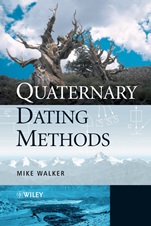
Quaternary Dating Methods
ISBN 9780470869260
Autor: Mike Walker
Wydawca: Wiley
Dostępność: 3-6 tygodni
Cena: 892,50 zł
Przed złożeniem zamówienia prosimy o kontakt mailowy celem potwierdzenia ceny.
ISBN13: |
9780470869260 |
ISBN10: |
0470869267 |
Autor: |
Mike Walker |
Oprawa: |
Hardback |
Rok Wydania: |
2005-04-25 |
Ilość stron: |
304 |
Wymiary: |
253x177 |
Tematy: |
RB |
The Quaternary is the most recent major subdivision of the geological record, covering the last 2.5 million years or so of earth history and extending to the present day. Over the course of the Quaternary, the earth′s global climate system oscillated between glacial and interglacial modes. A reliable chronology is key to our understanding not only of the dramatic changes in the physical and biotic landscapes that resulted from these major climatic shifts, but also of the important human evolutionary and dispersal events that occurred during this period. Quaternary Dating Methods describes the different techniques that can be employed to establish a Quaternary timescale, and shows the wide range of contexts in which these can be applied.
The book begins with a review of the history of Quaternary dating from the early attempts based on biblical genealogies to recent developments involving radiometric methods. The basics of radioactivity and concepts of Quaternary stratigraphy are also introduced. Subsequent chapters cover the different dating techniques, beginning with those based on the radioactive decay of certain chemical elements, through the use of annually–banded records such as tree–rings and varves, to methods that enable materials either to be ranked in terms of relative order of antiquity or to be correlated using time–parallel marker horizons in different sedimentary sequences.
This book:Introduces each dating technique in a clear and straightforward manner, with a minimum of technical detail.Discusses the strengths and weaknesses of each method.Focuses on the practical aspects of dating, with specific examples that show the versatility of the different approaches.Covers a broad field, including Quaternary Science, Earth Science and Archaeology.
This book is essential reading for second and third–year undergraduates in Physical Geography, Environmental Science, Earth Science and Archaeo
logy, and for students taking courses in Quaternary Studies, Geochronology, and Palaeoclimatology. It is equally important for professionals in the fields of Earth, Environmental and Archaeological Sciences, who need to know about the range of dating techniques that are available, and about their strengths, limitations and potential applications.
Spis treści:
Preface.
1 Dating Methods and the Quaternary.
1.1 Introduction.
1.2 The Development of Quaternary Dating.
1.3 Precision and Accuracy in Dating.
1.4 Atomic Structure, Radioactivity and Radiometric Dating.
1.5 The Quaternary: Stratigraphic Framework and Terminology.
1.6 The Scope and Content of the Book.
Notes.
2 Radiometric Dating 1: Radiocarbon Dating.
2.1 Introduction.
2.2 Basic Principles.
2.3 Radiocarbon Measurement.
2.4 Sources of Error in Radiocarbon Dating.
2.5 Some Problematic Dating Materials.
2.6 Calibration of the Radiocarbon Timescale.
2.7 Applications of Radiocarbon Dating.
Notes.
3 Radiometric Dating 2: Dating Using Long–Lived and Short–Lived Radioactive Isotopes.
3.1 Introduction.
3.2 Argon–Isotope Dating.
3.3 Uranium–Series Dating.
3.4 Cosmogenic Nuclide Dating.
3.5 Dating Using Short–Lived Isotopes.
Notes.
4 Radiometric Dating 3: Radiation Exposure Dating.
4.1 Introduction.
4.2 Luminescence Dating.
4.3 Electron Spin Resonance Dating.
4.4 Fission Track Dating.
Notes.
5 Dating Using Annually Banded Records.
5.1 Introduction.
5.2 Dendrochronology.
5.3 Varve Chronology.
5.4 Lichenometry.
5.5 Annual Layers in Glacier Ice.
5.6 Other Media Dated by Annual Banding.
Notes.
6 Relative Dating Methods.
6.1 Introduction.
6.2 Rock Surface Weathering.
6.3 Obsidian Hydration Dating.
6.4 Pedogenesis.
6.5 Relative Dating of Fossil Bone.
6.6 Amino Acid Geochronology.
Notes.
<
b>7 Techniques for Establishing Age Equivalence.
7.1 Introduction.
7.2 Oxygen Isotope Chronostratigraphy.
7.3 Tephrochronology.
7.4 Palaeomagnetism.
7.5 Palaeosols.
Notes.
8 Dating the Future.
8.1 Introduction.
8.2 Radiometric Dating.
8.3 Annually Banded Records.
8.4 Age Equivalence.
8.5 Biomolecular Dating.
Notes.
References.
Index.
Okładka tylna:
The Quaternary is the most recent major subdivision of the geological record, covering the last 2.5 million years or so of earth history and extending to the present day. Over the course of the Quaternary, the earth′s global climate system oscillated between glacial and interglacial modes. A reliable chronology is key to our understanding not only of the dramatic changes in the physical and biotic landscapes that resulted from these major climatic shifts, but also of the important human evolutionary and dispersal events that occurred during this period. Quaternary Dating Methods describes the different techniques that can be employed to establish a Quaternary timescale, and shows the wide range of contexts in which these can be applied.
The book begins with a review of the history of Quaternary dating from the early attempts based on biblical genealogies to recent developments involving radiometric methods. The basics of radioactivity and concepts of Quaternary stratigraphy are also introduced. Subsequent chapters cover the different dating techniques, beginning with those based on the radioactive decay of certain chemical elements, through the use of annually–banded records such as tree–rings and varves, to methods that enable materials either to be ranked in terms of relative order of antiquity or to be correlated using time–parallel marker horizons in different sedimentary sequences.
This book:Introduces each dating technique in a clear and straightforward manner, with a minimum of t
echnical detail.Discusses the strengths and weaknesses of each method.Focuses on the practical aspects of dating, with specific examples that show the versatility of the different approaches.Covers a broad field, including Quaternary Science, Earth Science and Archaeology.
This book is essential reading for second and third–year undergraduates in Physical Geography, Environmental Science, Earth Science and Archaeology, and for students taking courses in Quaternary Studies, Geochronology, and Palaeoclimatology. It is equally important for professionals in the fields of Earth, Environmental and Archaeological Sciences, who need to know about the range of dating techniques that are available, and about their strengths, limitations and potential applications.
Koszyk
Książek w koszyku: 0 szt.
Wartość zakupów: 0,00 zł
Informacje


Kontakt
Gambit
Centrum Oprogramowania
i Szkoleń Sp. z o.o.
Al. Pokoju 29b/22-24
31-564 Kraków
Siedziba Księgarni
ul. Kordylewskiego 1
31-542 Kraków
+48 12 410 5991
+48 12 410 5987
+48 12 410 5989
Subskrypcje
Administratorem danych osobowych jest firma Gambit COiS Sp. z o.o. Na podany adres będzie wysyłany wyłącznie biuletyn informacyjny.
Autoryzacja płatności

Informacje na temat autoryzacji płatności poprzez PayU.

© Copyright 2012: GAMBIT COiS Sp. z o.o. Wszelkie prawa zastrzeżone.
Projekt i wykonanie: Alchemia Studio Reklamy