


Wydawcy
Katalog tematyczny
- Archeologia (109)
- Ekonomia, finanse, business (13704)
- Filozofia (1445)
- Historia (3040)
- Języki i językoznawstwo (2356)
- Lifestyle, hobby i rozrywka (475)
- Medycyna (9704)
- Nauki humanistyczne (4)
- Nauki o Ziemi i środowisku (2638)
- Nauki ścisłe (20412)
- Nauki społeczne (8486)
- Nauki techniczne (13450)
- Budownictwo lądowe (1045)
- Budownictwo komunikacyjne (9)
- Hydraulika (33)
- Konstrukcje budowlane (95)
- Mechanika konstrukcji (182)
- Przemysł budowlany (7)
- Chemia przemysłowa (2258)
- Elektronika i telekomunikacja (3287)
- Energetyka (1122)
- Inne nauki stosowane (363)
- Inżynieria biochemiczna (507)
- Inżynieria transportu (232)
- Mechanika i materiały (3316)
- Nauka o środowisku (321)
- Rolnictwo (507)
- Technika, ogólnie (475)
- Prawo (1696)
- Publikacje informacyjne i interdyscyplinarne (1288)
- Religia i wierzenia (917)
- Technika komputerowa (4067)
- Zdrowie, relacje międzyludzkie i rozwój osobisty (657)





Informacje szczegółowe o książce
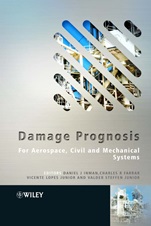
Damage Prognosis: For Aerospace, Civil and Mechanical Systems
ISBN 9780470869079
Autor: Daniel J. Inman, Charles R. Farrar, Vicente Lopes Junior, Valder Steffen Junior
Wydawca: Wiley
Dostępność: 3-6 tygodni
Cena: 554,40 zł
Przed złożeniem zamówienia prosimy o kontakt mailowy celem potwierdzenia ceny.
ISBN13: |
9780470869079 |
ISBN10: |
0470869070 |
Autor: |
Daniel J. Inman, Charles R. Farrar, Vicente Lopes Junior, Valder Steffen Junior |
Oprawa: |
Hardback |
Rok Wydania: |
2005-03-18 |
Ilość stron: |
470 |
Wymiary: |
252x179 |
Tematy: |
TN |
Damage Prognosis is the prediction in near real time of the remaining useful life of an engineered system given the measurement and assessment of its current damaged (or aged) state and accompanying predicted performance in anticipated future loading environments.
Damage Prognosis – For Aerospace, Civil and Mechanical Systems brings together fundamental information and extensive references in each of the component technologies necessary to perform damage prognosis such as predictive modelling, sensing and data acquisition hardware, and data interrogation procedures.
Written by a global team of experts representing academia, industry and government laboratories, this book:Presents a series of fundamental topics that define the new area of Damage Prognosis.Deals with interdisciplinary topics such as rotating machines, aerospace structures, automotive components and civil structures.
Damage Prognosis – For Aerospace, Civil and Mechanical Systems is the first book to address this multi–disciplinary technology in a comprehensive manner. The potential for Damage Prognosis to enhance life safety and provide economic benefits to society will make it the focus of extensive research over the next decade. As such, this book is an invaluable resource for civil, mechanical and aerospace engineers who wish to work in damage prognosis. In addition it serves as an excellent research tool for academic and corporate researchers and lecturers and graduates in related fields. Research libraries and government lab libraries will also find this book a useful asset.
Spis treści:
List of Contributors.
Preface.
1. An Introduction to Prognosis, (C. R. Farrar, N. A. J. Lieven and M. Bement).
PART I: DAMAGE MODELS.
2. An Overview of Modeling Damage Evolution in Materials, (T. Williams and I. J. Beyerlein).
3. In Situ Observation of Damage Evolution and Fracture Toughness Measu
rement, (J. E. P. Ipina and A.A. Yawny).
4. Predictive Modeling of Crack Propagation Using the Boundary Element Method, (P. Sollero).
5. On Friction Induced Non–Ideal Vibrations: A source of Fatigue, (J. M. Balthazar and B. R. Pontes).
6. Incorporating and Updating of Damping in Finite Element Modeling, (J. A. Pereira and P. M. Doi).
PART II: MONITORING ALGORITHMS.
7. Model–Based Inverse Problems in Structural Dynamics, (V. Steffen, Jr. and D. A. Rade).
8. Structural Health Monitoring Algorithms for Smart Structures, (V. Lopes, Jr.).
9. Uncertainty Quantification and the Verification of computation Models, (F. Hemez).
10. Reliability Methods, (A. Robertson and F. Hemez).
11. Lamb Wave Methods in Structural Health Monitoring, (C. Cesnik, and A. Raghavan).
12. Structural Energy Flow Techniques, (J. R. F. Arruda).
13. Impedance Based Structural Health Monitoring, (G. Park and D. J. Inman).
14. Statistical Pattern Recognition Paradigm Applied to Defect Detection in Composite Plates, (H. Sohn).
PART III: HARDWARE.
15. Sensing and Data Acquisition Issues for Damage Prognosis, (C.R. Farrar, P. Cornwell, N. F. Hunter, and N. A. J. Lieven).
Chapter 16. Design of Active Structural Health Monitoring System for Aircraft and Spacecraft Structures, (F.–K. Chang, J.–B. Ihn and E. Blaise).
17. Optical Based Sensing, (M. Todd).
PART IV: APPLICATIONS.
18. Prognosis Applications and Challenges, (D. Adams).
19. Prognosis of Rotating Machinery Components, (M. Roemer and B. Marshall).
20. Application of Simplified Statistical Models in Hydro Generating Units Health Monitoring, (G. C. Brito, Jr.).
Index.
Nota biograficzna:
Daniel J. Inman; Director, Center for Intelligent Material Systems and Structures.Since 1980, he has published five books (on vibration, control, statics, and dynamics), eight software manuals, seven book chapters, over 160 journal papers and 300 proceedings p
apers, graduated 35 Ph.D. students and supervised more than 55 MS degrees. He is currently Technical Editor of the Journal of Intelligent Material Systems and Structures (1999–2004), Technical Editor of the Shock and Vibration Digest (1998–2001), and Technical Editor of the journal Shock and Vibration (1999–2004).
Charles R. Farrar, MS T–001, Los Alamos National Laboratory. Farrar is President of Los Alamos Dynamics. He is an expert in structural health monitoring and in technologies for detecting changes or damage in complex mechanical systems, ranging from bridges to nuclear weapons. He has authored dozens of papers and conference reports and has served as an editor for the International Journal of Structural Health Monitoring and the American Society of Mechanical Engineers Journal of Vibration and Acoustics. Farrar was instrumental in the recent establishment of the joint Engineering Institute for educational collaboration between the Laboratory and the Jacobs School of Engineering at the University of California, San Diego.
Vicente Lopes Junior, Director of the Faculty of Engineering of Ilha Solteira, UNESP, Universidade Estadual de São Paulo, Brazil.
Valder Steffen Junior, Federal University of Uberlandia, School of Mechanical Engineering, Campus Santa Mùnica, Brazil.
Okładka tylna:
Damage Prognosis is the prediction in near real time of the remaining useful life of an engineered system given the measurement and assessment of its current damaged (or aged) state and accompanying predicted performance in anticipated future loading environments.
Damage Prognosis – For Aerospace, Civil and Mechanical Systems brings together fundamental information and extensive references in each of the component technologies necessary to perform damage prognosis such as predictive modelling, sensing and data acquisition hardware, and data interrogation procedures.
Writt
en by a global team of experts representing academia, industry and government laboratories, this book:Presents a series of fundamental topics that define the new area of Damage Prognosis.Deals with interdisciplinary topics such as rotating machines, aerospace structures, automotive components and civil structures.
Damage Prognosis – For Aerospace, Civil and Mechanical Systems is the first book to address this multi–disciplinary technology in a comprehensive manner. The potential for Damage Prognosis to enhance life safety and provide economic benefits to society will make it the focus of extensive research over the next decade. As such, this book is an invaluable resource for civil, mechanical and aerospace engineers who wish to work in damage prognosis. In addition it serves as an excellent research tool for academic and corporate researchers and lecturers and graduates in related fields. Research libraries and government lab libraries will also find this book a useful asset.
Koszyk
Książek w koszyku: 0 szt.
Wartość zakupów: 0,00 zł
Informacje


Kontakt
Gambit
Centrum Oprogramowania
i Szkoleń Sp. z o.o.
Al. Pokoju 29b/22-24
31-564 Kraków
Siedziba Księgarni
ul. Kordylewskiego 1
31-542 Kraków
+48 12 410 5991
+48 12 410 5987
+48 12 410 5989
Subskrypcje
Administratorem danych osobowych jest firma Gambit COiS Sp. z o.o. Na podany adres będzie wysyłany wyłącznie biuletyn informacyjny.
Autoryzacja płatności

Informacje na temat autoryzacji płatności poprzez PayU.

© Copyright 2012: GAMBIT COiS Sp. z o.o. Wszelkie prawa zastrzeżone.
Projekt i wykonanie: Alchemia Studio Reklamy