


Wydawcy
Katalog tematyczny
- Archeologia (109)
- Ekonomia, finanse, business (13704)
- Filozofia (1445)
- Historia (3040)
- Języki i językoznawstwo (2356)
- Lifestyle, hobby i rozrywka (475)
- Medycyna (9704)
- Nauki humanistyczne (4)
- Nauki o Ziemi i środowisku (2638)
- Nauki ścisłe (20412)
- Nauki społeczne (8486)
- Nauki techniczne (13450)
- Budownictwo lądowe (1045)
- Chemia przemysłowa (2258)
- Elektronika i telekomunikacja (3287)
- Energetyka (1122)
- Inne nauki stosowane (363)
- Inżynieria biochemiczna (507)
- Inżynieria transportu (232)
- Mechanika i materiały (3316)
- Nauka o środowisku (321)
- Rolnictwo (507)
- Technika, ogólnie (475)
- Prawo (1696)
- Publikacje informacyjne i interdyscyplinarne (1288)
- Religia i wierzenia (917)
- Technika komputerowa (4067)
- Zdrowie, relacje międzyludzkie i rozwój osobisty (657)





Informacje szczegółowe o książce
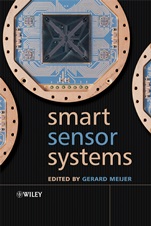
Smart Sensor Systems
ISBN 9780470866917
Autor: Gerard Meijer
Wydawca: Wiley
Dostępność: 3-6 tygodni
Cena: 483,00 zł
Przed złożeniem zamówienia prosimy o kontakt mailowy celem potwierdzenia ceny.
ISBN13: |
9780470866917 |
ISBN10: |
0470866918 |
Autor: |
Gerard Meijer |
Oprawa: |
Hardback |
Rok Wydania: |
2008-09-19 |
Ilość stron: |
404 |
Wymiary: |
252x170 |
Tematy: |
TJ |
Information processing systems need sensors to acquire the physical, mechanical and chemical information to be able to function. For extended use of sensors in industrial production tools and consumer components, such as smart cars and smart homes, the reliability of the sensors should be improved and the cost dramatically reduced. The improvement of reliability, together with a reduction of cost, can only be achieved with smart sensor systems.
These systems combine the functions of sensors and interfaces, including sensors, signal conditioning A–D (analog to digital) conversion, and bus interfacing. Also, applications at a higher hierarchical level are included, such as self–testing, auto–calibration, data evaluation and identification. Developments into the integration of sensors with electronic circuitry to produce smart sensors and smart sensor systems are increasing as research in this field continues to expand.
Written by an internationally–recognized team of experts, this book reviews recent developments in the field of smart sensor systems, providing complete coverage of all important system aspects. It takes a multidisciplinary approach to the understanding, design and use of smart sensor systems, their building blocks and methods of signal processing. This book also contains:
a review of powerful measurement techniques, and basic principles and typical problems of sensor elements, smart analog interfaces and A–D converters;
a discussion about how to use microcontrollers and DSPs (digital signal processors) for sensor applications;
detailed up–to–date reviews of the features of optical, integrated hall magnetic, capacitive, thermal sensors, and temperature sensors and physical chemosensors;
numerous case studies and problems set at the end of each chapter to test and develop your knowledge on the theory. Solutions for all can be found on t
he accompanying website.
Smart Sensor Systems will greatly benefit final year undergraduate and postgraduate students and professors in the areas of electrical, mechanical and chemical engineering, and physics. Professional engineers and researchers in the microelectronics industry, including microsystem developers, will also find this a thorough and useful volume.
www.wiley.com/go/meijer—smart
Spis treści:
p>Preface
About the authors
1.Smart sensor systems Why? Where? How?
Han Huijsing
1.1 Third industrial revolution
1.2 Definitions for several kinds of sensors
1.3 Automated production machines
1.4 Automated consumer products
1.5 Conclusion
References
2 Interface electronics and measurement techniques for smart sensor systems
Gerard Meijer
2.1 Introduction
2.2 Object–oriented design of sensor systems
2.3 Sensing elements and their parasitic effects
2.4 Analog–to–digital conversion
2.5 High accuracy over a wide dynamic range
2.6 A universal transducer interface
2.7 Summary and future trends
Problems
References
3 Silicon sensors: an introduction
Paddy French
3.1 Introduction
3.2 Measurement and Control systems
3.3 Transducers
3.4 Transducer technologies
3.5 Examples of silicon sensors
3.6 Summary and future trends
References
4 Optical sensors based on photon detection
Reinoud Wolffenbuttel
4.1 Introduction
4.2 Photon absorption in silicon
4.3 The interface: photon transmission into silicon
4.4 Photon detection in silicon photoconductors
4.5 Photon detection in silicon pn junctions
4.6 Detection limit
4.7 Photon detectors with gain
4.8 Application examples
4.9 Summary and future trends
Problems
References
5 Physical chemosensors
Michiel Vellekoop
5.1 Introduction
5.2 Phys
ical chemosensing
5.3 Energy domains
5.4 Examples and applications
5.5 Examples of in–situ applications
5.6 Microfluidic devices
5.7 Conclusions
Problems
References
6 Thermal sensors
Sander van Herwaarden
6.1 The functional principle of thermal sensors
6.2 Heat–transfer mechanisms
6.3 Thermal structures
6.4 Temperature–difference–sensing elements
6.5 Sensors based on thermal measurements
6.6 Summary and future trends
Problems
References
7 Smart temperature sensors
Gerard Meijer
7.1 Introduction
7.2 Application–related requirements and problems of temperature sensors
7.3 Resistive temperature–sensing elements
7.4 Temperature–sensor features of transistors
7.5 Smart temperature sensors and systems
7.6 Case studies of smart–sensor applications
7.7 Summary and future trends
Problems
References
8 Capacitive sensors
Xiujun Li and Gerard Meijer
8.1 Introduction
8.2 Basics of capacitive sensors
8.3 Examples of capacitive sensors
8.4 The design of electrode configurations
8.5 Reduction of field–bending effects: segmentation
8.6 Selectivity for electrical signals and electrical parameters
8.7 Summary and future trends
Problems
References
9 Integrated Hall Magnetic Sensors
Pavel Kajik and Radivoje Popovic
9.1 Introduction
9.2 Hall effect and Hall elements
9.3 Integrated Hall sensor systems
9.4 Examples of integrated Hall magnetic sensors
Problems
References
10 Universal asynchronous sensor interfaces
Gerard Meijer
10.1 Introduction
10.2 Universal sensor systems
10.3 Asynchronous converters
10.4 Dealing with problems of low–cost design of universal interface ICs
10.5 Front–end circuits
10.6 Case study
10.7 Summary and future trends
Problems
References
11 Data Acquisition for Frequency–Time–Do
main Sensors
Sergey Yurish
11.1 Introduction
11.2 DAQ boards: State–of–the–Art
11.3 DAQ board design for quasi–digital sensors
11.4 Universal Frequency–to–digital converters (UFDC)
11.5 Applications and examples
11.6 Summary and future trends
Problems
References
12 Microcontrollers and digital Signal Processors for Smart Sensor Systems
Ratcho Ivanov
12.1 Introduction
12.2 MCU and DSP architecture, organization, structure and peripherals
12.3 Choosing a low–power MCU or DSP
12.4 Timer modules
12.5 Analog comparators, ADCs, and DACs as modules of microcontrollers
12.6 Embedded networks and LCD interfacing
12.7 Development tools and support
12.8 Conclusions
Reference sites
Appendix A Material Data
Appendix B Conversion for Non–SI units
Index
Okładka tylna:
Information processing systems need sensors to acquire the physical, mechanical and chemical information to be able to function. For extended use of sensors in industrial production tools and consumer components, such as smart cars and smart homes, the reliability of the sensors should be improved and the cost dramatically reduced. The improvement of reliability, together with a reduction of cost, can only be achieved with smart sensor systems.
These systems combine the functions of sensors and interfaces, including sensors, signal conditioning A–D (analog to digital) conversion, and bus interfacing. Also, applications at a higher hierarchical level are included, such as self–testing, auto–calibration, data evaluation and identification. Developments into the integration of sensors with electronic circuitry to produce smart sensors and smart sensor systems are increasing as research in this field continues to expand.
Written by an internationally–recognized team of experts, this book reviews recent developments in the field of smart
Koszyk
Książek w koszyku: 0 szt.
Wartość zakupów: 0,00 zł
Informacje


Kontakt
Gambit
Centrum Oprogramowania
i Szkoleń Sp. z o.o.
Al. Pokoju 29b/22-24
31-564 Kraków
Siedziba Księgarni
ul. Kordylewskiego 1
31-542 Kraków
+48 12 410 5991
+48 12 410 5987
+48 12 410 5989
Subskrypcje
Administratorem danych osobowych jest firma Gambit COiS Sp. z o.o. Na podany adres będzie wysyłany wyłącznie biuletyn informacyjny.
Autoryzacja płatności

Informacje na temat autoryzacji płatności poprzez PayU.

© Copyright 2012: GAMBIT COiS Sp. z o.o. Wszelkie prawa zastrzeżone.
Projekt i wykonanie: Alchemia Studio Reklamy