


Wydawcy
Katalog tematyczny
- Archeologia (109)
- Ekonomia, finanse, business (13704)
- Filozofia (1445)
- Historia (3040)
- Języki i językoznawstwo (2356)
- Lifestyle, hobby i rozrywka (475)
- Medycyna (9704)
- Nauki humanistyczne (4)
- Nauki o Ziemi i środowisku (2638)
- Nauki ścisłe (20412)
- Astronomia (294)
- Biologia (5119)
- Chemia (6540)
- Chemia analityczna (361)
- Chemia fizyczna (346)
- Chemia nieorganiczna (137)
- Chemia organiczna (535)
- Krystalografia (27)
- Minerologia (46)
- Fizyka (3309)
- Matematyka (4574)
- Nauki ścisłe, ogólnie (503)
- Nauki społeczne (8486)
- Nauki techniczne (13450)
- Prawo (1696)
- Publikacje informacyjne i interdyscyplinarne (1288)
- Religia i wierzenia (917)
- Technika komputerowa (4067)
- Zdrowie, relacje międzyludzkie i rozwój osobisty (657)





Informacje szczegółowe o książce
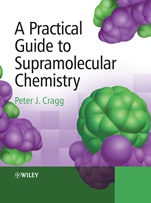
A Practical Guide to Supramolecular Chemistry
ISBN 9780470866535
Autor: Peter J. Cragg
Wydawca: Wiley
Dostępność: 3-6 tygodni
Cena: 904,05 zł
Przed złożeniem zamówienia prosimy o kontakt mailowy celem potwierdzenia ceny.
ISBN13: |
9780470866535 |
ISBN10: |
0470866535 |
Autor: |
Peter J. Cragg |
Oprawa: |
Hardback |
Rok Wydania: |
2005-09-23 |
Ilość stron: |
214 |
Wymiary: |
250x168 |
Tematy: |
PN |
A Practical Guide to Supramolecular Chemistry is an introductory manual of practical experiments for chemists with little or no prior experience of supramolecular chemistry. Syntheses are clearly presented to facilitate the preparation of acyclic and macrocyclic compounds frequently encountered in supramolecular chemistry using straightforward experimental procedures.
Many of the compounds can be used to illustrate classic supramolecular phenomena, for which clear directions are given, or may be developed further as part of the reader’s own research. The book also describes techniques commonly used in the analysis of supramolecular behaviour, including computational methods, with many detailed examples.
An invaluable reference for students and researchers in the field embarking on supramolecular chemistry projects and looking for a ‘tried and tested’ route into the chemistry of key compounds.
An introductory guide to practical syntheses focusing on supramolecular chemistry.
Fully referenced introductions explain the historical and contemporary importance of each compound
Supplementary website including 3D molecular structures, FAQ’s about syntheses and suggestions for further experiments
Spis treści:
Preface.
Introduction.
1. Linear xomponents for supramolecular networks.
1.1 Flexible components.
1.2 Rigid components from schiff bases.
1.3 Flexible tripods.
1.4 Simple anion hosts.
1.5 Rigid platforms.
2. Cyclic synthons.
2.1 Planar macrocycles from nature.
2.2 Artificial planar macrocycles – phthalocyanines andother cyclic systems.
2.3 Serendipitous macrosycles.
2.4 Adding functionality to the crowns.
2.5 Azacrowns with sidearms.
2.6 Water–soluble macrosycles.
2.7 Catenanes and rotaxanes.
3. Molecular baskets, chalices and cages.
3.1 One for beginners.
3.2 Calixarences – essential supramolecular sythons.
3.3 Adding lower rim
functionality to the calixarenes.
3.4 Adding upper rim functionality to the calixarenes.
3.5 Oxacalix[3]arenes.
3.6 Oxacalixarene derivatibves.
3.7 Azacalix[3]arenes.
3.8 Calixarene variations.
3.9 Molecular cages for cations and anions.
4. Supramolecular assembly.
4.1 Detection, measurement, prediction and visualization.
4.2 X–ray crystallography.
4.3 Spectroscopic and spectrmetric techniques.
4.4 Binding constant determination.
4.5 Solid state vs. solution behavour.
4.6 Supramolecular chemistry in silico: molecular and associated techniques.
4.7 Computational approaches.
4.8 A protocol for supramolecular computational chemistry.
4.9 Examples of in silico supramolecular chemistry.
5. Supramolecular phenomena.
5.1 Clathrates.
5.2 Stabilization of cation–anion pairs by by crown ethers: liquid clathrates.
5.3 Receptors for the ammonium ion.
5.4 Purification of fullerenes.
5.5 Making molecular boxes and capsules.
5.6 Self–complimentary species and self–replication.
Appendix 1: Integrated undergraduate projects.
Appendix 2: Reagents and solvents.
Index.
Okładka tylna:
A Practical Guide to Supramolecular Chemistry is an introductory manual of practical experiments for chemists with little or no prior experience of supramolecular chemistry. Syntheses are clearly presented to facilitate the preparation of acyclic and macrocyclic compounds frequently encountered in supramolecular chemistry using straightforward experimental procedures.
Many of the compounds can be used to illustrate classic supramolecular phenomena, for which clear directions are given, or may be developed further as part of the reader’s own research. The book also describes techniques commonly used in the analysis of supramolecular behaviour, including computational methods, with many detailed examples.
An invaluable reference for students and researchers in the f
ield embarking on supramolecular chemistry projects and looking for a ‘tried and tested’ route into the chemistry of key compounds.
An introductory guide to practical syntheses focusing on supramolecular chemistry.
Fully referenced introductions explain the historical and contemporary importance of each compound
Supplementary website including 3D molecular structures, FAQ’s about syntheses and suggestions for further experiments
Koszyk
Książek w koszyku: 0 szt.
Wartość zakupów: 0,00 zł
Informacje


Kontakt
Gambit
Centrum Oprogramowania
i Szkoleń Sp. z o.o.
Al. Pokoju 29b/22-24
31-564 Kraków
Siedziba Księgarni
ul. Kordylewskiego 1
31-542 Kraków
+48 12 410 5991
+48 12 410 5987
+48 12 410 5989
Subskrypcje
Administratorem danych osobowych jest firma Gambit COiS Sp. z o.o. Na podany adres będzie wysyłany wyłącznie biuletyn informacyjny.
Autoryzacja płatności

Informacje na temat autoryzacji płatności poprzez PayU.

© Copyright 2012: GAMBIT COiS Sp. z o.o. Wszelkie prawa zastrzeżone.
Projekt i wykonanie: Alchemia Studio Reklamy