


Wydawcy
Katalog tematyczny
- Archeologia (109)
- Ekonomia, finanse, business (13704)
- Filozofia (1445)
- Historia (3040)
- Języki i językoznawstwo (2356)
- Lifestyle, hobby i rozrywka (475)
- Medycyna (9704)
- Nauki humanistyczne (4)
- Nauki o Ziemi i środowisku (2638)
- Nauki ścisłe (20412)
- Nauki społeczne (8486)
- Nauki techniczne (13450)
- Prawo (1696)
- Publikacje informacyjne i interdyscyplinarne (1288)
- Religia i wierzenia (917)
- Technika komputerowa (4067)
- Zdrowie, relacje międzyludzkie i rozwój osobisty (657)





Informacje szczegółowe o książce
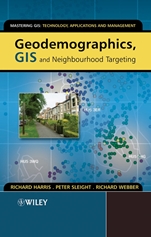
Geodemographics, GIS and Neighbourhood Targeting
ISBN 9780470864142
Autor: Richard Harris, Peter Sleight, Richard Webber
Wydawca: Wiley
Dostępność: 3-6 tygodni
Cena: 416,85 zł
Przed złożeniem zamówienia prosimy o kontakt mailowy celem potwierdzenia ceny.
ISBN13: |
9780470864142 |
ISBN10: |
0470864141 |
Autor: |
Richard Harris, Peter Sleight, Richard Webber |
Oprawa: |
Paperback |
Rok Wydania: |
2005-02-04 |
Ilość stron: |
328 |
Wymiary: |
232x167 |
Tematy: |
KM |
Geodemographics is the analysis of people by where they live, using profiling, mapping and GIS software to display and analyse geodemographic information. It focuses on the complex geographies of consumption, behaviour, attitude, affluence and deprivation that shape our socio–economic landscape. With an extensive range of applications, geodemographic methods are widely used to aid marketing, customer targeting, service delivery and strategic decision–making in both the public and private sectors.
Geodemographics, GIS and Neighbourhood Targeting provides an introduction to the methods, theories and classification techniques that form the foundation of neighbourhood analysis and commercial geodemographic products. It examines best practice when using geodemographic methods, software and systems, to balance academic theories with the realities of the business world. Theory is presented in a user–friendly style and is supported by relevant contributed case studies and short vignettes. Applied ′how to′ sections will appeal to those who work in business and service planning.Features specially commissioned case studies written by expert users of geodemographics.Focuses on presenting and using neighbourhood classification in GIS.Considers the relevance, strengths and limitations of the geodemographic idea for public and private sector decision–making.Includes information of the recent UK and US Census products and resulting classifications.
Part of the Mastering GIS: Technology, Applications and Management Series, this book will appeal to professionals working with geodemographics or neighbourhood data in marketing, retail planning, service delivery and the public sector. It will be an excellent introduction for upper–level undergraduate and Masters students taking geodemographics or related modules as part of degrees in GIS, Geography, Marketing or Business.
Spis treści:<
/b>
List of Case Study Contributors.
Preface.
1. Introducing Geodemographics.
Learning Objectives.
Introduction.
The use of demographics.
A simple application: opening a coffee shop Atlantic City.
Another application: for guiding neighbourhood regeneration funding.
Using geodemographics for retail targeting.
How it works: a short theory of geodemographics.
Case Study: modelling price sensitivity and geodemographic categories in the restaurant market (Martin Callingham).
Case Study: using geodemographics in the public sector Keith Dugmore).
Where next? An overview of the following chapters.
Conclusion.
Summary.
Further Reading.
2. London to Chicago and Back Again! The Origins of Geodemographics.
Learning Objectives.
Introduction.
The life and labours of an early neighbourhood analyst.
From London to Chicago and beyond!
A note on measuring deprivation.
Case Study: Charles Booth – yesterday once more? (Scott Orford).
Conclusion.
Summary.
Further Reading.
3. The Evolution of Geodemographics and the Market Today.
Learning Objectives.
Introduction.
From Census to commerce.
Geodemographics today.
The US Market for Geodemographics (Dave Miller).
The role of market research linkages.
Use of non–census data.
Conclusion.
Summary.
Further Reading.
4. Geodemographics and GIS.
Learning Objectives.
Introduction.
Principles of GIS.
Mapping geodemographic information with GIS.
An interesting pattern?
Confounded by choropleths!
Case Study: Using GIS for neighbourhood analysis and targeting – a commercial perspective (Stewart Berry).
Spatial interaction models.
Conclusion.
Summary
Further Reading.
5. Geodemographic Information Systems and Analysis.
Learning Objectives.
Introduction.
Data collection and input.
Data analysis.
Data visualization and output.
Case Study: Different neighbourhoods, different policing styles (Tom Williamson).
Conclusion.
Summary.
Further Reading.
6. How Geodemographic Classification are Built.
Learning Objectives.
Introduction.
Data input – sources of data for neighbourhood classification.
Preparing the data for classification.
Evaluation of input variables.
Selecting weights.
Clustering.
Optimization process and manual intervention.
Forming a cluster hierarchy.
Labels, portraits and visualization tools.
A worked example of clustering.
Conclusion.
Summary.
Further Reading.
7. Geodemographics Around the World.
Learning Objectives.
Introduction.
The internalisation of geodemographics.
Case Study: a brief comparison of selected censuses from across the world (Peter Furness).
Census data sources – some differences in what is asked and where.
Differences in the availability of non census data sources.
Variations in the detail of the postal delivery system.
International geographies of neighbourhood.
Conclusion.
Summary.
Further Reading.
8. ′But Does it Work? ′ Geodemographics in the Dock.
Learning Objectives.
Introduction.
The case for the prosecution.
The case for the defence.
Validating geodemographics – the Luton Case Study (Barry Leventhal).
Conclusion.
Summary.
Further Reading.
9. New Data, New Approaches: from Geodemographics to Geolifestyles.
Learning Objectives.
Introduction.
Case Study: Lifestyles analysis and new approaches (Gordon Farquharson).
Using GIS to map lifestyle data.
Looking for ‘hot spots’.
From revelation to explanation.
Data handling issues.
Conclusion.
Summary.
Further Reading.
10. Postscript: There are three Is in geodemographics!
References.
Index
.
Okładka tylna:
Geodemographics is the analysis of people by where they live, using profiling, mapping and GIS software to display and analyse geodemographic information. It focuses on the complex geographies of consumption, behaviour, attitude, affluence and deprivation that shape our socio–economic landscape. With an extensive range of applications, geodemographic methods are widely used to aid marketing, customer targeting, service delivery and strategic decision–making in both the public and private sectors.
Geodemographics, GIS and Neighbourhood Targeting provides an introduction to the methods, theories and classification techniques that form the foundation of neighbourhood analysis and commercial geodemographic products. It examines best practice when using geodemographic methods, software and systems, to balance academic theories with the realities of the business world. Theory is presented in a user–friendly style and is supported by relevant contributed case studies and short vignettes. Applied ′how to′ sections will appeal to those who work in business and service planning.Features specially commissioned case studies written by expert users of geodemographics.Focuses on presenting and using neighbourhood classification in GIS.Considers the relevance, strengths and limitations of the geodemographic idea for public and private sector decision–making.Includes information of the recent UK and US Census products and resulting classifications.
Part of the Mastering GIS: Technology, Applications and Management Series, this book will appeal to professionals working with geodemographics or neighbourhood data in marketing, retail planning, service delivery and the public sector. It will be an excellent introduction for upper–level undergraduate and Masters students taking geodemographics or related modules as part of degrees in GIS, Geography, Marketing or
Koszyk
Książek w koszyku: 0 szt.
Wartość zakupów: 0,00 zł
Informacje


Kontakt
Gambit
Centrum Oprogramowania
i Szkoleń Sp. z o.o.
Al. Pokoju 29b/22-24
31-564 Kraków
Siedziba Księgarni
ul. Kordylewskiego 1
31-542 Kraków
+48 12 410 5991
+48 12 410 5987
+48 12 410 5989
Subskrypcje
Administratorem danych osobowych jest firma Gambit COiS Sp. z o.o. Na podany adres będzie wysyłany wyłącznie biuletyn informacyjny.
Autoryzacja płatności

Informacje na temat autoryzacji płatności poprzez PayU.

© Copyright 2012: GAMBIT COiS Sp. z o.o. Wszelkie prawa zastrzeżone.
Projekt i wykonanie: Alchemia Studio Reklamy