


Wydawcy
Katalog tematyczny
- Archeologia (109)
- Ekonomia, finanse, business (13704)
- Filozofia (1445)
- Historia (3040)
- Języki i językoznawstwo (2356)
- Lifestyle, hobby i rozrywka (475)
- Medycyna (9704)
- Chirurgia (272)
- Inne gałęzie medycyny (1871)
- Medycyna kliniczna (4187)
- Choroby wewnętrzne (514)
- Dermatologia (51)
- Diagnostyka medyczna (3)
- Endokrynologia (144)
- Gastroenterologia (27)
- Geriatria (50)
- Ginekologia i położnictwo (134)
- Hematologia (46)
- Hepatologia (10)
- Kardiologia (71)
- Laryngologia (12)
- Nefrologia (10)
- Neurologia (500)
- Oftalmologia (50)
- Pediatria (33)
- Pulmunologia (32)
- Reumatologia (14)
- Terapia genowa (1)
- Układ mięśniowo-szkieletowy (1)
- Urologia (14)
- Medycyna niekonwencjonalna (14)
- Medycyna przedkliniczna (269)
- Medycyna, ogólnie (1740)
- Medyczne służby pomocnicze (745)
- Studia medyczne (16)
- Weterynaria (548)
- Nauki humanistyczne (4)
- Nauki o Ziemi i środowisku (2638)
- Nauki ścisłe (20412)
- Nauki społeczne (8486)
- Nauki techniczne (13450)
- Prawo (1696)
- Publikacje informacyjne i interdyscyplinarne (1288)
- Religia i wierzenia (917)
- Technika komputerowa (4067)
- Zdrowie, relacje międzyludzkie i rozwój osobisty (657)





Informacje szczegółowe o książce
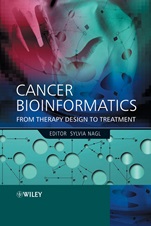
Cancer Bioinformatics: From Therapy Design to Treatment
ISBN 9780470863046
Autor: Sylvia Nagl
Wydawca: Wiley
Dostępność: 3-6 tygodni
Cena: 662,55 zł
Przed złożeniem zamówienia prosimy o kontakt mailowy celem potwierdzenia ceny.
ISBN13: |
9780470863046 |
ISBN10: |
0470863048 |
Autor: |
Sylvia Nagl |
Oprawa: |
Hardback |
Rok Wydania: |
2006-01-27 |
Ilość stron: |
300 |
Wymiary: |
250x180 |
Tematy: |
MJ |
The emerging field of cancer bioinformatics is facilitating an unprecedented synthesis of knowledge arising from the life and clinical sciences. The complexity of the questions being addressed requires experts from diverse backgrounds to engage in close and ongoing discourse and collaboration. They therefore need to be familiar with the research questions, terminology and methodology of the specialists in related subject areas.
The primary aim of the book is to provide a comprehensive and up–to–date account of the enormous range of bioinformatics techniques now being developed for cancer research and therapy, from the laboratory to clinical trials. It will function as a guide to integrated data exploitation and synergistic knowledge discovery, and support the consolidation of the multidisciplinary research community involved.
The book features a balanced range of topics, including both well–established techniques and emergent approaches in genomics, systems biology and e–science. Each chapter delivers an overview of the topic, combined with more detailed technical descriptions of key aspects of informatics, biology and clinical science. With contributions from clinical oncologists, research scientists, bioinformaticians and mathematical modellers, the book will facilitate scientific dialogue and collaboration across disciplinary boundaries. Finally, three chapters on the ethical and legal implications of cancer bioinformatics provide an expanded view of these groundbreaking developments and how they may impact on patients and other health care stakeholders.
This multidisciplinary book will be of interest to a broad audience including clinical oncologists, basic researchers in both academia and industry, computer scientists/bioinformaticians, clinical trial managers, ethicists and ethics boards.
Spis treści:
Preface.
List of Contributors.
SECTION I CANCER SYSTEMS.
1 A Path to Kno
wledge: from Data to Complex Systems Models of Cancer (Sylvia Nagl).
1.1 Conceptual foundations: biological complexity.
1.2 A taxonomy of cancer complexity.
1.3 Modelling and simulation of cancer systems.
1.4 Data standards and integration.
1.5 Concluding remarks.
2 Theory of Cancer Robustness (Hiroaki Kitano).
2.1 Robustness: the fundamental organizational principle of biological systems.
2.2 Underlying mechanisms for robustness.
2.3 Intrinsic features of robust systems: evolvability and trade–offs.
2.4 Cancer as a robust system.
2.5 Therapy strategies.
2.6 A proper index of treatment efficacy.
2.7 Computational tools.
2.8 Conclusion.
3 Developing an Integrated Informatics Platform for Cancer Research (Richard Begent).
3.1 Background.
3.2 The challenge.
3.3 The UK National Cancer Research Institute (NCRI) informatics platform.
3.4 Developing the informatics platform.
3.5 Benefits of the platform.
3.6 Conclusions.
SECTION II In silico MODELS.
4 Mathematical Models of Cancer (Manish Patel and Sylvia Nagl).
4.1 Growth models.
4.2 A very brief tour of cellular automata.
4.3 Angiogenesis models.
4.4 Treatment response models.
4.5 Dynamic pathways models.
4.6 Other models.
4.7 Simulations of complex biological systems.
4.8 Concluding remarks.
5 Some Mathematical Modelling Challenges and Approaches in Cancer (Philip Maini and Robert A. Gatenby).
5.1 Introduction.
5.2 Multiscale modelling.
5.3 Tumour vascular modelling.
5.4 Population models.
5.5 Conclusion.
6 Computer Simulation of Tumour Response to Therapy (Georgios S. Stamatakos and Nikolaos Uzunoglu).
6.1 Introduction.
6.2 Tumour growth simulation.
6.3 Radiotherapy response simulation.
6.4 Chemotherapy response simulation.
6.5 Simulation of tumour response
to other therapeutic modalities.
6.6 Simulation of normal tissue response to antineoplastic interventions.
6.7 Integration of molecular networks into tumour behaviour simulations.
6.8 Future directions.
7 Structural Bioinformatics in Cancer (Stephen Neidle).
7.1 Introduction.
7.2 Macromolecular crystallography.
7.3 Molecular modelling.
7.4 Conclusions.
SECTION III In vivo MODELS.
8 The Mouse Tumour Biology Database: an Online Resource for Mouse Models of Human Cancer (Carol J. Bult, Debra M. Krupke, Matthew J. Vincent, Theresa Allio, John P. Sundberg, Igor Mikaelian and Janan T. Eppig).
8.1 Introduction.
8.2 Background.
8.3 Database content.
8.4 Data acquisition.
8.5 Using the MTB database.
8.6 Connecting the MTB database with related databases.
8.7 Summary.
9 Bioinformatics Approaches to Integrate Cancer Models and Human Cancer Research (Cheryl L. Marks and Sue Dubman).
9.1 Background.
9.2 The MMHCC Informatics at the outset of the programme.
9.3 Initial NCI bioinformatics infrastructure development.
9.4 Future directions for informatics support.
9.5 Summary.
SECTION IV DATA.
10 The FAPESP/LICR Human Cancer Genome Project: Perspectives on Integration (Ricardo Brentani, Anamaria A. Camargo, Helena Brentani and Sandro J. De Souza).
10.1 Introduction.
10.2 The FAPESP/LICR Human Cancer Genome Project.
10.3 An integrated view of the tumour transcriptome.
10.4 Summary.
11 Today’s Science, Tomorrow’s Patient: the Pivotal Role of Tissue, Clinical Data and Informatics in Modern Drug Development (Kirstine Knox, Amanda Taylor and David J. Kerr).
11.1 Introduction.
11.2 A new national strategy for the provision of tissue annotated with clinical information to meet current and future needs of academic researchers and industry.
11.3 The N
CRI National Cancer Tissue Resource for cancer biology and treatment development.
11.4 A potential future world–class resource integrating research and health service information systems and bioinformatics for cancer diagnosis and treatment.
11.5 A proposed information system architecture that will meet the challenges and deliver the required functionality: an overview.
11.6 Consent and confidentiality: ensuring that the NCTR is embedded in the UK’s legal and ethical framework.
11.7 Concluding remarks: future challenges and opportunities.
SECTION V ETHICS.
12 Software Design Ethics for Biomedicine (Don Gotterbarn and Simon Rogerson).
12.1 The problem: software and research.
12.2 Risk identification.
12.3 Biomedical software example.
12.4 Is an ethical risk analysis required?
12.5 Details of SoDIS.
12.6 A SoDIS analysis of the biomedical software example.
12.7 Conclusion.
13 Ethical Issues of Electronic Patient Data and Informatics in Clinical Trial Settings (Dipak Kalra and David Ingram).
13.1 Introduction.
13.2 Ethical aspects of using patient–identifiable health data.
13.3 Legislation and policies pertaining to patient–identifiable health data.
13.4 Using anonymized and pseudonymized data.
13.5 Protecting personal health data.
14 Pharmacogenomics and Cancer: Ethical, Legal and Social Issues (Mary Anderlik Majumder and Mark Rothstein).
14.1 Introduction.
14.2 Getting pharmacogenomic tests and drugs to market.
14.3 Cost and coverage issues.
14.4 Ethical challenges of pharmacogenomics.
14.5 Conclusion.
Index
Nota biograficzna:
Dr Sylvia Nagl, Senior Lecturer, Department of Oncology, University College, London
Okładka tylna:
The emerging field of cancer bioinformatics is facilitating an unprecedented synthesis of knowledge arising from the life and clin
Koszyk
Książek w koszyku: 0 szt.
Wartość zakupów: 0,00 zł
Informacje


Kontakt
Gambit
Centrum Oprogramowania
i Szkoleń Sp. z o.o.
Al. Pokoju 29b/22-24
31-564 Kraków
Siedziba Księgarni
ul. Kordylewskiego 1
31-542 Kraków
+48 12 410 5991
+48 12 410 5987
+48 12 410 5989
Subskrypcje
Administratorem danych osobowych jest firma Gambit COiS Sp. z o.o. Na podany adres będzie wysyłany wyłącznie biuletyn informacyjny.
Autoryzacja płatności

Informacje na temat autoryzacji płatności poprzez PayU.

© Copyright 2012: GAMBIT COiS Sp. z o.o. Wszelkie prawa zastrzeżone.
Projekt i wykonanie: Alchemia Studio Reklamy