


Wydawcy
Katalog tematyczny
- Archeologia (109)
- Ekonomia, finanse, business (13704)
- Filozofia (1445)
- Historia (3040)
- Języki i językoznawstwo (2356)
- Lifestyle, hobby i rozrywka (475)
- Medycyna (9704)
- Nauki humanistyczne (4)
- Nauki o Ziemi i środowisku (2638)
- Nauki ścisłe (20412)
- Astronomia (294)
- Biologia (5119)
- Chemia (6540)
- Chemia analityczna (361)
- Chemia fizyczna (346)
- Chemia nieorganiczna (137)
- Chemia organiczna (535)
- Krystalografia (27)
- Minerologia (46)
- Fizyka (3309)
- Matematyka (4574)
- Nauki ścisłe, ogólnie (503)
- Nauki społeczne (8486)
- Nauki techniczne (13450)
- Prawo (1696)
- Publikacje informacyjne i interdyscyplinarne (1288)
- Religia i wierzenia (917)
- Technika komputerowa (4067)
- Zdrowie, relacje międzyludzkie i rozwój osobisty (657)





Informacje szczegółowe o książce
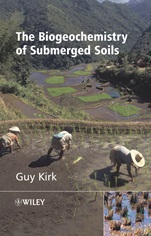
The Biogeochemistry of Submerged Soils
ISBN 9780470863015
Autor: Guy Kirk
Wydawca: Wiley
Dostępność: 3-6 tygodni
Cena: 1 219,05 zł
Przed złożeniem zamówienia prosimy o kontakt mailowy celem potwierdzenia ceny.
ISBN13: |
9780470863015 |
ISBN10: |
0470863013 |
Autor: |
Guy Kirk |
Oprawa: |
Hardback |
Rok Wydania: |
2004-02-17 |
Ilość stron: |
304 |
Wymiary: |
235x160 |
Tematy: |
PN |
Submerged soils and the wetlands they support are of huge practical importance: in global element cycles, as centres of biodiversity, in global food production. They are also uniquely interesting scientifically because of their peculiar biogeochemistry and the adaptations of plants and microbes to it.
This book describes the physical, chemical and biological processes operating in submerged soils and governing their properties. It describes the transport processes controlling the fluxes of gases and solutes through the soil; the interchange of solutes between solid, liquid and gas phases; reduction and oxidation processes; biological processes in the soil and overlying water; and processes in the roots and rhizospheres of wetland plants. The dynamics of nutrients, toxins, pollutants and trace gases are then discussed in terms of these processes and in relation to wetland productivity and global element cycles.
Written by a renowned expert in the field, this work will be invaluable to earth, environmental and agricultural scientists concerned with natural or man–made wetlands, and to advanced undergraduate and graduate studen ts of these topics.
Spis treści:
Preface.
Acknowledgements.
1. Introduction.
1.1 Global Extent of Submerged Soils and Wetlands.
1.2 Biogeochemical Characteristics.
1.3 Types of Submerged Soil.
1.3.1 Organic Soils.
1.3.2 Mineral Soils.
1.3.3 Relation between Soils and Landform.
2. Transport Processes in Submerged Soils.
2.1 Mass Flow.
2.2 Diffusion.
2.2.1 Diffusion Coefficients in Soil.
2.2.2 Propagation of pH Changes Through Soil.
2.3 Ebullition.
2.4 Mixing by Soil Animals.
3. Interchange of Solutes between Solid, Liquid and Gas Phases.
A. WATER.
3.1 Composition of the Water.
3.1.1 Acid and Bases.
3.1.2 Speciation.
3.1.3 Equilibrium Calculations.
3.2 pH Buffer Capacity.
3.3 Equilibrium with the Gas Phase.
3.3.1 Floodwater CO2 Dynamics.
3.4 Gas Transport Across the Air–Water Interface.
3.4.1 CO2 Transfer Across the Air–Water Interface.
B. SOIL.
3.5 The Solid Surfaces in Soils.
3.6 The Solid Surfaces in Submerged Soils.
3.6.1 Organic Matter in Submerged Soils.
3.7 Solid–Solution Interactions.
3.7.1 Adsorption.
3.7.2 Precipitation.
3.7.3 Co–Precipitation in Solid Solutions.
3.7.4 Inhibition of Precipitation.
3.7.5 Equations for Solid—Solution Interactions.
4. Reduction and Oxidation.
4.1 Thermodynamics and Kinetics of Redox Reactions.
4.1.1 Electron Activities and Free Energy Changes.
4.1.2 Redox Potentials.
4.1.3 Relation between pe and Concentration of Redox Couples.
4.1.4 pe–pH Diagrams.
4.1.5 Energetics of Reactions Mediated by Microbes.
4.2 Redox Conditions in Soils.
4.2.1 Changes with Depth in the Soil.
4.2.2 Changes with Time.
4.2.3 Calculated Changes in pe, pH and Fe During Soil Reduction.
4.2.4 Measurement of Redox Potential in Soil.
4.3 Transformations of Nutrient Elements Accompanying Changes in Redox.
4.3.1 Transformations of Carbon.
4.3.2 Transformations of Nitrogen.
4.3.3 Transformations of Sulfur.
4.3.4 Transformations of Phosphorus.
4.4 Oxidation of Reduced Soil.
4.4.1 Kinetics of Fe2+ Oxidation.
4.4.2 Simultaneous Diffusion and Oxidation in Soil.
5. Biological Processes in the Soil and Floodwater.
5.1 Microbiological Processes.
5.1.1 Processes Involved in Sequential Reduction.
5.1.2 Nitrate Reduction.
5.1.3 Iron and Manganese Reduction.
5.1.4 Sulfate Reduction.
5.1.5 Methanogenesis.
5.1.6 Aerobic Processes.
5.2 Macrobiological Processes.
5.2.1 Net Primary Production and Decomposition.
5.2.2 The Floodwater–Soil System.
5.2.3 Floodwater Properties.
5.2.4 Floodwater Flora.
5.2.5 Fauna.
5.3 Is Biodiversity Important?
6. Processes in Roots and the Rhizospher
e.
6.1 Effects of Anoxia and Anaerobicity on Plant Roots.
6.1.1 Adaptations to Anoxia.
6.1.2 Armstrong and Beckett’s Model of Root Aeration.
6.2 Architecture of Wetland Plant Root Systems.
6.2.1 Model of Root Aeration versus Nutrient Absorption.
6.2.2 Root Surface Required for Nutrient Absorption.
6.3 Nutrient Absorption Properties of Wetland Plant Roots.
6.3.1 Ion Transport in Roots.
6.3.2 Ion Transport in Wetland Roots.
6.4 Root–Induced Changes in the Soil.
6.4.1 Oxygenation of the Rhizosphere.
6.4.2 The pH Profile Across the Rhizosphere.
6.5 Consequences of Root–induced Changes.
6.5.1 Nitrification–Denitrification in the Rhizosphere.
6.5.2 Solubilization of Phosphate.
6.5.3 Solubilization of Zinc.
6.5.4 Immobilization of Cations.
6.6 Conclusions.
7. Nutrients, Toxins and Pollutants.
7.1 Nutrient and Acidity Balances.
7.1.1 Nutrient Balances in Ricefields.
7.1.2 Acidity Balances in Ricefields.
7.1.3 Peat Bogs.
7.1.4 Riparian Wetlands.
7.1.5 Tidal Wetlands.
7.2 Toxins.
7.2.1 Acidity.
7.2.2 Iron Toxicity.
7.2.3 Organic Acids.
7.2.4 Salinity.
7.3 Trace Elements.
7.3.1 Global Cycling of Trace Elements.
7.3.2 Transport Through Soil and into Plant Roots.
7.3.1 Mobilities of Individual Trace Elements.
8. Trace Gases.
8.1 Methane.
8.1.1 Global Budget.
8.1.2 Processes Governing Methane Emissions from Rice.
8.1.3 Modelling Methane Emission.
8.1.4 Estimating Emissions at the Regional Scale.
8.1.5 Possibilities For Decreasing Emissions.
8.2 Nitrogen Oxides.
8.2.1 Global Budget.
8.2.2 Processes Governing Nitrous and Nitric Oxide Emissions from Rice.
8.2.3 Differences between Rice Production Systems.
8.3 Ammonia.
8.3.1 Global Budget.
8.3.2 Processes Governing Ammonia Emissions from Rice.
8.4 Sulfur Compounds.
8.4.1 Global Budget.
8.4.2 Emissions from Ricefields.
8.5 Carbon Sequestra
tion.
References.
Index.
Okładka tylna:
Submerged soils and the wetlands they support are of huge practical importance: in global element cycles, as centres of biodiversity, in global food production. They are also uniquely interesting scientifically because of their peculiar biogeochemistry and the adaptations of plants and microbes to it.
This book describes the physical, chemical and biological processes operating in submerged soils and governing their properties. It describes the transport processes controlling the fluxes of gases and solutes through the soil; the interchange of solutes between solid, liquid and gas phases; reduction and oxidation processes; biological processes in the soil and overlying water; and processes in the roots and rhizospheres of wetland plants. The dynamics of nutrients, toxins, pollutants and trace gases are then discussed in terms of these processes and in relation to wetland productivity and global element cycles.
Written by a renowned expert in the field, this work will be invaluable to earth, environmental and agricultural scientists concerned with natural or man–made wetlands, and to advanced undergraduate and graduate studen ts of these topics.
Koszyk
Książek w koszyku: 0 szt.
Wartość zakupów: 0,00 zł
Informacje


Kontakt
Gambit
Centrum Oprogramowania
i Szkoleń Sp. z o.o.
Al. Pokoju 29b/22-24
31-564 Kraków
Siedziba Księgarni
ul. Kordylewskiego 1
31-542 Kraków
+48 12 410 5991
+48 12 410 5987
+48 12 410 5989
Subskrypcje
Administratorem danych osobowych jest firma Gambit COiS Sp. z o.o. Na podany adres będzie wysyłany wyłącznie biuletyn informacyjny.
Autoryzacja płatności

Informacje na temat autoryzacji płatności poprzez PayU.

© Copyright 2012: GAMBIT COiS Sp. z o.o. Wszelkie prawa zastrzeżone.
Projekt i wykonanie: Alchemia Studio Reklamy