


Wydawcy
Katalog tematyczny
- Archeologia (109)
- Ekonomia, finanse, business (13704)
- Filozofia (1445)
- Historia (3040)
- Języki i językoznawstwo (2356)
- Lifestyle, hobby i rozrywka (475)
- Medycyna (9704)
- Nauki humanistyczne (4)
- Nauki o Ziemi i środowisku (2638)
- Nauki ścisłe (20412)
- Astronomia (294)
- Biologia (5119)
- Chemia (6540)
- Chemia analityczna (361)
- Chemia fizyczna (346)
- Chemia nieorganiczna (137)
- Chemia organiczna (535)
- Krystalografia (27)
- Minerologia (46)
- Fizyka (3309)
- Matematyka (4574)
- Nauki ścisłe, ogólnie (503)
- Nauki społeczne (8486)
- Nauki techniczne (13450)
- Prawo (1696)
- Publikacje informacyjne i interdyscyplinarne (1288)
- Religia i wierzenia (917)
- Technika komputerowa (4067)
- Zdrowie, relacje międzyludzkie i rozwój osobisty (657)





Informacje szczegółowe o książce
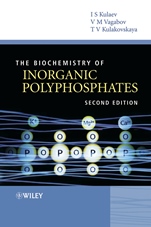
The Biochemistry of Inorganic Polyphosphates
ISBN 9780470858103
Autor: Igor S. Kulaev, Vladimir Vagabov, Tatiana Kulakovskaya
Wydawca: Wiley
Dostępność: 3-6 tygodni
Cena: 1 056,30 zł
Przed złożeniem zamówienia prosimy o kontakt mailowy celem potwierdzenia ceny.
ISBN13: |
9780470858103 |
ISBN10: |
0470858109 |
Autor: |
Igor S. Kulaev, Vladimir Vagabov, Tatiana Kulakovskaya |
Oprawa: |
Hardback |
Rok Wydania: |
2004-05-14 |
Numer Wydania: |
2nd Edition |
Ilość stron: |
294 |
Wymiary: |
244x170 |
Tematy: |
PN |
More than one hundred years ago, L. Liberman found high–polymeric inorganic polyphosphates (PolyP) in living organisms. These compounds are linear polymers containing a few to several hundred residues of orthophosphate (Pi) linked by energy–rich phosphoanhydride bonds. However, these mysterious cell components have as yet been ignored in most biochemistry manuals.
This research being undertaken in this fast–developing field often yields unexpected results revealing the most important regulatory mechanisms of the living cell.
The Biochemistry of Inorganic Polyphosphates 2nd edition concentrates on the modern concepts of PolyP biochemistry and includes such topics asthe chemical structure and properties of condensed inorganic phosphatescharacteristics of the known enzymes of PolyP metabolismthe functions of PolyP and PolyP–dependent enzymes, including phosphate and energy reservation, sequestration and storage of cations, formation of membrane channels, involvement in cell envelope formation and function, gene activity control, regulation of enzyme activities, participation in stress response and stationary phase adaptation.a critical analysis of the methods of isolation and quantitative assay of PolyP in the cells.localization and forms of PolyP in prokaryotic and eukaryotic cellsthe applied aspects of PolyP biochemistry.inorganic PolyP in chemical and biological evolutionThis book will be of interest to research chemists, biochemists, microbiologists and postgraduate students.
Spis treści:
Foreword to the First Edition.
Preface.
Acknowledgements.
Introduction.
1 The Chemical Structures and Properties of Condensed Inorganic Phosphates.
1.1 The Structures of Condensed Phosphates.
1.1.1 Cyclophosphates.
1.1.2 Polyphosphates.
1.1.3 Branched Inorganic Phosphates, or ‘Ultraphosphates’.
1.2 Some
Chemical Properties of Condensed Inorganic Polyphosphates.
1.3 Physico–Chemical Properties of Condensed Inorganic Polyphosphates.
2 Methods of Polyphosphate Assay in Biological Materials.
2.1 Methods of Extraction from Biological Materials.
2.2 Chromatographic Methods.
2.3 Colorimetric and Fluorimetric Methods.
2.4 Cytochemical Methods.
2.5 X–Ray Energy Dispersive Analysis.
2.6 31P Nuclear Magnetic Resonance Spectroscopy.
2.7 Other Physical Methods.
2.8 Gel Electrophoresis.
2.9 Enzymatic Methods.
3 The Occurrence of Polyphosphates in Living Organisms.
4 The Forms in which Polyphosphates are Present in Cells.
4.1 Polyphosphate–Cation Complexes.
4.2 Polyphosphate–Ca2+–Polyhydroxybutyrate Complexes.
4.3 Complexes of Polyphosphates with Nucleic Acids.
4.4 Binding of Polyphosphates with Proteins.
5 Localization of Polyphosphates in Cells of Prokaryotes and Eukaryotes.
5.1 Prokaryotes.
5.2 Eukaryotes.
6 Enzymes of Polyphosphate Biosynthesis and Degradation.
6.1 Enzymes of Polyphosphate Biosynthesis.
6.1.1 Polyphosphate Kinase (Polyphosphate:ADP Phosphotransferase, EC 2.7.4.1).
6.1.2 3–Phospho–D–Glyceroyl–Phosphate:Polyphosphate Phosphotransferase (EC 2.7.4.17).
6.1.3 Dolichyl–Diphosphate:Polyphosphate Phosphotransferase (EC 2.7.4.20).
6.2 Enzymes of Polyphosphate Degradation.
6.2.1 Polyphosphate–Glucose Phosphotransferase (EC 2.7.1.63).
6.2.2 NAD Kinase (ATP:NAD 2—–Phosphotransferase, EC 2.7.1.23).
6.2.3 Exopolyphosphatase (Polyphosphate Phosphohydrolase, EC 3.6.1.11).
6.2.4 Adenosine–Tetraphosphate Phosphohydrolase (EC 3.6.1.14).
6.2.5 Triphosphatase (Tripolyphosphatase, EC 3.6.1.25).
6.2.6 Endopolyphosphatase (Polyphosphate Depolymerase, EC 3.6.1.10).
6.2.7 PolyP:AMP Phosphotransferase.
7 The Functions of Polyphosphates and Polyphosphate
–Dependent Enzymes.
7.1 Phosphate Reserve.
7.1.1 In Prokaryotes.
7.1.2 In Eukaryotes.
7.2 Energy Source.
7.2.1 Polyphosphates in Bioenergetics of Prokaryotes.
7.2.2 Polyphosphate in Bioenergetics of Eukaryotes.
7.3 Cations Sequestration and Storage.
7.3.1 In Prokaryotes.
7.3.2 In Eukaryotes.
7.4 Participation in Membrane Transport.
7.5 Cell Envelope Formation and Function.
7.5.1 Polyphosphates in the Cell Envelopes of Prokaryotes.
7.5.2 Polyphosphates in the Cell Envelopes of Eukaryotes.
7.6 Regulation of Enzyme Activities.
7.7 Gene Activity Control, Development and Stress Response.
7.7.1 In Prokaryotes.
7.7.2 In Lower Eukaryotes.
7.8 The Functions of Polyphosphates in Higher Eukaryotes.
8 The Peculiarities of Polyphosphate Metabolism in Different Organisms.
8.1 Escherichia coli.
8.1.1 The Dynamics of Polyphosphates under Culture Growth.
8.1.2 The Effects of Pi Limitation and Excess.
8.1.3 The Effects of Mutations on Polyphosphate Levels and Polyphosphate–Metabolizing Enzyme Activities.
8.1.4 The Effects of Nutrition Deficiency and Environmental Stress.
8.2 Pseudomonas aeruginosa.
8.3 Acinetobacter.
8.4 Aerobacter aerogenes (Klebsiella aerogenes).
8.5 Azotobacter.
8.6 Cyanobacteria (Blue–Green Algae) and other Photosynthetic Bacteria.
8.7 Mycobacteria and Corynebacteria.
8.8 Propionibacteria.
8.9 Archae.
8.10 Yeast.
8.10.1 Yeast Cells Possess Different Polyphosphate Fractions.
8.10.2 The Dynamics of PolyP Fractions during the Cell Cycle.
8.10.3 The Relationship between the Metabolism of Polyphosphates and other Compounds.
8.10.4 Polyphosphate Fractions at Growth on a Pi–Sufficient Medium with Glucose.
8.10.5 The Effects of Pi Limitation and Excess.
8.10.6 The Effects of other Conditions on the Polyphosphate Content in Yeast Cells.
8.10.7
The Effects of Inhibitors on the Polyphosphate Content in Yeast Cells.
8.10.8 The Effects of Mutations on the Content and Chain Lengths of Polyphosphate in Yeast.
8.11 Other Fungi (Mould and Mushrooms).
8.12 Algae.
8.12.1 Localization and Forms in Cells.
8.12.2 The Dynamics of Polyphosphates in the Course of Growth.
8.12.3 The Influence of Light and Darkness.
8.12.4 The Effects of Pi Limitation and Excess.
8.12.5 Changes in Polyphosphate Content under Stress Conditions.
8.13 Protozoa.
8.14 Higher Plants.
8.15 Animals.
9 Applied Aspects of Polyphosphate Biochemistry.
9.1 Bioremediation of the Environment.
9.1.1 Enhanced Biological Phosphate Removal.
9.1.2 Removal of Heavy Metals from Waste.
9.2 Polyphosphates and Polyphosphate–Metabolizing Enzymes in Assay and Synthesis.
9.3 Polyphosphates in Medicine.
9.3.1 Antiseptic and Antiviral Agents.
9.3.2 Polyphosphate Kinase as a Promising Antimicrobial Target.
9.3.3 Polyphosphates as New Biomaterials.
9.3.4 Polyphosphates in Bone Therapy and Stomathology.
9.4 Polyphosphates in Agriculture.
9.5 Polyphosphates in the Food Industry.
10 Inorganic Polyphosphates in Chemical and Biological Evolution.
10.1 Abiogenic Synthesis of Polyphosphates and Pyrophosphate.
10.2 Phosphorus Compounds in Chemical Evolution.
10.3 Polyphosphates and Pyrophosphates: Fossil Biochemical Reactions and the Course of Bioenergetic Evolution.
10.4 Changes in the Role of Polyphosphates in Organisms at Different Evolutionary Stages.
References.
Index of Generic Names.
Subject Index.
Okładka tylna:
More than one hundred years ago, L. Liberman found high–polymeric inorganic polyphosphates (PolyP) in living organisms. These compounds are linear polymers containing a few to several hundred residues of orthophosphate (Pi) linked by energy–rich phosphoanhydride bonds. However, these mysterious c
Koszyk
Książek w koszyku: 0 szt.
Wartość zakupów: 0,00 zł
Informacje


Kontakt
Gambit
Centrum Oprogramowania
i Szkoleń Sp. z o.o.
Al. Pokoju 29b/22-24
31-564 Kraków
Siedziba Księgarni
ul. Kordylewskiego 1
31-542 Kraków
+48 12 410 5991
+48 12 410 5987
+48 12 410 5989
Subskrypcje
Administratorem danych osobowych jest firma Gambit COiS Sp. z o.o. Na podany adres będzie wysyłany wyłącznie biuletyn informacyjny.
Autoryzacja płatności

Informacje na temat autoryzacji płatności poprzez PayU.

© Copyright 2012: GAMBIT COiS Sp. z o.o. Wszelkie prawa zastrzeżone.
Projekt i wykonanie: Alchemia Studio Reklamy