


Wydawcy
Katalog tematyczny
- Archeologia (109)
- Ekonomia, finanse, business (13704)
- Filozofia (1445)
- Historia (3040)
- Języki i językoznawstwo (2356)
- Lifestyle, hobby i rozrywka (475)
- Medycyna (9704)
- Nauki humanistyczne (4)
- Nauki o Ziemi i środowisku (2638)
- Nauki ścisłe (20412)
- Nauki społeczne (8486)
- Nauki techniczne (13450)
- Prawo (1696)
- Publikacje informacyjne i interdyscyplinarne (1288)
- Religia i wierzenia (917)
- Technika komputerowa (4067)
- Zdrowie, relacje międzyludzkie i rozwój osobisty (657)





Informacje szczegółowe o książce
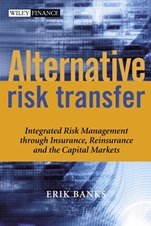
Alternative Risk Transfer: Integrated Risk Management through Insurance, Reinsurance, and the Capital Markets
ISBN 9780470857458
Autor: Erik Banks
Wydawca: Wiley
Dostępność: 3-6 tygodni
Cena: 530,25 zł
Przed złożeniem zamówienia prosimy o kontakt mailowy celem potwierdzenia ceny.
ISBN13: |
9780470857458 |
ISBN10: |
0470857455 |
Autor: |
Erik Banks |
Oprawa: |
Hardback |
Rok Wydania: |
2004-01-27 |
Ilość stron: |
238 |
Wymiary: |
265x168 |
Tematy: |
KF |
The Alternative Risk Transfer (ART) market has expanded in recent years to become a vital source of risk solutions and risk capacity and an important mechanism for the creation of integrated corporate risk management programs.
The ART market unites the risk management and product development skills of financial institutions, insurers and reinsurers with the capital of global investors to give corporate risk managers the best possible means of managing financial and operating risks. In a time when natural and man–made disasters and financial volatility are constantly present, the need for dependable, equitably priced risk capacity and innovative, holistic risk solutions has never been greater. The ART market, which can supply both, is thus becoming an integral component of the 21st century financial markets.
Alternative Risk Transfer, written by a veteran of the banking and insurance industries, provides a practical, detailed and up–to–date review of the topic. The text is divided into four parts, includingRisk and the ART market Insurance and ReinsuranceCapital MarketsEnterprise Risk Management and the Future of ART
The book contains numerous worked examples and case studies to place the subject in a practical light, and is ideal reading for CFOs, corporate risk managers, treasurers, institutional investors and fund managers seeking to understand the ART market.
Spis treści:
Acknowledgements.
Biography.
PART I: RISK AND THE ART MARKET.
1 Overview of Risk Management.
1.1 Risk and return.
1.2 Active risk management.
1.2.1 Risk management processes.
1.2.2 Risk management techniques.
1.2.3 General risk management considerations.
1.3 Risk concepts.
1.3.1 Expected value and variance.
1.3.2 Risk aversion.
1.3.3 Risk transfer and the insurance mechanism.
1.3.4 Diversification and risk pooling.
1.3.5 Hedging.
1.3.6 Moral hazard, adverse selection and basis risk.
1.3.7 Non–insurance transfers.
1.4 Outline of the book.
2 Risk Management Drivers: Theoretical Motivations, Benefits, and Costs.
2.1 Maximizing enterprise value.
2.2 The decision framework.
2.2.1 Replacement and abandonment.
2.2.2 Costs and benefits of loss control.
2.2.3 Costs and benefits of loss financing.
2.2.4 Costs and benefits of risk reduction.
2.3 Coping with market cycles.
2.3.1 Insurance pricing.
2.3.2 Hard versus soft markets.
2.4 Accessing new risk capacity.
2.5 Diversifying the credit risk of intermediaries.
2.6 Managing enterprise risks intelligently.
2.7 Reducing taxes.
2.8 Overcoming regulatory barriers.
2.9 Capitalizing on deregulation.
3 The ART Market and its Participants.
3.1 A definition of ART.
3.2 Origins and background of ART.
3.3 Market participants.
3.3.1 Insurers and reinsurers.
3.3.2 Investment, commercial, and universal banks.
3.3.3 Corporate end–users.
3.3.4 Investors/capital providers.
3.3.5 Insurance agents and brokers.
3.4 Product and market convergence.
PART II: INSURANCE AND REINSURANCE.
4 Primary Insurance/Reinsurance Contracts.
4.1 Insurance concepts.
4.2 Insurance and loss financing.
4.3 Primary insurance contracts.
4.3.1 Maximum risk transfer contracts.
4.3.2 Minimal risk transfer contracts.
4.3.3 Layered insurance coverage.
4.4 Reinsurance and retrocession contracts.
4.4.1 Facultative and treaty reinsurance.
4.4.2 Quota share, surplus share, excess of loss, and reinsurance pools.
4.4.3 Finite reinsurance.
5 Captives.
5.1 Using captives to retain risks.
5.1.1 Background and function.
5.1.2 Benefits and costs.
5.2 Forms of captives.
5.2.1 Pure captives.
5.2.2 Sister captives.
5.2.3 Group captives.
5.2.4 Rent–a–captives and protected cell companies.
5.2.5 Risk retention group
s.
5.3 Tax consequences.
6 Multi–risk Products.
6.1 Multiple peril products.
6.2 Multiple trigger products.
PART III: CAPITAL MARKETS.
7 Capital Markets Issues and Securitization.
7.1 Overview of securitization.
7.2 Insurance–linked securities.
7.2.1 Overview.
7.2.2 Costs and benefits.
7.3 Structural features.
7.3.1 Issuing vehicles.
7.3.2 Triggers.
7.3.3 Tranches.
7.4 Catastrophe bonds.
7.4.1 Hurricane.
7.4.2 Earthquake.
7.4.3 Windstorm.
7.4.4 Multiple cat peril ILS and peril by tranche ILS.
7.4.5 Bond/derivative variations.
7.5 Other insurance–linked securities.
8 Contingent Capital Structures.
8.1 Creating post–loss financing products.
8.2 Contingent debt.
8.2.1 Committed capital facilities.
8.2.2 Contingent surplus notes.
8.2.3 Contingency loans.
8.2.4 Financial guarantees.
8.3 Contingent equity.
8.3.1 Loss equity puts.
8.3.2 Put protected equity.
9 Insurance Derivatives.
9.1 Derivatives and ART.
9.2 General characteristics of derivatives.
9.3 Exchange–traded insurance derivatives.
9.3.1 Exchange–traded catastrophe derivatives.
9.3.2 Exchange–traded temperature derivatives.
9.4 OTC insurance derivatives.
9.4.1 Catastrophe reinsurance swaps.
9.4.2 Pure catastrophe swaps.
9.4.3 Temperature derivatives.
9.4.4 Other weather derivatives.
9.4.5 Credit derivatives.
9.5 Bermuda transformers and capital markets subsidiaries.
PART IV: ART OF THE FUTURE.
10 Enterprise Risk Management.
10.1 Combining risks.
10.1.1 The enterprise risk management concept.
10.1.2 Costs and benefits.
10.2 Developing an enterprise risk management program.
10.2.1 Strategic and governance considerations.
10.2.2 Program blueprint.
10.2.3 Program costs.
10.3 End–user demand.
11 Prospects for Growth.
11.1 Drivers of growth.
11.2 Barriers to gr
owth.
11.3 Market segments.
11.3.1 Finite structures.
11.3.2 Captives.
11.3.3 Multi–risk products.
11.3.4 Capital markets issues.
11.3.5 Contingent capital.
11.3.6 Insurance derivatives.
11.3.7 Enterprise risk management.
11.4 End–user profiles.
11.5 Future convergence.
Glossary.
Selected References.
Index.
Nota biograficzna:
ERIK BANKS has held senior risk management positions at several global financial institutions, including XL Capital, where he was Partner and Chief Risk Officer of the Bermuda reinsurer′s derivative subsidiary, and Merrill Lynch, where he spent 13 years managing credit and market risk teams in Tokyo, Hong Kong, London and New York. Mr. Banks has written various books on risk management, emerging markets, derivatives, merchant banking, and electronic finance.
Okładka tylna:
The Alternative Risk Transfer (ART) market has expanded in recent years to become a vital source of risk solutions and risk capacity and an important mechanism for the creation of integrated corporate risk management programs.
The ART market unites the risk management and product development skills of financial institutions, insurers and reinsurers with the capital of global investors to give corporate risk managers the best possible means of managing financial and operating risks. In a time when natural and man–made disasters and financial volatility are constantly present, the need for dependable, equitably priced risk capacity and innovative, holistic risk solutions has never been greater. The ART market, which can supply both, is thus becoming an integral component of the 21st century financial markets.
Alternative Risk Transfer, written by a veteran of the banking and insurance industries, provides a practical, detailed and up–to–date review of the topic. The text is divided into four parts, including<
Koszyk
Książek w koszyku: 0 szt.
Wartość zakupów: 0,00 zł
Informacje


Kontakt
Gambit
Centrum Oprogramowania
i Szkoleń Sp. z o.o.
Al. Pokoju 29b/22-24
31-564 Kraków
Siedziba Księgarni
ul. Kordylewskiego 1
31-542 Kraków
+48 12 410 5991
+48 12 410 5987
+48 12 410 5989
Subskrypcje
Administratorem danych osobowych jest firma Gambit COiS Sp. z o.o. Na podany adres będzie wysyłany wyłącznie biuletyn informacyjny.
Autoryzacja płatności

Informacje na temat autoryzacji płatności poprzez PayU.

© Copyright 2012: GAMBIT COiS Sp. z o.o. Wszelkie prawa zastrzeżone.
Projekt i wykonanie: Alchemia Studio Reklamy