


Wydawcy
Katalog tematyczny
- Archeologia (109)
- Ekonomia, finanse, business (13704)
- Filozofia (1445)
- Historia (3040)
- Języki i językoznawstwo (2356)
- Lifestyle, hobby i rozrywka (475)
- Medycyna (9704)
- Chirurgia (272)
- Inne gałęzie medycyny (1871)
- Medycyna kliniczna (4187)
- Medycyna niekonwencjonalna (14)
- Medycyna przedkliniczna (269)
- Medycyna, ogólnie (1740)
- Historia medycyny (3)
- Lekarze, sprawy zawodowe (8)
- Medycyna, aspekty prawne (10)
- Służba zdrowia (36)
- Wyposażenie medyczne (157)
- Zdrowie publiczne (460)
- Medyczne służby pomocnicze (745)
- Studia medyczne (16)
- Weterynaria (548)
- Nauki humanistyczne (4)
- Nauki o Ziemi i środowisku (2638)
- Nauki ścisłe (20412)
- Nauki społeczne (8486)
- Nauki techniczne (13450)
- Prawo (1696)
- Publikacje informacyjne i interdyscyplinarne (1288)
- Religia i wierzenia (917)
- Technika komputerowa (4067)
- Zdrowie, relacje międzyludzkie i rozwój osobisty (657)





Informacje szczegółowe o książce
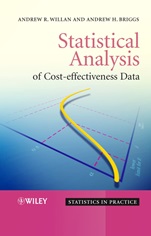
Statistical Analysis of Cost–Effectiveness Data
ISBN 9780470856260
Autor: Andrew R. Willan, Andrew H. Briggs
Wydawca: Wiley
Dostępność: 3-6 tygodni
Cena: 431,55 zł
Przed złożeniem zamówienia prosimy o kontakt mailowy celem potwierdzenia ceny.
ISBN13: |
9780470856260 |
ISBN10: |
0470856262 |
Autor: |
Andrew R. Willan, Andrew H. Briggs |
Oprawa: |
Hardback |
Rok Wydania: |
2006-07-14 |
Ilość stron: |
202 |
Wymiary: |
244x157 |
Tematy: |
MB |
Statistical Analysis of Cost–effectiveness Data
Cost–effectiveness analysis is the simultaneous Statistical comparison of two or more groups with respect to costs and effectiveness. A prime example of this is the comparison of health–care interventions, where there is a growing expectation from policymakers that evidence supporting the cost–effectiveness of new interventions be provided along with customary data on efficacy and safety. Statistical Analysis of Cost–effectiveness Data provides an overview of the statistical methods used in such analysis and gives an illustrated summary of the key developments in statistical issues related to cost–effectiveness comparisons, over the last decade.Provides an up–to–date overview of statistical methods used in the analysis of cost–effectiveness data.Discusses all the major issues in the field, including:Parameter estimation for both censored and uncensored data;Making inference using cost–effectiveness ratios;Incremental net benefit plots and cost–effectiveness ratios;Incremental net benefit plots and cost–effectiveness acceptability curves;Covariate adjustment and sub–group analyses;Multinational trials;Sample size determinations using both classical and Bayesian approaches.Illustrated throughout by worked examples from the authors′ own experiences.
Statistical Analysis of Cost–effectiveness Data is ideal for biostatisticians and health economists both in academia and industry. There is also much of use for graduate students of biostatistics, public health and economics, as well as individuals working in government regulator agencies.
STATISTICS IN PRACTICE
A series of practical books outlining the use of statistical techniques in a wide range of applications areas:HUMAN AND BIOLOGICAL SCIENCESEARTH AND ENVIRONMENTAL SCIENCES
INDUSTRY, COMMERCE AND FINANCE
Spis treści:
Preface.
1. Concepts.
1.1 Introduction.
1.2 Cost–effectiveness data and the parameters of interest.
1.3 The cost–effectiveness plane, the ICER and INB.
1.4 Outline.
2. Parameter Estimation for Non–censored Data.
2.1 Introduction.
2.2 Cost.
2.3 Effectiveness.
2.4 Summary.
3. Parameter Estimation for Censored Data.
3.1 Introduction.
3.2 Mean Cost.
3.3 Effectiveness.
3.4 Summary.
4. Cost–effectiveness Analysis.
4.1 Introduction.
4.2 Incremental cost–effectiveness ratio.
4.3 Incremental net benefit.
4.4 The cost–effectiveness acceptability curve.
4.5 Using bootstrap methods.
4.6 A Bayesian incremental net benefit approach.
4.7 Kinked thresholds.
4.8 Summary.
5. Cost–effectiveness Analysis: Examples.
5.1 Introduction.
5.2 The CADET–Hp trial.
5.3 Symptomatic hormone–resistant prostate cancer.
5.4 The Canadian implantable defibrillator study (CIDS).
5.5 The EVALUATE trial.
5.6 Bayesian approach applied to the UK PDS study.
5.7 Summary.
6. Power and Sample Size Determination.
6.1 Introduction.
6.2 Approaches based on the cost–effectiveness plane.
6.3 The classical approach based on net benefit.
6.4 Bayesian take on the classical approach.
6.5 The value of information approach.
6.6 Summary.
7. Covariate Adjustment and Sub–group Analysis.
7.1 Introduction.
7.2 Non–censored data.
7.3 Censored data.
7.4 Summary.
8. Multicenter and Multinational Trials.
8.1 Introduction.
8.2 Background to multinational cost–effectiveness.
8.3 Fix
ed effect approaches.
8.4 Random effects approaches.
8.5 Summary.
9. Modeling Cost–effectiveness.
9.1 Introduction.
9.2 A general framework for modeling cost–effectiveness results.
9.3 Case study: an economic appraisal of the goal study.
9.4 Summary.
References.
Author Index.
Subject Index.
Series List.
Okładka tylna:
Statistical Analysis of Cost–effectiveness Data
Cost–effectiveness analysis is the simultaneous Statistical comparison of two or more groups with respect to costs and effectiveness. A prime example of this is the comparison of health–care interventions, where there is a growing expectation from policymakers that evidence supporting the cost–effectiveness of new interventions be provided along with customary data on efficacy and safety. Statistical Analysis of Cost–effectiveness Data provides an overview of the statistical methods used in such analysis and gives an illustrated summary of the key developments in statistical issues related to cost–effectiveness comparisons, over the last decade.Provides an up–to–date overview of statistical methods used in the analysis of cost–effectiveness data.Discusses all the major issues in the field, including:Parameter estimation for both censored and uncensored data;Making inference using cost–effectiveness ratios;Incremental net benefit plots and cost–effectiveness ratios;Incremental net benefit plots and cost–effectiveness acceptability curves;Covariate adjustment and sub–group analyses;Multinational trials;Sample size determinations using both classical and Bayesian approaches.Illustrated throughout by worked examples from the authors′ own experiences.
Statistical Analysis of Cost–effectiveness Data is ideal for biostatisticians and health economists
both in academia and industry. There is also much of use for graduate students of biostatistics, public health and economics, as well as individuals working in government regulator agencies.
STATISTICS IN PRACTICE
A series of practical books outlining the use of statistical techniques in a wide range of applications areas:HUMAN AND BIOLOGICAL SCIENCESEARTH AND ENVIRONMENTAL SCIENCESINDUSTRY, COMMERCE AND FINANCE
Koszyk
Książek w koszyku: 0 szt.
Wartość zakupów: 0,00 zł
Informacje


Kontakt
Gambit
Centrum Oprogramowania
i Szkoleń Sp. z o.o.
Al. Pokoju 29b/22-24
31-564 Kraków
Siedziba Księgarni
ul. Kordylewskiego 1
31-542 Kraków
+48 12 410 5991
+48 12 410 5987
+48 12 410 5989
Subskrypcje
Administratorem danych osobowych jest firma Gambit COiS Sp. z o.o. Na podany adres będzie wysyłany wyłącznie biuletyn informacyjny.
Autoryzacja płatności

Informacje na temat autoryzacji płatności poprzez PayU.

© Copyright 2012: GAMBIT COiS Sp. z o.o. Wszelkie prawa zastrzeżone.
Projekt i wykonanie: Alchemia Studio Reklamy