


Wydawcy
Katalog tematyczny
- Archeologia (109)
- Ekonomia, finanse, business (13704)
- Filozofia (1445)
- Historia (3040)
- Języki i językoznawstwo (2356)
- Lifestyle, hobby i rozrywka (475)
- Medycyna (9704)
- Nauki humanistyczne (4)
- Nauki o Ziemi i środowisku (2638)
- Nauki ścisłe (20412)
- Astronomia (294)
- Biologia (5119)
- Chemia (6540)
- Chemia analityczna (361)
- Chemia fizyczna (346)
- Chemia nieorganiczna (137)
- Chemia organiczna (535)
- Krystalografia (27)
- Minerologia (46)
- Fizyka (3309)
- Matematyka (4574)
- Nauki ścisłe, ogólnie (503)
- Nauki społeczne (8486)
- Nauki techniczne (13450)
- Prawo (1696)
- Publikacje informacyjne i interdyscyplinarne (1288)
- Religia i wierzenia (917)
- Technika komputerowa (4067)
- Zdrowie, relacje międzyludzkie i rozwój osobisty (657)





Informacje szczegółowe o książce
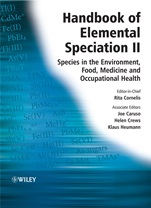
Handbook of Elemental Speciation II: Species in the Environment, Food, Medicine and Occupational Health
ISBN 9780470855980
Autor: Rita Cornelis, Joseph A. Caruso, Helen Crews, Klaus G. Heumann
Wydawca: Wiley
Dostępność: 3-6 tygodni
Cena: 2 085,30 zł
Przed złożeniem zamówienia prosimy o kontakt mailowy celem potwierdzenia ceny.
ISBN13: |
9780470855980 |
ISBN10: |
0470855983 |
Autor: |
Rita Cornelis, Joseph A. Caruso, Helen Crews, Klaus G. Heumann |
Oprawa: |
Hardback |
Rok Wydania: |
2005-04-25 |
Ilość stron: |
788 |
Wymiary: |
254x197 |
Tematy: |
PN |
This Handbook explores elemental species in both living and non–living systems. It is of interest to a wide range of scientists, including analytical chemists, biochemists, toxicologists, clinicians and environmental scientists in academia, government laboratories and industry. Those involved in regulatory or legislative activities will find it to be a source of relevant information. It is also intended to be a comprehensive database for students in these disciplines.
The analytical methodology has been the subject of Volume 1 of this Handbook. This second volume covers in great detail the various species of 21 elements, of the actinides and of four groups of compounds (halogens, volatile metal compounds of biogenic origin, metal complexes of humic substances and metal complexes of proteins) within four key areas: environment, food, occupation and clinical health. Chapters on modelling of trace element species in the environment, food, health and disease illustrate the power of modern chemometric techniques in describing the behaviour of elemental species in complicated systems.
Elemental speciation is a relatively young discipline and as a consequence, the fundamental knowledge is sometimes fragmentary and incomplete. Thus, each contribution is a stand–alone reference, written by a recognized expert in the field, aiming to be as informative as possible.
The information contained in the two volumes of this Handbook provides a state–of–the–art introduction to this young and exciting scientific domain. The editors hope it will constitute a stimulating basis for further research.
Spis treści:
List of contributors.
Preface.
Acknowledgements.
1. Introduction.
2. Elements by Element Review .
2.1. Introduction.
2.2. Speciation of Aluminium.
2.3 Speciation of Antimony.
2.4 Speciation of Arsenic.
2.5. Speciation of Cadmium.
2.6. Speciation of Chromium.
2.7. Speciation of Cobalt.
2.8. Speciation of Copper.
2.9. Speciation of Iron.
2.10. Speciation of Lead.
2.11. Speciation of Manganese.
2.12. Speciation of Mercury .
2.13. Speciation of Molybdenum.
2.14. Speciation of Nickel.
2.15. Speciation of Platinum, Gold and Rhodium.
2.16. Speciation of Selenium .
2.17. Speciation of Silicon .
2.18. Speciation of Sulfur.
2.19. Speciation of Thallium.
2.20. Speciation of Tin.
2.21. Speciation of Vanadium.
2.22. Speciation of Zinc.
2.23. Speciation of Actinides.
2.24. Speciation of Halogens.
2.25. Volatile Metal Compounds of Biogenic Origin.
2.26. Metal Complexes of Humic Substances.
2.27. Metal Complexes of Proteins.
3. Modeling of Elemental Species.
3.1. Modeling of Trace Elements Partitioning in the Environment.
3.2 Modeling in Nutrition.
3.3. Modeling of Trace Elements in Health and Disease.
4. Elemental Speciation and Present Day Legislation.
Index.
Okładka tylna:
This Handbook explores elemental species in both living and non–living systems. It is of interest to a wide range of scientists, including analytical chemists, biochemists, toxicologists, clinicians and environmental scientists in academia, government laboratories and industry. Those involved in regulatory or legislative activities will find it to be a source of relevant information. It is also intended to be a comprehensive database for students in these disciplines.
The analytical methodology has been the subject of Volume 1 of this Handbook. This second volume covers in great detail the various species of 21 elements, of the actinides and of four groups of compounds (halogens, volatile metal compounds of biogenic origin, metal complexes of humic substances and metal complexes of proteins) within four key areas: environment, food, occupation and clinical health. Chapters on modelling of trace element species in the environment, food, health and disease illustrate the power of
modern chemometric techniques in describing the behaviour of elemental species in complicated systems.
Elemental speciation is a relatively young discipline and as a consequence, the fundamental knowledge is sometimes fragmentary and incomplete. Thus, each contribution is a stand–alone reference, written by a recognized expert in the field, aiming to be as informative as possible.
The information contained in the two volumes of this Handbook provides a state–of–the–art introduction to this young and exciting scientific domain. The editors hope it will constitute a stimulating basis for further research.
Koszyk
Książek w koszyku: 0 szt.
Wartość zakupów: 0,00 zł
Informacje


Kontakt
Gambit
Centrum Oprogramowania
i Szkoleń Sp. z o.o.
Al. Pokoju 29b/22-24
31-564 Kraków
Siedziba Księgarni
ul. Kordylewskiego 1
31-542 Kraków
+48 12 410 5991
+48 12 410 5987
+48 12 410 5989
Subskrypcje
Administratorem danych osobowych jest firma Gambit COiS Sp. z o.o. Na podany adres będzie wysyłany wyłącznie biuletyn informacyjny.
Autoryzacja płatności

Informacje na temat autoryzacji płatności poprzez PayU.

© Copyright 2012: GAMBIT COiS Sp. z o.o. Wszelkie prawa zastrzeżone.
Projekt i wykonanie: Alchemia Studio Reklamy