


Wydawcy
Katalog tematyczny
- Archeologia (109)
- Ekonomia, finanse, business (13704)
- Filozofia (1445)
- Historia (3040)
- Języki i językoznawstwo (2356)
- Lifestyle, hobby i rozrywka (475)
- Medycyna (9704)
- Nauki humanistyczne (4)
- Nauki o Ziemi i środowisku (2638)
- Nauki ścisłe (20412)
- Nauki społeczne (8486)
- Nauki techniczne (13450)
- Prawo (1696)
- Publikacje informacyjne i interdyscyplinarne (1288)
- Religia i wierzenia (917)
- Technika komputerowa (4067)
- Zdrowie, relacje międzyludzkie i rozwój osobisty (657)





Informacje szczegółowe o książce
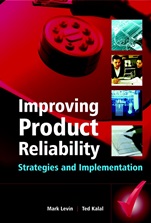
Improving Product Reliability: Strategies and Implementation
ISBN 9780470854495
Autor: Mark A. Levin, Ted T. Kalal
Wydawca: Wiley
Dostępność: 3-6 tygodni
Cena: 718,20 zł
Przed złożeniem zamówienia prosimy o kontakt mailowy celem potwierdzenia ceny.
ISBN13: |
9780470854495 |
ISBN10: |
0470854499 |
Autor: |
Mark A. Levin, Ted T. Kalal |
Oprawa: |
Hardback |
Rok Wydania: |
2003-03-21 |
Ilość stron: |
342 |
Wymiary: |
253x179 |
Tematy: |
KJ |
If product reliability is falling short of customer expectations and warranty costs are out of control then changes are needed to the reliability process. Practical and easy to understand, Improving Product Reliability offers invaluable advice to designers, engineers, managers and CEOs who wish to develop better products but are unsure of what to do and how to go about it. This book presents a time–tested reliability process which has been refined over the years and can be readily transferable to any organization.
Incorporating the whole product development and product life cycle process, this book:explains why product reliability is a requirement for competing in the 21st century
covers reliability concepts and how to develop a practical reliability toolbox for your business
addresses why businesses are unsuccessful at improving product reliability and a strategy for implementation based on company size
describes a three step process for successful implementation of a reliability program
provides guidance in selecting and hiring: consultants, reliability engineers and establishing a reliability lab
presents tutorials to promote a deeper understanding of the more complex conceptsThis book can be understood and applied by designers, engineers, business managers, consultants and product development teams who must develop reliable products. Anyone involved in this work will appreciate the time–saving, cost–effective, and result oriented techniques described.
Spis treści:
About the Authors.
Series Foreword.
Foreword.
Preface.
Gaining Competitive Advantage.
List of Acronyms.
Acknowledgements.
PART I: Reliability – It’s a Matter of Survival.
1 Competing in the Twenty–first Century.
1.1 Gaining competitive advantage.
1.2 Competing in the next decade – winners will compete on reliability.
1.3 Concurrent engineering.
1.4 Red
ucing the number of Engineering Change Orders (ECOs) at product release.
1.5 Time–to–market advantage.
1.6 Accelerating product development.
1.7 Identifying and managing risks.
1.8 ICM, a process to mitigate risk.
Reference.
2 Barriers to Implementing Reliability.
2.1 Lack of understanding.
2.2 Internal barriers.
2.3 Implementing change and change agents.
2.4 Building credibility.
2.5 Perceived external barriers.
2.6 It takes time to gain acceptance.
2.7 External barrier.
3 Understanding Why Products Fail.
3.1 Why things fail.
3.2 Parts have improved, everyone can build quality products.
3.3 Reliability – a twenty–first century paradigm shift.
References.
4 Alternative Approaches to Implement Reliability.
4.1 Hiring consultants.
4.2 Outsourcing reliability.
PART II: Unraveling the Mystery.
5 The Product Life Cycle.
5.1 Six phases of the product life cycle.
5.1.1 Mitigate risk.
5.2 The ICM process for a small company.
5.2.1 DFx – Design For Manufacturability (DFM), Design For Test (DFT), Design For Reliability (DFR), and Design For Serviceability (DFS).
5.2.2 Warranty.
References.
6 Reliability Concepts.
6.1 The bathtub curve.
6.2 Mean Time Between Failure.
6.2.1 Mean time between repair.
6.2.2 Mean Time Between Maintenances (MTBM).
6.2.3 Mean Time To Failure (MTTF).
6.2.4 Mean Time To Repair (MTTR).
6.2.5 Mean Time To Restore System (MTTRS).
6.3 Warranty costs.
6.4 Availability.
6.4.1 On–site manufacturer service personnel.
6.4.2 Customer trained service personnel.
6.4.3 Manufacturer training for customer service personnel.
6.4.4 Easy–to–Use service manuals.
6.4.5 Rapid diagnosis capability.
6.4.6 Repair and spare parts availability.
6.4.7 Rapid response to customer requests for service.
6.4.8 Failure data tracking.
6.5 Reliability growth.
6.6 Reliability demonstration test
ing.
References.
7 The Reliability Toolbox.
7.1 The FMEA process.
7.1.1 The functional block diagram.
7.1.2 The fault tree analysis.
7.1.3 Failure modes and effects analysis spreadsheet.
7.1.4 Preparing for the FMEA.
7.1.5 Barriers to the FMEA process.
7.1.6 FMEAs ground rules.
7.2 The HALT process.
7.2.1 Types of stresses applied in HALT.
7.2.2 The theory behind the HALT process.
7.2.3 HALT testing.
7.3 Highly accelerated stress screening (HASS).
7.3.1 Proof Of Screen (POS).
7.3.2 Burn–in.
7.3.3 Environmental Stress Screening (ESS).
7.3.4 Economic impact of HASS.
7.3.5 The HASA process.
7.4 Summary of HALT, HASS, HASA and POF benefits.
7.5 HALT and HASS test chambers.
7.6 SPC tool.
7.7 FIFO tool.
7.8 Component derating – a first line of defense in product reliability.
References.
8 Why Reliability Efforts Fail.
8.1 Lack of commitment to the reliability process.
8.2 Inability to embrace and mitigate technologies risk issues.
8.3 Choosing the wrong people for the job.
8.4 Inadequate funding.
8.5 Mil–Std 217/Bellcore – What they really do and why they don’t work.
8.6 Finding but not fixing problems.
8.7 Nondynamic testing.
8.8 Vibration testing too difficult to implement.
8.9 Late software.
8.10 Supplier reliability.
References.
9 Supplier Management.
9.1 Purchasing interface.
9.2 Identifying your critical suppliers.
9.3 Develop a thorough supplier audit process.
9.4 Develop rapid nonconformance feedback.
9.5 Develop a Materials Review Board (MRB).
PART III: Three Steps to Successful Implementation.
10 Establishing a Reliability Lab.
10.1 Staffing for reliability.
10.2 The reliability lab.
10.3 Facility requirements.
10.4 Liquid nitrogen requirements.
10.5 Air compressors requirements.
10.6 Selecting a reliability lab location.
10.7 Selecting a HALT test chamber.
10.7.1 Chamber siz
e.
10.7.2 Machine overall height.
10.7.3 Power required and consumption.
10.7.4 Acceptable operational noise levels.
10.7.5 Door swing.
10.7.6 Ease of operation.
10.7.7 Profile creation, editing, and storage.
10.7.8 Temperature rates of change.
10.7.9 Built–in test instrumentation.
10.7.10 Safety.
10.7.11 Time from order to delivery.
10.7.12 Warranty.
10.7.13 Technical/Service support.
10.7.14 Compressed air requirements.
10.7.15 Lighting.
10.7.16 Customization.
11 Hiring and Staffing the Right People.
11.1 Staffing for reliability.
11.2 Choosing the wrong people for the job.
12 Implementing the Reliability Process.
12.1 Reliability is everyone’s job.
12.2 Formalizing the reliability process.
12.3 Implementing the reliability process.
12.4 Rolling out the reliability process.
12.5 Developing a reliability culture.
12.6 Setting reliability goals.
12.7 Training.
12.8 Product life cycle defined.
12.9 Concept phase.
12.10 Design phase.
12.11 Production phase.
12.12 End–of–life phase.
12.13 Proactive and reactive reliability activities.
References.
PART IV: Reliability Process for Product Development.
13 Product Concept Phase.
13.1 Establish the reliability organization.
13.2 Define the reliability process.
13.3 Define the system reliability requirement.
13.4 Capture and apply lessons learned.
13.5 Risk mitigation.
13.5.1 Filling out the risk mitigation form.
14 Design Concept Phase.
14.1 Setting reliability requirements and budgets.
14.2 Define reliability design guidelines.
14.3 Risk mitigation in the design concept phase.
14.3.1 Identifying risk issues.
14.3.2 Reflecting back (capturing internal lessons learned).
14.3.3 Looking forward (capturing new risk issues).
14.4 Reliability capital budget and activity scheduling.
14.5 Risk mitigation meeting.
14.6 Reflection.
15 Product Design Phase.
15.1 Product design phase.
15.2 Reliability estimates.
15.3 Implementing risk mitigation plans.
15.3.1 Mitigating risk issues captured reflecting back.
15.3.2 Mitigating risk issues captured looking forward.
15.4 Design For Reliability Guidelines (DFR).
15.4.1 Derating guidelines.
15.5 Design FMEA.
15.6 Installing a failure reporting analysis and corrective action system.
15.7 HALT planning.
15.8 HALT test development.
15.9 Risk mitigation meeting.
References.
16 Design Validation Phase.
16.1 Design validation.
16.2 Using HALT to precipitate failures.
16.2.1 Starting the HALT Test.
16.2.2 Room ambient test.
16.2.3 Tickle vibration test.
16.2.4 Temperature step stress test.
16.2.5 Rapid thermal cycling stress test.
16.2.6 Vibration step stress test.
16.2.7 Combinational temperature and vibration test.
16.2.8 Combinational search pattern test.
16.2.9 Additional stress tests.
16.2.10 HALT validation test.
16.3 Proof Of Screen (POS).
16.4 Operate FRACAS.
16.5 Design FMEA.
16.6 Closure of risk issues.
References.
17 Production Phase.
17.1 Accelerating design maturity.
17.1.1 Product improvement tools.
17.2 Reliability growth.
17.3 Design and process FMEA.
17.3.1 Quality control tools.
References.
18 End of Life Phase.
18.1 Product termination.
18.2 Project assessment.
Reference.
19 Field Service.
19.1 Design for ease of access.
19.2 Identify high replacement assemblies (FRUS).
19.3 Wearout replacement.
19.4 Preemptive servicing.
19.5 Servicing tools.
19.6 Service loops.
19.7 Availability or repair time turnaround.
19.8 Avoid system failure through redundancy.
19.9 Random versus wearout failures.
Reference.
Appendix A.
Appendix B.
Index.
Okładka tylna:
If product reliability is falling short of customer expectations and warranty costs are out of control then changes are needed to the
reliability process. Practical and easy to understand, Improving Product Reliability offers invaluable advice to designers, engineers, managers and CEOs who wish to develop better products but are unsure of what to do and how to go about it. This book presents a time–tested reliability process which has been refined over the years and can be readily transferable to any organization.
Incorporating the whole product development and product life cycle process, this book:explains why product reliability is a requirement for competing in the 21st century
covers reliability concepts and how to develop a practical reliability toolbox for your business
addresses why businesses are unsuccessful at improving product reliability and a strategy for implementation based on company size
describes a three step process for successful implementation of a reliability program
provides guidance in selecting and hiring: consultants, reliability engineers and establishing a reliability lab
presents tutorials to promote a deeper understanding of the more complex conceptsThis book can be understood and applied by designers, engineers, business managers, consultants and product development teams who must develop reliable products. Anyone involved in this work will appreciate the time–saving, cost–effective, and result oriented techniques described.
Koszyk
Książek w koszyku: 0 szt.
Wartość zakupów: 0,00 zł
Informacje


Kontakt
Gambit
Centrum Oprogramowania
i Szkoleń Sp. z o.o.
Al. Pokoju 29b/22-24
31-564 Kraków
Siedziba Księgarni
ul. Kordylewskiego 1
31-542 Kraków
+48 12 410 5991
+48 12 410 5987
+48 12 410 5989
Subskrypcje
Administratorem danych osobowych jest firma Gambit COiS Sp. z o.o. Na podany adres będzie wysyłany wyłącznie biuletyn informacyjny.
Autoryzacja płatności

Informacje na temat autoryzacji płatności poprzez PayU.

© Copyright 2012: GAMBIT COiS Sp. z o.o. Wszelkie prawa zastrzeżone.
Projekt i wykonanie: Alchemia Studio Reklamy