


Wydawcy
Katalog tematyczny
- Archeologia (109)
- Ekonomia, finanse, business (13704)
- Filozofia (1445)
- Historia (3040)
- Języki i językoznawstwo (2356)
- Lifestyle, hobby i rozrywka (475)
- Medycyna (9704)
- Nauki humanistyczne (4)
- Nauki o Ziemi i środowisku (2638)
- Nauki ścisłe (20412)
- Nauki społeczne (8486)
- Nauki techniczne (13450)
- Prawo (1696)
- Publikacje informacyjne i interdyscyplinarne (1288)
- Religia i wierzenia (917)
- Technika komputerowa (4067)
- Zdrowie, relacje międzyludzkie i rozwój osobisty (657)





Informacje szczegółowe o książce
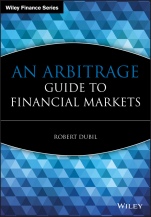
An Arbitrage Guide to Financial Markets
ISBN 9780470853320
Autor: Robert Dubil
Wydawca: Wiley
Dostępność: 3-6 tygodni
Cena: 449,40 zł
Przed złożeniem zamówienia prosimy o kontakt mailowy celem potwierdzenia ceny.
ISBN13: |
9780470853320 |
ISBN10: |
0470853328 |
Autor: |
Robert Dubil |
Oprawa: |
Hardback |
Rok Wydania: |
2004-08-20 |
Ilość stron: |
344 |
Wymiary: |
254x175 |
Tematy: |
KF |
An Arbitrage Guide to Financial Markets is the first book to explicitly show the linkages of markets for equities, currencies, fixed income and commodities. Using a unique structural approach, it dissects all markets the same way: into spot, forward and contingent dimensions, bringing out the simplicity and the commonalities of all markets. The book shuns stochastic calculus in favor of cash flow details of arbitrage trades. All math is simple, but there is lots of it. The book reflects the relative value mentality of an institutional trader seeking profit from misalignments of various market segments.
The book is aimed at entrants into investment banking and dealing businesses, existing personnel in non–trading jobs, and people outside of the financial services industry trying to gain a view into what drives dealers in today’s highly integrated marketplace. A committed reader is guaranteed to leave with a deep understanding of all current issues.
"This is an excellent introduction to the financial markets by an author with a strong academic approach and practical insights from trading experience. At a time when the proliferation of financial instruments and the increased use of sophisticated mathematics in their analysis, makes an introduction to financial markets intimidating to most, this book is very useful. It provides an insight into the core concepts across markets and uses mathematics at an accessible level. It equips readers to understand the fundamentals of markets, valuation and trading. I would highly recommend it to anyone looking to understand the essentials of successfully trading, structuring or using the entire range of financial instruments available today."
—Varun Gosain, Principal, Constellation Capital Management, New York
"Robert Dubil, drawing from his extensive prior trading experience, has made a significant contribution by writing an easy to understand book about the complex world of today’s f
inancial markets, using basic mathematical concepts. The book is filled with insights and real life examples about how traders approach the market and is required reading for anyone with an interest in understanding markets or a career in trading."
—George Handjinicolaou, Partner, Etolian Capital, New York
"This book provides an excellent guide to the current state of the financial markets. It combines academic rigour with the author’s practical experience of the financial sector, giving both students and practitioners an insight into the arbitrage pricing mechanism."
—Zenji Nakamura, Managing Director, Europe Fixed Income Division, Nomura International plc, London
Spis treści:
1. The Purpose and Structure of Financial Markets.
1.1 Overview.
1.2 Risk sharing.
1.3 The structure of financial markets.
1.4 Arbitrage: Pure vs. relative value.
1.5 Financial institutions: Asset transformers and broker–dealers.
1.6 Primary and secondary markets.
1.7 Market players: Hedgers vs. speculators.
1.8 Preview of the book.
PART ONE: SPOT.
2. Financial Math I—Spot.
2.1 Interest–rate basics.
2.2 Zero, coupon and amortizing rates.
2.3 The term structure of interest rates.
2.4 Interest–rate risk.
2.5 Equity markets math.
2.6 Currency markets.
3. Fixed Income Securities.
3.1 Money markets.
3.2 Capital markets: Bonds.
3.3 Interest–rate swaps.
3.4 Mortgage securities.
3.5 Asset–backed securities.
4. Equities, Currencies, and Commodities.
4.1 Equity markets.
4.2 Currency markets.
4.3 Commodity markets.
5. Spot Relative Value Trades.
5.1 Fixed–income strategies.
5.2 Equity portfolio strategies.
5.3 Spot currency arbitrage.
5.4 Commodity basis trades.
PART TWO: FORWARDS.
6. Financial Math II—Futures and Forwards.
6.1 Commodity
futures mechanics.
6.2 Interest–rate futures and forwards.
6.3 Stock index futures.
6.4 Currency forwards and futures.
6.5 Convenience assets—backwardation and contango.
6.6 Commodity futures.
6.7 Spot–Forward arbitrage in interest rates.
6.8 Constructing the zero curve from forwards.
6.9 Recovering forwards from the yield curve.
6.10 Energy forwards and futures.
7. Spot–Forward Arbitrage.
7.1 Currency arbitrage.
7.2 Stock index arbitrage and program trading.
7.3 Bond futures arbitrage.
7.4 Spot–Forward arbitrage in fixed–income markets.
7.5 Dynamic hedging with a Euro strip.
7.6 Dynamic duration hedge.
8. Swap Markets.
8.1 Swap–driven finance.
8.2 The anatomy of swaps as packages of forwards.
8.3 The pricing and hedging of swaps.
8.4 Swap spread risk.
8.5 Structured finance.
8.6 Equity swaps.
8.7 Commodity and other swaps.
8.8 Swap market statistics.
PART THREE: OPTIONS.
9. Financial Math III—Options.
9.1 Call and put payoffs at expiry.
9.2 Composite payoffs at expiry.
9.3 Option values prior to expiry.
9.4 Options, forwards and risk–sharing.
9.5 Currency options.
9.6 Options on non–price variables.
9.7 Binomial options pricing.
9.8 Residual risk of options: Volatility.
9.9 Interest–rate options, caps, and floors.
9.10 Swaptions.
9.11 Exotic options.
10. Option Arbitrage.
10.1 Cash–and–carry static arbitrage.
10.2 Running an option book: Volatility arbitrage.
10.3 Portfolios of options on different underlyings.
10.4 Options spanning asset classes.
10.5 Option–adjusted spread (OAS).
10.6 Insurance.
APPENDIX: CREDIT RISK.
11 Default Risk (Financial Math IV) and Credit Derivatives.
11.1 A constant default probability model.
11.2 A credit migration model.
11.3 Alternative models.
11.4 Credit ex
posure calculations for derivatives.
11.5 Credit derivatives.
11.6 Implicit credit arbitrage plays.
11.7 Corporate bond trading.
Index.
Nota biograficzna:
ROBERT DUBIL is a former Director of Risk Analytics in the Corporate Risk Management Group at Merrill Lynch (1999–2001), head of Exotic Fixed Income Derivatives Trading at UBS (1996–99) and Chase Manhattan (1994–95), an equity and debt derivatives trader at Merrill Lynch (1992–94), and a quantitative researcher at Nomura (1990–92) and JP Morgan (1989–90). He worked in New York, London, Tokyo, Hong Kong and Sydney. He holds a PhD and MBA from University of Connecticut, and an MA from Wharton. His recent articles covering liquidity risks and banking regulation can be found in the Journal of Applied Finance, Financial Services Review, Journal of Entrepreneurial Finance and Business Ventures, Journal of Wealth Management and the Journal of Investing. He is currently Associate Professor of Finance at San Jose State University in California.
Okładka tylna:
An Arbitrage Guide to Financial Markets is the first book to explicitly show the linkages of markets for equities, currencies, fixed income and commodities. Using a unique structural approach, it dissects all markets the same way: into spot, forward and contingent dimensions, bringing out the simplicity and the commonalities of all markets. The book shuns stochastic calculus in favor of cash flow details of arbitrage trades. All math is simple, but there is lots of it. The book reflects the relative value mentality of an institutional trader seeking profit from misalignments of various market segments.
The book is aimed at entrants into investment banking and dealing businesses, existing personnel in non–trading jobs, and people outside of the financial services industry trying to gain a view into what drives dealers in today’s
Koszyk
Książek w koszyku: 0 szt.
Wartość zakupów: 0,00 zł
Informacje


Kontakt
Gambit
Centrum Oprogramowania
i Szkoleń Sp. z o.o.
Al. Pokoju 29b/22-24
31-564 Kraków
Siedziba Księgarni
ul. Kordylewskiego 1
31-542 Kraków
+48 12 410 5991
+48 12 410 5987
+48 12 410 5989
Subskrypcje
Administratorem danych osobowych jest firma Gambit COiS Sp. z o.o. Na podany adres będzie wysyłany wyłącznie biuletyn informacyjny.
Autoryzacja płatności

Informacje na temat autoryzacji płatności poprzez PayU.

© Copyright 2012: GAMBIT COiS Sp. z o.o. Wszelkie prawa zastrzeżone.
Projekt i wykonanie: Alchemia Studio Reklamy