


Wydawcy
Katalog tematyczny
- Archeologia (109)
- Ekonomia, finanse, business (13704)
- Filozofia (1445)
- Historia (3040)
- Języki i językoznawstwo (2356)
- Lifestyle, hobby i rozrywka (475)
- Medycyna (9704)
- Nauki humanistyczne (4)
- Nauki o Ziemi i środowisku (2638)
- Nauki ścisłe (20412)
- Nauki społeczne (8486)
- Nauki techniczne (13450)
- Prawo (1696)
- Publikacje informacyjne i interdyscyplinarne (1288)
- Religia i wierzenia (917)
- Technika komputerowa (4067)
- Zdrowie, relacje międzyludzkie i rozwój osobisty (657)





Informacje szczegółowe o książce
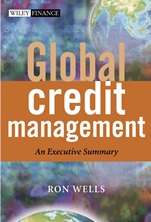
Global Credit Management: An Executive Summary
ISBN 9780470851111
Autor: Ron Wells
Wydawca: Wiley
Dostępność: 3-6 tygodni
Cena: 557,55 zł
Przed złożeniem zamówienia prosimy o kontakt mailowy celem potwierdzenia ceny.
ISBN13: |
9780470851111 |
ISBN10: |
0470851112 |
Autor: |
Ron Wells |
Oprawa: |
Hardback |
Rok Wydania: |
2003-12-22 |
Ilość stron: |
178 |
Wymiary: |
239x168 |
Tematy: |
KF |
In many companies credit management is a passive and reactive discipline. This results in significant receivables assets weighing heavily on balance sheets, dragging down cash flow and inhibiting growth. The power of credit is shackled, muted.
Release the power and passion of credit management in your company. Proactively squeeze every morsel of value out of receivables and simultaneously, protect your company from the bad debt danger that lurks in the value chain.
Harness the power of credit to effectively manage your company′s receivables. Immediately make a positive difference in your company, and use this book as a resource for years to come.
Reading Global Credit Management will help youwake the sleeping giant on your balance sheetmake receivables earn their keep, just like every other asset.wrest control of credit from bureaucratic processes, grab it by the throat and wring out every drop of value.And last but by no means least, boost the value of your company.
"... one of the most intelligent and refreshing exposés of the present and future role of international credit management that I have read in a long time. Global Credit Management represents a very welcome and innovative addition to the small library of quality publications available on international credit and risk management." –Tim Lane
Spis treści:
Preface.
PART I: CREDIT POWER AND BUSINESS DEVELOPMENT: THE STRATEGIC OVERVIEW.
1. Why Grant Credit?
1.1 Introduction.
1.2 Product offer enhancement credit strategy.
1.3 Comparative cost of money credit strategy.
1.4 Credit strategy for administrative efficiency.
1.5 Credit strategy to build trust.
1.6 Credit strategy for business development.
1.7 Conclusion.
2. Customer Risk.
2.1 It’s people! People make the difference!
2.2 Due diligence.
2.2.1 Credit fraud.
2.3 Customer payment risk.
2.4 Customer risk analys
is tools.
2.5 Analysis of financial information.
2.5.1 However reported, operating cash flow can be misleading . . . .
2.6 Analysis of information about the future.
2.7 Credit scoring.
2.8 Trade Credit Risk ScoreCard.
2.9 Customer limits.
2.10 Authority to approve credit limits.
2.11 Powerful collections.
2.11.1 Specialized trade debt collectors and debt trader s.
3. Country Risk.
3.1 The mismanagement of Oolretaw.
3.2 Introduction.
3.2.1 Transfer or sovereign risk and local factors risk.
3.3 Country risk management.
3.4 Country risk rating agencies.
3.5 Unique–company–product–or–service country factors.
3.6 A practical country risk management process.
4. Bank Risk.
4.1 Introduction.
4.2 Well, we have the bank’s commitment but are we safe?
4.3 Understanding bank risk.
4.3.1 International bank supervision.
4.3.2 Basel II.
4.4 Bank risk analysis and bank exposure limit decisions.
4.5 Two practical bank risk management processes.
5. Risk Mitigation Power.
5.1 Introduction.
5.2 Cash in advance.
5.3 Credit insurance.
5.3.1 Export credit agency cover.
5.3.2 Pre–shipment or pre–delivery risk cover.
5.3.3 Country risk.
5.3.4 Catastrophe cover.
5.3.5 Difficult markers.
5.3.6 Post–loss insurance.
5.4 Letters of credit UCP 500 and eUCP.
5.4.1 Warning! Warning!
5.4.2 LC myths and legends.
5.4.3 LC reality.
5.4.4 LCs may be past their ‘‘use–by–date’’ but . . . .
5.4.5 Alternatives for high–volume, low–value transactions.
5.4.6 Alternatives for low–volume, high–value transactions.
5.4.7 Supplement to UCP 500 for electronic presentation (eUCP) – version 1.0.
5.4.8 Warning! Buyers beware.
5.5 Standby letters of credit subject to ISP98.
5.6 Bank guarantees and Uniform Rules for Demand Guarantees (URDG).
5.6.1 U
RDG.
5.7 Parent company guarantees.
5.7.1 Transactional parent or sibling company guarantees.
5.7.2 Letters of comfort.
5.8 Payment undertakings and risk–sharing agreements.
5.8.1 Historical development of payment undertakings.
5.8.2 Payment undertakings and risk sharing in practice.
5.9 Documentary collections.
5.9.1 Documents against payment (DP).
5.9.2 Documents against acceptance (DA).
5.9.3 Documents against bank guaranteed acceptance (DA∗).
5.10 Credit derivatives.
5.10.1 Credit default swaps (CDSs).
5.11 Netting agreements.
5.12 Collateral security.
5.12.1 Security interest.
5.12.2 Outright transfer.
5.13 Bills of exchange and promissory notes.
5.14 Discounting receivables and forfeiting.
5.15 Securitization.
5.16 Other ideas and conclusion.
5.16.1 Bonded (customs supervised) storage.
5.16.2 Retention of ownership.
5.16.3 Selling direct to better buyers.
5.16.4 Countertrade.
PART II: GLOBAL CREDIT POWER IN THE TWENTY–FIRST CENTURY: THE NEW SOURCES OF POWER.
6. Receivable Asset Management – Portfolio Power.
6.1 Background.
6.1.1 Cost of capital.
6.2 What does all of this mean to me, Boss?
6.3 Managing the portfolio dynamic of transactions.
6.3.1 A scenario for illustration purposes.
6.4 Managing correlation risk.
6.5 Managing concentration risk.
6.5.1 Payment risk swaps.
6.5.2 Bilateral swap contracts.
7. Electronic Commerce – Internet Power.
7.1 Introduction.
7.2 Automation of the order–to–cash process.
7.2.1 An example sales transaction with LC and STP.
7.3 New credit risk mitigation techniques.
7.3.1 TradeCard prerequisites.
7.3.2 The TradeCard process.
7.4 Credit analysis and decision.
7.4.1 Authentication.
7.4.2 Pre–qualification.
7.4.3 Instant decisions.
7.5 Finding credit risk cover efficiently.
7.5.1 Trade financing and/or payment risk auction sites
.
8. Outsourcing – Alliance Power.
8.1 Introduction.
8.2 Implications for trade credit management.
8.3 Outsourcing order–to–cash.
8.4 Adding value.
PART III: POWER BLUEPRINTS – PRACTICAL TOOLS: THE HOW.
9. Measuring – Switch on Credit Power.
9.1 The reward system is the lever.
9.2 Connecting the lever to credit power.
9.2.1 Match competitors/provide competitive edge/expand the market.
9.2.2 Cost of capital.
9.2.3 Receivables/cash flow/bad debts.
9.2.4 Sales–weighted DSO – the alternative that works.
10. A Practical Country Risk Management Process.
10.1 Preamble.
10.2 The 11–step process.
10.3 The country risk limit decision process explained.
10.3.1 Shareholders’ equity.
10.3.2 Risk categories and equity allocation.
10.3.3 Country risk rating agency.
10.3.4 Link risk ratings with risk categories.
10.3.5 Choose a list of countries.
10.3.6 Calculate the initial country limit.
10.3.7 Evaluate company–specific elements.
10.3.8 Adjust the initial limit.
10.3.9 Overall review.
10.3.10 Monitor and manage exposure.
10.3.11 Review and update limits.
11. Two Practical Bank Risk Management Processes.
11.1 Preamble.
11.2 The five–step process.
11.3 The five–step bank limit decision process explained.
11.3.1 Determine the acceptability of the bank.
11.3.2 Bank’s own funds.
11.3.3 Decide a factor.
11.3.4 Monitor and manage exposure.
11.3.5 Review and update limits.
11.4 A Bank Credit ScoreCard – balanced analysis.
11.5 A bank exposure limit model and internal rating scheme.
11.5.1 Rules of the bank limit model.
11.5.2 Internal bank credit rating conversion chart.
12. Promissory Notes and Demand Guarantees.
12.1 Introduction.
12.2 Promissory notes (PN).
12.3 Demand guarantees (DG).
12.4 Alternative one.
12.5 Alternative two.
Koszyk
Książek w koszyku: 0 szt.
Wartość zakupów: 0,00 zł
Informacje


Kontakt
Gambit
Centrum Oprogramowania
i Szkoleń Sp. z o.o.
Al. Pokoju 29b/22-24
31-564 Kraków
Siedziba Księgarni
ul. Kordylewskiego 1
31-542 Kraków
+48 12 410 5991
+48 12 410 5987
+48 12 410 5989
Subskrypcje
Administratorem danych osobowych jest firma Gambit COiS Sp. z o.o. Na podany adres będzie wysyłany wyłącznie biuletyn informacyjny.
Autoryzacja płatności

Informacje na temat autoryzacji płatności poprzez PayU.

© Copyright 2012: GAMBIT COiS Sp. z o.o. Wszelkie prawa zastrzeżone.
Projekt i wykonanie: Alchemia Studio Reklamy