


Wydawcy
Katalog tematyczny
- Archeologia (109)
- Ekonomia, finanse, business (13704)
- Filozofia (1445)
- Historia (3040)
- Języki i językoznawstwo (2356)
- Lifestyle, hobby i rozrywka (475)
- Medycyna (9704)
- Nauki humanistyczne (4)
- Nauki o Ziemi i środowisku (2638)
- Nauki ścisłe (20412)
- Nauki społeczne (8486)
- Edukacja (229)
- Kryminologia, opieka spełeczna (284)
- Obronność (10)
- Polityka (1389)
- Psychologia (777)
- Socjologia (410)
- Społeczeństwo i kultura (187)
- Nauki techniczne (13450)
- Prawo (1696)
- Publikacje informacyjne i interdyscyplinarne (1288)
- Religia i wierzenia (917)
- Technika komputerowa (4067)
- Zdrowie, relacje międzyludzkie i rozwój osobisty (657)





Informacje szczegółowe o książce
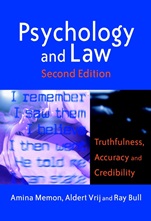
Psychology and Law: Truthfulness, Accuracy and Credibility
ISBN 9780470850602
Autor: Amina A Memon, Aldert Vrij, Ray Bull
Wydawca: Wiley
Dostępność: 3-6 tygodni
Cena: 848,40 zł
Przed złożeniem zamówienia prosimy o kontakt mailowy celem potwierdzenia ceny.
ISBN13: |
9780470850602 |
ISBN10: |
0470850604 |
Autor: |
Amina A Memon, Aldert Vrij, Ray Bull |
Oprawa: |
Hardback |
Rok Wydania: |
2003-06-20 |
Numer Wydania: |
2nd Edition |
Ilość stron: |
236 |
Wymiary: |
252x176 |
Tematy: |
JC |
How can psychology inform law and policing to help determine the accuracy of witnesses, victims and suspects?
This second edition of Psychology and Law: Truthfulness, Accuracy and Credibility is a substantially revised and exhaustive review of forensic research to do with credibility and the accuracy of evidence.
Throughout the book, Memon, Vrij and Bull use their renowned expertise to focus on the practical relevance of research in areas such as:criminal appearance stereotypingassessment of the reliability of eyewitness evidencenon–verbal characteristics and physiological correlates of deceptionimproving practice in interviewing witnesses, in particular children and vulnerable adultsthe use of and the study of juries in different countries
Aimed primarily at students and researchers in psychology, criminology and law, this book will also appeal to professionals in law and police work.
Spis treści:
ABOUT THE AUTHORS.
PREFACE.
Chapter 1: INTRODUCTION.
Chapter 2: TELLING AND DETECTING LIES.
Some Characteristics of Deception.
Nonverbal Behaviour and Deception.
Verbal Behaviour and Deception: Criteria–Based Content Analysis.
Physiological Reactions and Deception: The Polygraph.
Detecting Lies.
Difficulties and Pitfalls for Lie Detectors.
Summary and Conclusion.
Chapter 3: FACIAL APPEARANCE AND CRIMINALITY.
Matching Faces to Crimes.
Attractiveness.
Facial Appearance and Deceit.
Police Officers.
Children.
Facial Surgery for Criminals.
Frequency of Facial Abnormality.
Weak Methodologies.
Does Facial Appearance have an Effect in the Courtroom?
Attributions of Responsibility.
Group Decision Making.
Meta–analysis.
Real–Life Court Proceedings.
Summary and Conclusion.
Chapter 4: INTERVIEWING SUSPECTS.
How to Get the Suspect to Talk.
How to Let the Suspect Talk.
How Many Suspects Confess and Why?
Qua
lity of the Interview.
False Confessions.
Summary and Conclusion.
Chapter 5: INTERVIEWING WITNESSES.
The Effects of Long Delays.
Facial Identification.
Individual Differences.
Suggestibility.
Suggestion from Stereotypes.
Interviewing Vulnerable Witnesses.
Contributions from Cognitive Psychology.
Contributions from Social Psychology.
Interviewer Manner.
Summary and Conclusion.
Chapter 6: PSYCHOLOGICAL FACTORS IN EYEWITNESS TESTIMONY.
Estimator Variables and System Variables in Eyewitness Identification.
Estimator Variables.
System Variables.
Summary and Conclusion.
Chapter 7: FALSE MEMORIES.
Repression, Amnesia and Memory for Early Childhood Experiences.
Adults’ Memories for Traumatic and Non–traumatic Events.
Implanting False Memories.
Mechanisms Responsible for the Creation of False Memories and Beliefs.
Verifying the Accuracy of Recovered Memories in the Courtroom.
Summary and Conclusion.
Chapter 8: JURY DECISION MAKING.
The Jury System in Different Countries.
Empirical Research on Juries: Methodology.
Juror Characteristics.
How the Social Perceptions of Jurors May Influence Decisions.
Social Identity and Juror Decisions.
Prior Character Evidence.
Publicity Before and During the Trial.
The Story Model.
Evidence.
Aiding Juries.
Judge/Lawyer Characteristics.
Jury Deliberation.
Summary and Conclusion.
Chapter 9: THE ROLE OF EXPERT WITNESSES.
Admissibility of Expert Testimony.
Expert Testimony: Its Impact on Jury Decision Making.
Examples of Research on the Impact of Expert Testimony.
Ethical Issues.
The Hired Gun Effect.
Objectivity in Child Abuse Trials.
Summary and Conclusion.
REFERENCES.
INDEX.
Okładka tylna:
How can psychology inform law and policing to help determine the accuracy of witnesses, victims and suspects?
This second edition of Psychology and Law: Truthfulness, Accura
cy and Credibility is a substantially revised and exhaustive review of forensic research to do with credibility and the accuracy of evidence.
Throughout the book, Memon, Vrij and Bull use their renowned expertise to focus on the practical relevance of research in areas such as:criminal appearance stereotypingassessment of the reliability of eyewitness evidencenon–verbal characteristics and physiological correlates of deceptionimproving practice in interviewing witnesses, in particular children and vulnerable adultsthe use of and the study of juries in different countries
Aimed primarily at students and researchers in psychology, criminology and law, this book will also appeal to professionals in law and police work.
Koszyk
Książek w koszyku: 0 szt.
Wartość zakupów: 0,00 zł
Informacje


Kontakt
Gambit
Centrum Oprogramowania
i Szkoleń Sp. z o.o.
Al. Pokoju 29b/22-24
31-564 Kraków
Siedziba Księgarni
ul. Kordylewskiego 1
31-542 Kraków
+48 12 410 5991
+48 12 410 5987
+48 12 410 5989
Subskrypcje
Administratorem danych osobowych jest firma Gambit COiS Sp. z o.o. Na podany adres będzie wysyłany wyłącznie biuletyn informacyjny.
Autoryzacja płatności

Informacje na temat autoryzacji płatności poprzez PayU.

© Copyright 2012: GAMBIT COiS Sp. z o.o. Wszelkie prawa zastrzeżone.
Projekt i wykonanie: Alchemia Studio Reklamy