


Wydawcy
Katalog tematyczny
- Archeologia (109)
- Ekonomia, finanse, business (13704)
- Filozofia (1445)
- Historia (3040)
- Języki i językoznawstwo (2356)
- Lifestyle, hobby i rozrywka (475)
- Medycyna (9704)
- Nauki humanistyczne (4)
- Nauki o Ziemi i środowisku (2638)
- Nauki ścisłe (20412)
- Nauki społeczne (8486)
- Nauki techniczne (13450)
- Prawo (1696)
- Publikacje informacyjne i interdyscyplinarne (1288)
- Religia i wierzenia (917)
- Technika komputerowa (4067)
- Zdrowie, relacje międzyludzkie i rozwój osobisty (657)





Informacje szczegółowe o książce
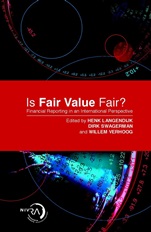
Is Fair Value Fair?: Financial Reporting from an International Perspective
ISBN 9780470850282
Autor: Henk Langendijk, Dirk Swagerman, Willem Verhoog
Wydawca: Wiley
Dostępność: 3-6 tygodni
Cena: 530,25 zł
Przed złożeniem zamówienia prosimy o kontakt mailowy celem potwierdzenia ceny.
ISBN13: |
9780470850282 |
ISBN10: |
0470850280 |
Autor: |
Henk Langendijk, Dirk Swagerman, Willem Verhoog |
Oprawa: |
Hardback |
Rok Wydania: |
2003-02-07 |
Ilość stron: |
384 |
Wymiary: |
237x153 |
Tematy: |
KF |
The failure of current mechanisms to either predict the collapse of various companies or curb corrupt practises has kept the subject of external reporting to the fore. Is Fair Value Fair? Financial Reporting in an International Perspective contains contributions from many highly–respected individuals involved in external reporting, regulation and standard setting. Their contributions discuss the future of regulation application of standards supervision audit Current trends are discussed, as are ways in which the current regulatory environment could be improved.
The new IFRS regulations coming into force in 2005 are set to radically change the various methods of financial reporting. Is Fair Value Fair? fully prepares readers for these changes and is an invaluable tool for corporate financiers and institutional investors with an interest in the regulatory environment.
About the Editors.
List of Abbreviations.
Introduction (W. Verhoog).
1. Is fair value fair: Expert opinions on financial reporting from an international perspective: brief impressions (W. Verhoog).
Part I The future of international accounting.
The model of Black and Scholes is like Newtonian physics before Einstein was born (R. Elliott).
Current US accounting issues (N. Strauss).
Part II Regulations and regulators.
We have to produce one set of unified high–quality global standards (D. Tweedie).
EFRAG: a new force to be reckoned with in the reporting field (J. Van Helleman).
Not partial, but full application of IAS (L. van der Tas).
IAS and the European Union (K. van Hulle).
IAS and legislation (J. Klaassen).
Shifting towards an Anglo–Saxon perspective on rules (E. Eeftink).
Uniform rules are important, but they must not block the view (J. den Hoed).
Part III Supervision and compliance.
Towards a new supervisory landscape (P. Koster).
The Enterprise and Companies Court as supervisory body (J. Willems), &l t;p> Globalisation is OK, as long as it takes account of Dutch culture (M. van Hoepen).
Enforcement of IAS is crucial for the realisation of a global standard for financial reporting (R. Vergoossen).
Part IV IAS and the users of financial statements.
Unambiguous rules, timely reports and close supervision (P. de Vries).
The supervisory director: striking the right balance (P. van den Hoek).
Insurers are lagging behind (L. Traas).
Double Dutch in financial reporting: highly flexible = extremely judgemental? (H. Langendijk).
The auditor is gratefully back on his pedestal (P. Lakeman).
Part V Fair Value Accounting.
The irrepressible advance of Fair Value Accounting (M. Hoogendoorn).
From profit smoothing to a true and fair presentation of profits at insurance companies and pension funds (A. Oosenbrug).
Introduction of Fair Value Accounting: little if any haste (K. Storm).
Fair Value Accounting will result in less transparency and more volatility in banks′ financial reporting (B. Bruggink).
Financial statements are a result of policy and not a factor informing policy (J. Groeneveld).
Financial reporting and the search for truth (D. Swagerman).
Warning signals about the application of fair value for financial instruments (T. O′Malley and P. Hofsté).
Part VI Capita selecta: external financial reporting and law.
IAS: right or wrong? (H. Beckman).
Part VII External financial reporting and new–economy companies.
The valuation of new–economy companies (A. de Bos).
Part VIII International financial reporting by governments.
IPSAS and financial reporting by the Dutch government (A. Bac).
Part IX The relationship between management accounting and financial accounting.
Interaction between internal and external reporting (E. Vosselman).
Part X Business combination accounting.
A creative approach to mergers and acquisitions (J. Blommaert).
Epilogue: toward a single global reporting system.
Index.
Professor Henk Langendijk is currently professor of external financial reporting at Nyenrode University and professor of external financial reporting at the University of Amsterdam. He has lectured in finance at the University of Amsterdam since 1980 and previously worked at BDO and Arthur Anderson. He has contributed articles to various financial journals as well as written a number of books in the field of financial accounting. He is a member of the Advisory Council of the Limperg Instituut. In addition, he is editor–in–chief of the magazine Accounting, editor of Accountant–Adviseur and a member of the VERA steering committee on financial reporting.
Professor Dirk Swagerman is currently with Deloitte and Touche in Amsterdam, having gained a master′s degree in business administration at Michigan State University. In 1991/1992 he qualified as Master of Business Telecommunications at the University of Delft. He is also involved with the business departments at Twente University
Willem Verhoog has been the Secretary of Royal NIVRA′s Continuing Professional Education Committee (VERA) since 1976. He has enabled VERA to develop a CPE package with more than 100 seminars and 1000 participants each year. He is editor–in–chief of the monthly VERA Actueel journal, editorial board member of 30 different NIVRA publications, and is co–author of 7 books prior to this effort
" this is a timely and useful book " (Professional Investor, May 2003)
Koszyk
Książek w koszyku: 0 szt.
Wartość zakupów: 0,00 zł
Informacje


Kontakt
Gambit
Centrum Oprogramowania
i Szkoleń Sp. z o.o.
Al. Pokoju 29b/22-24
31-564 Kraków
Siedziba Księgarni
ul. Kordylewskiego 1
31-542 Kraków
+48 12 410 5991
+48 12 410 5987
+48 12 410 5989
Subskrypcje
Administratorem danych osobowych jest firma Gambit COiS Sp. z o.o. Na podany adres będzie wysyłany wyłącznie biuletyn informacyjny.
Autoryzacja płatności

Informacje na temat autoryzacji płatności poprzez PayU.

© Copyright 2012: GAMBIT COiS Sp. z o.o. Wszelkie prawa zastrzeżone.
Projekt i wykonanie: Alchemia Studio Reklamy