


Wydawcy
Katalog tematyczny
- Archeologia (109)
- Ekonomia, finanse, business (13704)
- Filozofia (1445)
- Historia (3040)
- Języki i językoznawstwo (2356)
- Lifestyle, hobby i rozrywka (475)
- Medycyna (9704)
- Nauki humanistyczne (4)
- Nauki o Ziemi i środowisku (2638)
- Geografia (299)
- Nauki o Ziemi (1661)
- Geologia (414)
- Hydrologia (237)
- Meteorologia i klimatologia (114)
- Paleontologia (33)
- Wulkanologia i sejsmologia (44)
- Planowanie przestrzenne (53)
- Środowisko (607)
- Nauki ścisłe (20412)
- Nauki społeczne (8486)
- Nauki techniczne (13450)
- Prawo (1696)
- Publikacje informacyjne i interdyscyplinarne (1288)
- Religia i wierzenia (917)
- Technika komputerowa (4067)
- Zdrowie, relacje międzyludzkie i rozwój osobisty (657)





Informacje szczegółowe o książce
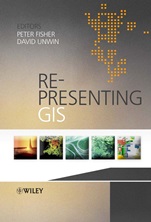
Re–Presenting GIS
ISBN 9780470848470
Autor: Peter Fisher, David Unwin
Wydawca: Wiley
Dostępność: 3-6 tygodni
Cena: 790,65 zł
Przed złożeniem zamówienia prosimy o kontakt mailowy celem potwierdzenia ceny.
ISBN13: |
9780470848470 |
ISBN10: |
0470848472 |
Autor: |
Peter Fisher, David Unwin |
Oprawa: |
Hardback |
Rok Wydania: |
2005-08-26 |
Ilość stron: |
296 |
Wymiary: |
250x178 |
Tematy: |
RB |
The increasingly widespread use of Geographical Information Systems (GIS) has meant that a version of ‘geography’ has been exported to many other disciplines and walks of life where this technology has been found to be useful. In the analysis of geographic information, ‘geography’ is often short hand for the spaces and distances used to explain or model some phenomenon. Typically, it is the usefulness of this, in turn almost entirely a consequence of the phenomenon of spatial autocorrelation, which explains the evident popularity of GIS.
The academic underpinning of GIS, Geographical Information Science is not merely a technical subject; it poses difficult theoretical questions on the nature of geographic representation and whether or not there exist limits on the ability of GIS to deal with certain objects and issues. This book attempts to synthesize the different strands of debate between technical GIS issues and social–theory of GI Science representation by looking at the conceptual and applied aspects of the subject in one cohesive volume.
This is the first book to present the debate surrounding technical GIS and theory of representation from an ‘inside’ GIS perspective.
The chapters have been split into three distinct sections exploring objects, time and space; their interaction with each other and with GIS
Re–presenting GIS is aimed at:advanced students (undergraduate and postgraduate) taking courses in GISacademic researchers in GI Science and Computer Science with interests in the modelling of spatial information andpractitioners involved with GIS who need an accessible guide to current thinking in GI Science research.
The Workshop that gave rise to this book was organized with the generous assistance of the UK Economic and Social Research Council, under its Research Seminar series. The editors wish to express their gratitude.<
br>
Spis treści:
List of Contributors.
Preface.
1. Re–presenting Geographical Information Systems (Peter Fisher and David J. Unwin).
PART I: NOT JUST OBJECTS.
2. Not Just Objects: Reconstructing Objects (Ola Ahlqvist, Peter Bibby, Matt Duckham, Peter Fisher, Francis Harvey and Nadine Schuurman).
3. Social Dimensions of Object Definition in GIS (Nadine Schuurman).
4. The Linguistic Trading Zones of Semantic Interoperability (Francis Harvey).
5. GIS, Worldmaking and Natural Language (Peter Bibby).
6. Land Use and Land Cover: Contradiction or Complement (Peter Fisher, Alexis Comber and Richard Wadsworth).
7. Transformation of Geographic Information using Crisp, Fuzzy and Rough Semantics (Ola Ahlqvist).
8. Uncertainty and Geographic Information: Computational and Critical Convergence (Matt Duckham and Joanne Sharp).
PART II: NOT JUST SPACE.
9. Not Just Space: An Introduction (Michael Batty, Antony Galton and Marcos Llobera).
10. The QSS Framework for Modelling Qualitative Change: Prospects and Problems (Antony Galton).
11. Network Geography: Relations, Interactions, Scaling and Spatial Processes in GIS (Michael Batty).
12. The Nature of Everyday Experience: Examples from the Study of Visual Space (Marcos Llobera).
PART III: TIME AS WELL.
13. Time As Well: An Introduction (Jonathan Raper, Harvey J. Miller, Subhrajit Guhathakurta, Robert Muetzelfeldt and Tao Cheng).
14. Spatio–Temporal Ontology for Digital Geographies (Jonathan Raper).
15. Modeling and Visualizing Linear and Cyclic Changes (Tao Cheng).
16. What about People in Geographic Information Science? (Harvey J. Miller).
17. Dynamic Spatial Modelling in the Simile Visual Modelling Environment (Robert Muetzelfeldt and Matt Duckham).
18. Telling Stories with Models: Reflecting on Land Use and Ecological Trends in the San Pedro Watershed (Subhrajit Guhathakurta).
PART IV: NOT ‘THERE’
YET?
19. Conclusion: Towards a Research Agenda (David J. Unwin and Peter Fisher).
Index.
Okładka tylna:
The increasingly widespread use of Geographical Information Systems (GIS) has meant that a version of ‘geography’ has been exported to many other disciplines and walks of life where this technology has been found to be useful. In the analysis of geographic information, ‘geography’ is often short hand for the spaces and distances used to explain or model some phenomenon. Typically, it is the usefulness of this, in turn almost entirely a consequence of the phenomenon of spatial autocorrelation, which explains the evident popularity of GIS.
The academic underpinning of GIS, Geographical Information Science is not merely a technical subject; it poses difficult theoretical questions on the nature of geographic representation and whether or not there exist limits on the ability of GIS to deal with certain objects and issues. This book attempts to synthesize the different strands of debate between technical GIS issues and social–theory of GI Science representation by looking at the conceptual and applied aspects of the subject in one cohesive volume.
This is the first book to present the debate surrounding technical GIS and theory of representation from an ‘inside’ GIS perspective.
The chapters have been split into three distinct sections exploring objects, time and space; their interaction with each other and with GIS
Re–presenting GIS is aimed at:advanced students (undergraduate and postgraduate) taking courses in GISacademic researchers in GI Science and Computer Science with interests in the modelling of spatial information andpractitioners involved with GIS who need an accessible guide to current thinking in GI Science research.
The Workshop that gave rise to this book was organized with the generous assistance
of the UK Economic and Social Research Council, under its Research Seminar series. The editors wish to express their gratitude.
Koszyk
Książek w koszyku: 0 szt.
Wartość zakupów: 0,00 zł
Informacje


Kontakt
Gambit
Centrum Oprogramowania
i Szkoleń Sp. z o.o.
Al. Pokoju 29b/22-24
31-564 Kraków
Siedziba Księgarni
ul. Kordylewskiego 1
31-542 Kraków
+48 12 410 5991
+48 12 410 5987
+48 12 410 5989
Subskrypcje
Administratorem danych osobowych jest firma Gambit COiS Sp. z o.o. Na podany adres będzie wysyłany wyłącznie biuletyn informacyjny.
Autoryzacja płatności

Informacje na temat autoryzacji płatności poprzez PayU.

© Copyright 2012: GAMBIT COiS Sp. z o.o. Wszelkie prawa zastrzeżone.
Projekt i wykonanie: Alchemia Studio Reklamy