


Wydawcy
Katalog tematyczny
- Archeologia (109)
- Ekonomia, finanse, business (13704)
- Filozofia (1445)
- Historia (3040)
- Języki i językoznawstwo (2356)
- Lifestyle, hobby i rozrywka (475)
- Medycyna (9704)
- Nauki humanistyczne (4)
- Nauki o Ziemi i środowisku (2638)
- Nauki ścisłe (20412)
- Nauki społeczne (8486)
- Nauki techniczne (13450)
- Prawo (1696)
- Publikacje informacyjne i interdyscyplinarne (1288)
- Religia i wierzenia (917)
- Technika komputerowa (4067)
- Zdrowie, relacje międzyludzkie i rozwój osobisty (657)





Informacje szczegółowe o książce
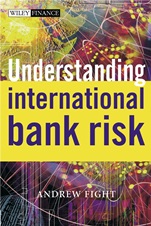
Understanding International Bank Risk
ISBN 9780470847688
Autor: Andrew Fight
Wydawca: Wiley
Dostępność: 3-6 tygodni
Cena: 530,25 zł
Przed złożeniem zamówienia prosimy o kontakt mailowy celem potwierdzenia ceny.
ISBN13: |
9780470847688 |
ISBN10: |
0470847689 |
Autor: |
Andrew Fight |
Oprawa: |
Hardback |
Rok Wydania: |
2003-12-22 |
Ilość stron: |
248 |
Wymiary: |
263x178 |
Tematy: |
KF |
In an era of globalisation, syndicated lending and consolidation within the banking world, virtually all industries will have international dealings, whether directly or indirectly, and will there be exposed to consequential risks. An understanding of international risk, from that of bank or country failure to the idiosyncrasies of different religious, cultural and regulatory frameworks, is essential to the modern banker. This book gives the reader a thorough understanding of how to calculate, analyse and manage such risks.
Understanding International Bank Risk addresses the key areas of international risk within the banking environment. It shows the reader how to assess and model both bank and country risk in clear practical terms in order to make informed decisions and be aware of the early warning signs. It spans the full range of factors from the micro to the macro environment and pays particular attention to major growth areas such as syndicated lending.
"The logical and comprehensive analytical framework makes this a useful guide for credit analysis, particularly in relation to the fundamentals of a bank. Moreover, the frequent tie–ins between theory and empirical information lead to an interesting and easily digestible reading experience."
—Suresh Menon, Executive Director, Rating Agency Malaysia Berhad
"Risk is the word on the lips of every financial practitioner. Andrew Fight′s new book is both a timely introduction to the subject and an excellent survey of risk and risk management in their many manifestations."
—Professor Charles W Munn, Chief Executive, The Chartered Institute of Bankers in Scotland, President, The European Bank Training Network, Chairman, QAA Scotland
"A challenging and timely review of how to appraise banks, that recognises the wider social context as well as technical analysis. This book will be an important reference point over the next few years as the turbulence of Basel II c
hange increases."
—Michael Mainelli, Executive Chairman, Z/Yen Limited
Spis treści:
Foreword.
About the Author.
1 The Banking Background.
1.1 Different types of banks and their risk profile.
1.1.1 Bank failure and the financial services community.
1.1.2 What do banks do? How do they earn their money?
1.1.3 Different types of banks and their revenue structures.
1.1.4 Commercial banks.
1.1.5 Investment banks.
1.1.6 Risk profile of investment banks.
1.1.7 Broking is a competitive business.
1.1.8 Derivatives trading and AAA subsidiaries.
1.1.9 The regulation of investment banks.
1.1.10 “Analyst of the year” awards.
1.2 Primary causes of bank failure.
1.2.1 Types of failures.
1.2.2 Causes of losses.
1.2.3 Warning signals in predicting bank failure.
1.2.4 Rescuing the bank!
1.2.5 Credit rating agencies.
1.3 Bank failures – the four aces.
1.3.1 Bank of Credit and Commerce International.
1.3.2 Continental Illinois.
1.3.3 Crédit Lyonnais.
1.3.4 Rumasa.
1.4 The macroeconomic environment.
1.4.1 Banking system and industry risks.
1.4.2 Economic environment.
1.4.3 Industry competition and its impact on banks.
1.4.4 Technology.
2 The Rating Framework.
2.1 What is a rating?
2.2 The development of ratings.
2.3 Background to rating agencies.
2.3.1 Inconsistent initial foundations.
2.3.2 Secretive deliberations.
2.3.3 Main source of revenues.
2.3.4 Generating value.
2.3.5 Growth and the future.
2.4 The rating analytical framework.
2.4.1 CAMEL, CAMEL B–COM, and CAMELOT.
2.4.2 Capital.
2.4.3 Asset quality.
2.4.4 Management.
2.4.5 Earnings.
2.4.6 Liquidity (liability management).
2.5 How the rating agencies analyse bank risk.
2.5.1 What is a rating?
2.5.2 Rating scale comparisons.
2.5.3 Standard & Poor’s ratings.
2.5.4 Moody
’s ratings.
2.5.5 Fitch performance and legal ratings.
3 The Regulatory Framework.
3.1 Banking system: structure, governing law, and regulations.
3.1.1 Banking supervision.
3.2 Core principles for effective banking supervision.
3.2.1 Core principles for effective banking supervision.
3.2.2 Basel committee publications No. 30 (September 1997) on banking principles.
3.3 Risk management.
3.3.1 Generally accepted risk principles.
3.3.2 Derivatives and market risk.
3.3.3 Managing bank limits.
3.3.4 Generally accepted risk principles risk map.
3.4 Basle Capital Adequacy and international convergence.
3.4.1 Background to the Basle Capital Adequacy regime.
3.4.2 Pressures for change.
3.4.3 The BIS paper: the response of the central banks.
3.4.4 Foreign exchange and interest rate related exposure.
3.4.5 Implementation.
3.4.6 Impact of the BIS proposals.
4 The Analytical Framework.
4.1 Introduction.
4.1.1 The specific nature of bank financial analysis.
4.1.2 Sources of information on banks.
4.1.3 Other sources of information.
4.2 Financial criteria – the key factors.
4.2.1 Financial statement analysis.
4.2.2 Spreadsheet analysis.
4.3 Understanding the bank’s balance sheet.
4.3.1 Overview.
4.3.2 Balance sheet.
4.3.3 Assets.
4.3.4 Liabilities.
4.3.5 Contingent liabilities.
4.3.6 Income statement.
4.3.7 Financial analysis of investment banks.
4.3.8 Risk profile of investment banks.
5 Bankscope and Comparative Techniques.
5.1 Bankscope spreadsheet analysis.
5.2 Bankscope ratios and ratio analysis.
5.2.1 Lines of the Bankscope global format.
5.2.2 Financial ratio analysis.
5.2.3 The Bankscope ratios.
5.3 Bank peer group analysis.
5.3.1 Analytical techniques.
5.4 Problems with intercountry comparisons.
5.4.1 Local vs international accounting standards.
5.4.2 Inflation accounting.
5.4.3 Creative accoun
ting and ratio manipulation.
6 Country and Political Risk.
6.1 Country risk.
6.1.1 Introduction to country risk.
6.1.2 Definition of country risk.
6.1.3 Types of countries.
6.1.4 Country risk assessment.
6.2 Political risk.
6.2.1 Introduction to political risk.
6.2.2 Time dimension.
6.2.3 Political risk analysis methodologies.
6.2.4 World Bank list of countries.
6.3 Typical sovereign ratings process.
6.3.1 Introduction.
6.3.2 Political risk.
6.3.3 Economic risk.
6.3.4 S&P’s sovereign ratings profiles.
6.3.5 Behind the sovereign ratings exercise.
7 The World of E–finance.
7.1 A quick definition of e–finance.
7.2 CRM – Customer Relationship Management.
7.3 STP/CLS.
7.3.1 STP – Straight Through Processing.
7.3.2 CLS – Continuous Linked Settlement.
7.3.3 Establishment of Continuous Linked Settlement services.
7.4 SWIFT.
7.4.1 Background.
7.5 Electronic funds transfer.
7.6 Online banking.
7.7 Day trading.
7.8 Smart cards.
7.9 Evolution of e–finance.
7.10 Origin of e–finance and internet commerce.
7.10.1 Rise Of e–finance and electronic trading.
8 Conclusion.
Glossary.
Suggested Readings.
Appendix I.
Appendix II.
Appendix III.
Index.
Nota biograficzna:
ANDREW FIGHT provides financial training and consulting services in the areas of Financial Analysis, Commercial, Syndicated, and Project Finance Lending, Asset Liability Management, Credit Risk Management, and Problem Loan Management.
He has over 15 years of experience in international banking and financial analysis gained in Paris and London with Chase Manhattan Bank, IBCA Rating Agency, Euromoney Training, and the French Banker′s Training Institute.
He is a financial trainer and consultant to several banks, central banks, and IT companies, and a
successful author, having written over 15 books on financial analysis, banking risk analysis, credit risk management, credit rating agencies, and information technology in financial services.
He divides his time between London, where he works, and his home in the South of France.
Okładka tylna:
In an era of globalisation, syndicated lending and consolidation within the banking world, virtually all industries will have international dealings, whether directly or indirectly, and will there be exposed to consequential risks. An understanding of international risk, from that of bank or country failure to the idiosyncrasies of different religious, cultural and regulatory frameworks, is essential to the modern banker. This book gives the reader a thorough understanding of how to calculate, analyse and manage such risks.
Understanding International Bank Risk addresses the key areas of international risk within the banking environment. It shows the reader how to assess and model both bank and country risk in clear practical terms in order to make informed decisions and be aware of the early warning signs. It spans the full range of factors from the micro to the macro environment and pays particular attention to major growth areas such as syndicated lending.
"The logical and comprehensive analytical framework makes this a useful guide for credit analysis, particularly in relation to the fundamentals of a bank. Moreover, the frequent tie–ins between theory and empirical information lead to an interesting and easily digestible reading experience."
—Suresh Menon, Executive Director, Rating Agency Malaysia Berhad
"Risk is the word on the lips of every financial practitioner. Andrew Fight′s new book is both a timely introduction to the subject and an excellent survey of risk and risk management in their many manifestations."
—Professor Charles W Munn, Chief Executive, The Chartered Institute of Banke
rs in Scotland, President, The European Bank Training Network, Chairman, QAA Scotland
"A challenging and timely review of how to appraise banks, that recognises the wider social context as well as technical analysis. This book will be an important reference point over the next few years as the turbulence of Basel II change increases."
—Michael Mainelli, Executive Chairman, Z/Yen Limited
Koszyk
Książek w koszyku: 0 szt.
Wartość zakupów: 0,00 zł
Informacje


Kontakt
Gambit
Centrum Oprogramowania
i Szkoleń Sp. z o.o.
Al. Pokoju 29b/22-24
31-564 Kraków
Siedziba Księgarni
ul. Kordylewskiego 1
31-542 Kraków
+48 12 410 5991
+48 12 410 5987
+48 12 410 5989
Subskrypcje
Administratorem danych osobowych jest firma Gambit COiS Sp. z o.o. Na podany adres będzie wysyłany wyłącznie biuletyn informacyjny.
Autoryzacja płatności

Informacje na temat autoryzacji płatności poprzez PayU.

© Copyright 2012: GAMBIT COiS Sp. z o.o. Wszelkie prawa zastrzeżone.
Projekt i wykonanie: Alchemia Studio Reklamy