


Wydawcy
Katalog tematyczny
- Archeologia (109)
- Ekonomia, finanse, business (13704)
- Filozofia (1445)
- Historia (3040)
- Języki i językoznawstwo (2356)
- Lifestyle, hobby i rozrywka (475)
- Medycyna (9704)
- Nauki humanistyczne (4)
- Nauki o Ziemi i środowisku (2638)
- Nauki ścisłe (20412)
- Astronomia (294)
- Biologia (5119)
- Chemia (6540)
- Chemia analityczna (361)
- Chemia fizyczna (346)
- Chemia nieorganiczna (137)
- Chemia organiczna (535)
- Krystalografia (27)
- Minerologia (46)
- Fizyka (3309)
- Matematyka (4574)
- Nauki ścisłe, ogólnie (503)
- Nauki społeczne (8486)
- Nauki techniczne (13450)
- Prawo (1696)
- Publikacje informacyjne i interdyscyplinarne (1288)
- Religia i wierzenia (917)
- Technika komputerowa (4067)
- Zdrowie, relacje międzyludzkie i rozwój osobisty (657)





Informacje szczegółowe o książce
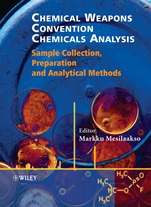
Chemical Weapons Convention Chemicals Analysis: Sample Collection, Preparation and Analytical Methods
ISBN 9780470847565
Autor: Markku Mesilaakso
Wydawca: Wiley
Dostępność: 3-6 tygodni
Cena: 2 090,55 zł
Przed złożeniem zamówienia prosimy o kontakt mailowy celem potwierdzenia ceny.
ISBN13: |
9780470847565 |
ISBN10: |
0470847565 |
Autor: |
Markku Mesilaakso |
Oprawa: |
Hardback |
Rok Wydania: |
2005-02-25 |
Ilość stron: |
476 |
Wymiary: |
253x189 |
Tematy: |
PN |
The States Parties to the Chemical Weapons Convention (CWC) have established the Organization for the Prohibition of Chemical Weapons (OPCW) in order to achieve the object and purpose of the Convention. It aims to ensure the implementation of the CWC’s provisions, including those for international verification of compliance with it, and to provide a forum for consultation and cooperation among States Parties. The aim of this book is to give a comprehensive view of how to internationally verify compliance with the CWC, in principle, using analytical chemistry and related strategies and methods.
There are currently eighteen analytical laboratories that have established capability, and obtained recognized competence in, the analysis of samples for CWC–related chemicals; these laboratories are the OPCW designated laboratories. The majority of the chapters in this book discuss the analytical methods used in these off–site laboratories. The methods discussed are for the identification of target chemicals from environmental and human origin samples. The procedures and strategies for on–site sampling and analysis are also discussed.
A variety of topics are covered, including:the requirements of the CWC for verification, sampling, mobile laboratories and their equipment and software;sample preparation from environmental samples;official inter–laboratory proficiency tests arranged by the OPCW;the OPCW Central Analytical Database (OCAD);monitoring of hazardous chemicals;analysis strategies and quality assurance;analytical methods including gas and liquid chromatography hyphenated with mass spectrometry or other detectors, nuclear magnetic resonance spectroscopy, infrared spectroscopy and capillary electrophoresis, and the detection of exposure to toxic scheduled chemicals.
This book is aimed at researchers from the fields of environmental and analytical chemistry, and researchers in civil and mi
litary laboratories. The National Authorities of the States Parties to the CWC will find the book useful as it covers developments in the area of CWC chemicals analysis. The approaches are practical and the chapters are particularly useful for those people responsible for developing their laboratory analysis methods and work instructions.
Spis treści:
List of Contributors.
Preface.
Chapter 1: Introduction (Markku Mesilaakso).
Chapter 2: Sampling and Analysis in the Chemical Weapons Convention and the OPCW Mobile Laboratory (Stefan Mogl).
Chapter 3: On–site Analysis by the Inspection Team. Sampling, Analysis, Equipment, Procedures and Strategies (Sabine Kruger).
Chapter 4: The OPCW Gas Chromatograph/Mass Spectrometer for On–site Analysis. Instrumentation, AMDIS Software and Preparations for Use (Mieczyslaw Sokolowski).
Chapter 5: Hazardous Environment Monitoring (George M. Murray and David S. Lawrence).
Chapter 6: A Comprehensive Review of the Official OPCW Proficiency Test (Jeanet Hendrikse).
Chapter 7: The OPCW Central Analytical Database (Charles Nyanyira).
Chapter 8: Analysis Strategy for Analysis of Chemicals Related to the Chemical Weapons Convention in an Off–site Laboratory (Markku Mesilaakso).
Chapter 9: Sample Preparation for Analysis of Chemicals Related to the Chemical Weapons Convention in an Off–site Laboratory (Marja–Leena Kuitunen).
Chapter 10: Gas Chromatography in Screening of Chemicals Related to the Chemical Weapons Convention (Olli Kostiainen).
Chapter 11: Gas Chromatography/MassSpectrometry in Analysis of Chemicals Related to the Chemical Weapons Convention (Eric R. J. Wils).
Chapter 12: Liquid Chromatography / Mass Spectrometry in Analysis of Chemicals Related to the Chemical Weapons Convention (R. M. Black and R. W. Read).
Chapter 13: Nuclear Magnetic Resonance Spectr
oscopy in Analysis of Chemicals Related to the Chemical Weapons Convention (Markku Mesilaakso and Andreas Niederhauser).
Chapter 14: Fourier Transform Infrared Spectroscopy in Analysis of Chemicals Related to the Chemical Weapons Convention (Martin T. Soderstrom).
Chapter 15: Capillary Electrophoresis in Analysis of Chemicals Related to the Chemical Weapons Convention (Jeremy E. Melanson and Camille A. Boulet).
Chapter 16: Methods for the Retrospective Detection of Exposure to Toxic Scheduled Chemicals.
Part A: Analysis of Free Metabolites (R. M. Black and D. Noort).
Chapter 17: Methods for Retrospective Detection of Exposure to Toxic Scheduled Chemicals.
Part B: Mass Spectrometric and Immunochemical Analysis of Covalent Adducts to Proteins and DNA (D. Noort and R. M. Black).
Index.
Okładka tylna:
The States Parties to the Chemical Weapons Convention (CWC) have established the Organization for the Prohibition of Chemical Weapons (OPCW) in order to achieve the object and purpose of the Convention. It aims to ensure the implementation of the CWC’s provisions, including those for international verification of compliance with it, and to provide a forum for consultation and cooperation among States Parties. The aim of this book is to give a comprehensive view of how to internationally verify compliance with the CWC, in principle, using analytical chemistry and related strategies and methods.
There are currently eighteen analytical laboratories that have established capability, and obtained recognized competence in, the analysis of samples for CWC–related chemicals; these laboratories are the OPCW designated laboratories. The majority of the chapters in this book discuss the analytical methods used in these off–site laboratories. The methods discussed are for the identification of target chemicals from environmental and human origin samples. The procedures and strategies fo
r on–site sampling and analysis are also discussed.
A variety of topics are covered, including:the requirements of the CWC for verification, sampling, mobile laboratories and their equipment and software;sample preparation from environmental samples;official inter–laboratory proficiency tests arranged by the OPCW;the OPCW Central Analytical Database (OCAD);monitoring of hazardous chemicals;analysis strategies and quality assurance;analytical methods including gas and liquid chromatography hyphenated with mass spectrometry or other detectors, nuclear magnetic resonance spectroscopy, infrared spectroscopy and capillary electrophoresis, and the detection of exposure to toxic scheduled chemicals.
This book is aimed at researchers from the fields of environmental and analytical chemistry, and researchers in civil and military laboratories. The National Authorities of the States Parties to the CWC will find the book useful as it covers developments in the area of CWC chemicals analysis. The approaches are practical and the chapters are particularly useful for those people responsible for developing their laboratory analysis methods and work instructions.
Koszyk
Książek w koszyku: 0 szt.
Wartość zakupów: 0,00 zł
Informacje


Kontakt
Gambit
Centrum Oprogramowania
i Szkoleń Sp. z o.o.
Al. Pokoju 29b/22-24
31-564 Kraków
Siedziba Księgarni
ul. Kordylewskiego 1
31-542 Kraków
+48 12 410 5991
+48 12 410 5987
+48 12 410 5989
Subskrypcje
Administratorem danych osobowych jest firma Gambit COiS Sp. z o.o. Na podany adres będzie wysyłany wyłącznie biuletyn informacyjny.
Autoryzacja płatności

Informacje na temat autoryzacji płatności poprzez PayU.

© Copyright 2012: GAMBIT COiS Sp. z o.o. Wszelkie prawa zastrzeżone.
Projekt i wykonanie: Alchemia Studio Reklamy