


Wydawcy
Katalog tematyczny
- Archeologia (109)
- Ekonomia, finanse, business (13704)
- Filozofia (1445)
- Historia (3040)
- Języki i językoznawstwo (2356)
- Lifestyle, hobby i rozrywka (475)
- Medycyna (9704)
- Nauki humanistyczne (4)
- Nauki o Ziemi i środowisku (2638)
- Geografia (299)
- Nauki o Ziemi (1661)
- Geologia (414)
- Hydrologia (237)
- Meteorologia i klimatologia (114)
- Paleontologia (33)
- Wulkanologia i sejsmologia (44)
- Planowanie przestrzenne (53)
- Środowisko (607)
- Nauki ścisłe (20412)
- Nauki społeczne (8486)
- Nauki techniczne (13450)
- Prawo (1696)
- Publikacje informacyjne i interdyscyplinarne (1288)
- Religia i wierzenia (917)
- Technika komputerowa (4067)
- Zdrowie, relacje międzyludzkie i rozwój osobisty (657)





Informacje szczegółowe o książce
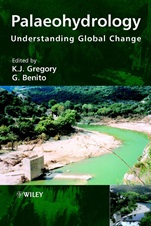
Palaeohydrology: Understanding Global Change
ISBN 9780470847398
Autor: K. J. Gregory, G. Benito
Wydawca: Wiley
Dostępność: 3-6 tygodni
Cena: 1 258,95 zł
Przed złożeniem zamówienia prosimy o kontakt mailowy celem potwierdzenia ceny.
ISBN13: |
9780470847398 |
ISBN10: |
0470847395 |
Autor: |
K. J. Gregory, G. Benito |
Oprawa: |
Hardback |
Rok Wydania: |
2003-04-22 |
Ilość stron: |
410 |
Wymiary: |
245x174 |
Tematy: |
RB |
Palaeohydrology includes studies of how the composition, distribution and movement of water on the land surface of the earth over the last 20,000 years has related to past environmental changes.
Investigations provide information about the way that hydrology, and in particular, flood discharges, have changed in the past. They also show long–term hydrological trends and their implications for future changes. Past hydroclimate reconstructions related to a variety of past climate and environmental change sequences are critical to understanding future potential changes. They can provide data sets for validating the response of climate models with which to predict future change.
Key features of this book include:
∗ a world summary of our understanding of palaeohydrological changes.
∗ real world examples of past hydrological scenarios in Europe, America, Africa, Asia and Australia.
∗ a long–term perspective of impacts of global changes on the hydrological regime during the last 20,000 years.
∗ an associated website containing database, expanded bibliography and reports from international programmes.
This book provides a general overview of global palaeohydrology and includes an up to date review of key methodological approaches involved in palaeohydrological construction. The first section provides a global review of palaeohydrology by focusing on major regions of the world. It shows how and why hydrological regimes have changed, and how this knowledge can help in understanding global change. The second section focuses on key methodologies for fluvial palaeohydrology, concerning use of sediment–landform assemblage and hydraulic approaches as well as hydrological methods for palaeohydrological reconstruction.
This book will be of use to researchers in fluvial geomorphology, hydrology and sedimentology, as well as professional hydrologists, sedimentologists, palaeocologists, Quaternary scientists and environ
mental consultants. It will make a good reference book for 2nd/3rd year undergraduates taking courses in Applied Hydrology, Global Change, Environmental Geology, Fluvial Geomorphology, Sedimentology within Departments of Geography, Environmental Science and Geology.
Spis treści:
List of Contributors.
Preface.
Foreword.
PART 1: INTRODUCTION.
Chapter 1. Potential of Palaeohydrology in Relation to Global Change (K.J. Gregory & G. Benito).
PART 2: PERSPECTIVES.
Chapter 2. INQUA Research and Palaeohydrology (L. Starkel).
Chapter 3. Palaeohydrology and International Global Change Programs (K. Alverson & T. Edwards).
PART 3: WORLD AREAS.
Chapter 4. Introduction to Regional Palaeohydrologic Regimes and Areas (K.J. Gregory & G. Benito).
Section I. High–latitude regions.
Chapter 5. High–latitude Fluvial Morphology: The Example from the Usa River, Northern Russia (J. Vandenberghe & M. Huisink).
Section II. Mid–latitude regions.
Chapter 6. The Lateglacial and Holocene Palaeohydrology of Northern Eurasia (A. Sidorchuk, et al.).
Chapter 7. Palaeohydrology of Central Europe (L. Starkel).
Chapter 8. Global Environmental Change and the Palaeohydrology of Western Europe: A Review (A.G. Brown).
Chapter 9. Palaeohydrological Changes in the Mediterranean Region during the Late Quaternary (G. Benito).
Chapter 10. North American Palaeofloods and Future Floods: Responses to Climatic Change (J.C. Knox).
Section III. Low–latitude regions.
Chapter 11. Palaeohydrological Reconstructions for Tropical Africa since the Last Glacial Maximum – Evidence and Problems (M. F. Thomas & M. B. Thorp).
Chapter 12. The Late–Quaternary Palaeohydrology of Large South American Fluvial Systems (E.M. Latrubesse).
Chapter 13. Late Pleistocene–Holocene Palaeohydrology of Monsoon Asia (V. Kale, et al.).
Chapter 14
. Alluvial Evidence of Major Late–Quaternary Climate and Flow–regime Changes on the Coastal Rivers of New South Wales, Australia (G. Nanson, et al.).
PART 4: RECENT PROGRESS INTERPRETING EVIDENCE OF ENVIRONMENTAL CHANGE.
Chapter 15. Data Sharing in Palaeohydrology: Changing Perspectives (T. Oguchi, et al.).
Chapter 16. Fluvial Morphology and Sediments: Archives of Past Fluvial System Response to Global Change (D. Maddy, et al.).
Chapter 17. Palaeohydrological Modelling: from Palaeohydraulics to Palaeohydrology (J. Thornes).
Chapter 18. Palaeofloods and Extended Discharge Records (V. Baker).
Chapter 19. Palaeohydraulics of Extreme Flood Events: Reality and Myth (P. Carling, et al.).
Chapter 20. Short–term Hydrological Changes (L. Starkel).
Chapter 21. Palaeohydrology, Environmental Change and River–channel Management (K. Gregory).
PART 5: PROSPECT.
Chapter 22. Concluding Perspective ( K. Gregory & G. Benito).
Appendix: Discussion at the Fifth International Meeting of GLOCOPH in Pune, India, December 2002.
Index.
Okładka tylna:
Palaeohydrology includes studies of how the composition, distribution and movement of water on the land surface of the earth over the last 20,000 years has related to past environmental changes.
Investigations provide information about the way that hydrology, and in particular, flood discharges, have changed in the past. They also show long–term hydrological trends and their implications for future changes. Past hydroclimate reconstructions related to a variety of past climate and environmental change sequences are critical to understanding future potential changes. They can provide data sets for validating the response of climate models with which to predict future change.
Key features of this book include:
∗ a world summary of our understanding of palaeohydrological changes.
∗ real world examples
of past hydrological scenarios in Europe, America, Africa, Asia and Australia.
∗ a long–term perspective of impacts of global changes on the hydrological regime during the last 20,000 years.
∗ an associated website containing database, expanded bibliography and reports from international programmes.
This book provides a general overview of global palaeohydrology and includes an up to date review of key methodological approaches involved in palaeohydrological construction. The first section provides a global review of palaeohydrology by focusing on major regions of the world. It shows how and why hydrological regimes have changed, and how this knowledge can help in understanding global change. The second section focuses on key methodologies for fluvial palaeohydrology, concerning use of sediment–landform assemblage and hydraulic approaches as well as hydrological methods for palaeohydrological reconstruction.
This book will be of use to researchers in fluvial geomorphology, hydrology and sedimentology, as well as professional hydrologists, sedimentologists, palaeocologists, Quaternary scientists and environmental consultants. It will make a good reference book for 2nd/3rd year undergraduates taking courses in Applied Hydrology, Global Change, Environmental Geology, Fluvial Geomorphology, Sedimentology within Departments of Geography, Environmental Science and Geology.
Koszyk
Książek w koszyku: 0 szt.
Wartość zakupów: 0,00 zł
Informacje


Kontakt
Gambit
Centrum Oprogramowania
i Szkoleń Sp. z o.o.
Al. Pokoju 29b/22-24
31-564 Kraków
Siedziba Księgarni
ul. Kordylewskiego 1
31-542 Kraków
+48 12 410 5991
+48 12 410 5987
+48 12 410 5989
Subskrypcje
Administratorem danych osobowych jest firma Gambit COiS Sp. z o.o. Na podany adres będzie wysyłany wyłącznie biuletyn informacyjny.
Autoryzacja płatności

Informacje na temat autoryzacji płatności poprzez PayU.

© Copyright 2012: GAMBIT COiS Sp. z o.o. Wszelkie prawa zastrzeżone.
Projekt i wykonanie: Alchemia Studio Reklamy