


Wydawcy
Katalog tematyczny
- Archeologia (109)
- Ekonomia, finanse, business (13704)
- Filozofia (1445)
- Historia (3040)
- Języki i językoznawstwo (2356)
- Lifestyle, hobby i rozrywka (475)
- Medycyna (9704)
- Nauki humanistyczne (4)
- Nauki o Ziemi i środowisku (2638)
- Nauki ścisłe (20412)
- Nauki społeczne (8486)
- Nauki techniczne (13450)
- Budownictwo lądowe (1045)
- Chemia przemysłowa (2258)
- Elektronika i telekomunikacja (3287)
- Energetyka (1122)
- Inne nauki stosowane (363)
- Inżynieria biochemiczna (507)
- Inżynieria transportu (232)
- Mechanika i materiały (3316)
- Nauka o środowisku (321)
- Rolnictwo (507)
- Technika, ogólnie (475)
- Prawo (1696)
- Publikacje informacyjne i interdyscyplinarne (1288)
- Religia i wierzenia (917)
- Technika komputerowa (4067)
- Zdrowie, relacje międzyludzkie i rozwój osobisty (657)








Informacje szczegółowe o książce
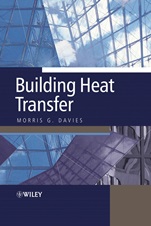
Building Heat Transfer
ISBN 9780470847312
Autor: Morris G. Davies
Wydawca: Wiley
Dostępność: 3-6 tygodni
Cena: 790,65 zł
Przed złożeniem zamówienia prosimy o kontakt mailowy celem potwierdzenia ceny.
ISBN13: |
9780470847312 |
ISBN10: |
047084731X |
Autor: |
Morris G. Davies |
Oprawa: |
Hardback |
Rok Wydania: |
2004-03-23 |
Ilość stron: |
524 |
Wymiary: |
248x180 |
Tematy: |
TG |
More than a third of the energy consumed in industrialised countries is used in creating acceptable conditions of thermal comfort and lighting in buildings, but such demands are harmful to the environment and are of concern to building experts. Internal thermal conditions are determined by the climate, the heating and cooling plant, and people’s behaviour, together with the characteristics of the building fabric itself. In this book the author discusses physical findings and computational techniques relating to the fabric, bringing together for the first time in one volume issues fundamental to heat transfer in buildings.
Features include:An overview of the use of thermal circuit theory.A wealth of information on convective and radiative exchange inside and outside the building envelope.Merging the processes of heat transfer by convection and radiation.Thermal representation of a wall by discrete storage and resistive elements.Representation of a wall as a chain of distributed storage/resistance elements when driven by varying temperatures and its application to estimate the thermal response of a room.Recent work on moisture movement in walls, with condensation and evaporation in unsteady conditions.
The book is essential to all civil, building and software engineers involved with designing heating and cooling systems in buildings. Architects, building physicists and students in the field will also benefit from this valuable reference.
Spis treści:
Preface.
Acknowledgements.
1 Elementary Steady–State Heat Transfer.
1.1 Human Thermal Comfort.
1.2 Ambient Temperature.
1.2.1 Design Temperature.
1.2.2 Degree–Day Value.
1.3 The Traditional Building Heating Model.
1.3.1 Ventilation Loss.
1.3.2 Conduction Loss.
1.3.3 Loss from a Cylinder.
1.4 Seasonal Heat Need.
1.5 Plan of the Book.
2 Physical Constants of Materials.
2.1 The
rmal Parameters for Gases: Kinetic Theory.
2.2 Representative Values for Solids.
2.3 Discussion.
2.4 Appendix: The Maxwellian Distribution.
3 Conduction–Dominated Systems.
3.1 Heat Flow along a Fin.
3.2 Heat Loss from a Solid Floor.
3.2.1 One–Dimensional Heat Loss.
3.2.2 Two–Dimensional Heat Loss.
3.2.3 Three–Dimensional Heat Loss.
3.2.4 Discussion of Floor Losses.
3.2.5 Placement of Insulation.
3.2.6 Heat Flow through Corners.
3.3 Solution using the Schwarz–Christoffel Transformation.
3.4 Appendix: Systems of Orthogonal Circles.
4 Thermal Circuit Theory.
4.1 Basic Thermal Elements.
4.1.1 Reference Temperature.
4.1.2 Temperature Node.
4.1.3 Pure Temperature Source.
4.1.4 Pure Heat Source.
4.1.5 Conductance.
4.1.6 Switch.
4.1.7 Quasi Heat Source.
4.1.8 Quasi Temperature Source.
4.2 The Heat Continuity Equation in an Enclosure.
4.2.1 The Mesh Approach.
4.2.2 The Nodal Approach.
4.3 Examples.
4.3.1 The Ventilated Cavity.
4.3.2 A Basic Circuit for Thermal Response.
4.4 Circuit Transforms.
4.4.1 Th&eeacute;venin’s and Norton’s Theorems.
4.4.2 Delta–Star Transformation.
4.4.3 Series–Parallel Transformation.
5 Heat Transfer by Air Movement.
5.1 Laminar and Turbulent Flow.
5.2 Natural Convection: Dimensional Approach.
5.2.1 Vertical Surface.
5.2.2 Inclined Surface.
5.2.3 Horizontal Surface.
5.3 Natural Convection at a Vertical Surface: Analytical Approach.
5.3.1 Heat Transfer through a Laminar Boundary Layer.
5.3.2 Discussion of the Laminar Flow Solution.
5.3.3 Heat Transfer through a Vertical Turbulent Boundary Layer.
5.4 Natural Convection between Parallel Surfaces.
5.5 Convective Exchange at Room Surfaces.
5.6 Convective Exchange through an Aperture between Rooms.
5.7 Heat Exchange at an External Surface.
6 Heat Transfer by Radiation.
6.1 The Fourth–Power Law.
6.2 Emissivity, Absorptivity and Reflectivity.
6.3 Radiation View Factors.
6.3.1 Basic Expression for View Factors.
6.3.2 Examples of View Factors.
6.3.3 View Factors by Contour Integration.
6.4 Direct Radiant Exchange between Surfaces.
6.4.1 Assumptions for Radiant Exchange.
6.4.2 The Thermal Circuit Formulation.
6.5 Radiant Exchange in an Enclosure.
6.5.1 Net Conductance G Δjkbetween Two Nodes.
6.5.2 Star Conductance G∗jkor Resistance R∗jk.
6.5.3 Optimal Star Links.
6.5.4 How Good is the Delta–Star Transformation?
6.5.5 Discussion.
6.5.6 Linearisation of the Driving Potentials.
6.5.7 Inclusion of the Emissivity Conductance.
6.6 Space–Averaged Observable Radiant Temperature.
6.6.1 Space–averaged Observable Temperature due to an Internal Radiant Source.
6.6.2 Space–averaged Observable Radiant Temperature due to Bounding Surfaces.
6.7 Star–Based Model for Radiant Exchange in a Room.
6.8 Representation of Radiant Exchange by Surface–Surface Links.
6.9 Long–Wave Radiant Exchange at Building Exterior Surfaces.
6.10 Appendix: Conductance between Rectangles on Perpendicular and Parallel Surfaces.
7 Design Model for Steady–State Room Heat Exchange.
7.1 A Model Enclosure.
7.2 The Rad–Air Model for Enclosure Heat Flows.
7.3 Problems in Modelling Room Heat Exchange.
7.3.1 The Environmental Temperature Model.
7.3.2 The Invalidity of Environmental Temperature.
7.3.3 Flaws in the Argument.
7.4 What is Mean Radiant Temperature?
8 Moisture Movement in Rooms.
8.1 Vapour Loss by Ventilation.
8.2 Vapour Resistivity.
8.3 Vapour Loss by Diffusion through Porous Walls.
8.4 Condensation on a Surface.
8.5 Condensation in a Wall: Simple Model.
8.6 Condensation in a Wall: More Detailed Models.
8.6.1 Condensati
on in Glass Fibre.
8.6.2 The Sorption Characteristic for Capillary–Porous Materials.
8.6.3 Moisture Movement in Capillary–Porous Materials.
8.7 Appendix: The Saturated Vapour Pressure Relation.
8.8 Appendix: Saturated Vapour Pressure over a Curved Surface.
8.9 Appendix: Measures of the Driving Potential for Water Vapour Transport.
8.10 Appendix: Mould Growth in Antiquity.
9 Solar Heating.
9.1 Factors Affecting Radiation Reaching the Earth.
9.2 Earth’s Orbit and Rotation.
9.3 The Sun’s Altitude and Azimuth.
9.4 Intensity of Radiation.
9.5 Solar Incidence on Glazing.
9.6 The Steady–State Solar Gain Factor.
9.7 Solar Gain Contribution to Heat Need.
10 The Wall with Lumped Elements.
10.1 Modelling Capacity.
10.2 Forms of Response for a Single–Capacity Circuit.
10.2.1 The r–c Circuit.
10.2.2 The r–c–r Circuit: Ramp Solution.
10.2.3 The r–c–r Circuit: Periodic Solution.
10.3 The Two–Capacity Wall.
10.3.1 Wall Decay Times.
10.3.2 Unit Flux Temperatures.
10.3.3 The Orthogonality Theorem and the Transient Solution.
10.3.4 Step and Steady–Slope Solutions.
10.3.5 Ramp Solution.
10.3.6 Examples.
10.4 Finite Difference Method.
10.4.1 Subdivision of the Wall.
10.4.2 Computational Formulae.
10.4.3 Discussion.
10.4.4 Evaluation of Complex Quantities.
10.5 The Electrical Analogue.
10.6 Time–Varying Elements.
10.7 Appendix.
11 Wall Conduction Transfer Coefficients for a Discretised System.
11.1 The Response Factors Φ50,k.
11.2 The d Coefficients.
11.3 The Transfer Coefficients b50,k.
11.4 The Response Factors Φ00,k, Φ55,k and Transfer Coefficients a, c.
11.5 Simple Cases.
11.6 Heat Stored in the Stea
Koszyk
Książek w koszyku: 0 szt.
Wartość zakupów: 0,00 zł
Informacje


Kontakt
Gambit
Centrum Oprogramowania
i Szkoleń Sp. z o.o.
Al. Pokoju 29b/22-24
31-564 Kraków
Siedziba Księgarni
ul. Kordylewskiego 1
31-542 Kraków
+48 12 410 5991
+48 12 410 5987
+48 12 410 5989
Subskrypcje
Administratorem danych osobowych jest firma Gambit COiS Sp. z o.o. Na podany adres będzie wysyłany wyłącznie biuletyn informacyjny.
Autoryzacja płatności

Informacje na temat autoryzacji płatności poprzez PayU.

© Copyright 2012: GAMBIT COiS Sp. z o.o. Wszelkie prawa zastrzeżone.
Projekt i wykonanie: Alchemia Studio Reklamy