


Wydawcy
Katalog tematyczny
- Archeologia (109)
- Ekonomia, finanse, business (13704)
- Filozofia (1445)
- Historia (3040)
- Języki i językoznawstwo (2356)
- Lifestyle, hobby i rozrywka (475)
- Medycyna (9704)
- Nauki humanistyczne (4)
- Nauki o Ziemi i środowisku (2638)
- Nauki ścisłe (20412)
- Nauki społeczne (8486)
- Edukacja (229)
- Kryminologia, opieka spełeczna (284)
- Obronność (10)
- Polityka (1389)
- Psychologia (777)
- Socjologia (410)
- Społeczeństwo i kultura (187)
- Nauki techniczne (13450)
- Prawo (1696)
- Publikacje informacyjne i interdyscyplinarne (1288)
- Religia i wierzenia (917)
- Technika komputerowa (4067)
- Zdrowie, relacje międzyludzkie i rozwój osobisty (657)





Informacje szczegółowe o książce
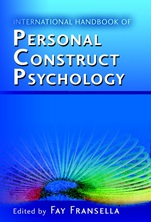
International Handbook of Personal Construct Psychology
ISBN 9780470847275
Autor: Fay Fransella
Wydawca: Wiley
Dostępność: 3-6 tygodni
Cena: 1 051,05 zł
Przed złożeniem zamówienia prosimy o kontakt mailowy celem potwierdzenia ceny.
ISBN13: |
9780470847275 |
ISBN10: |
0470847271 |
Autor: |
Fay Fransella |
Oprawa: |
Hardback |
Rok Wydania: |
2003-05-09 |
Ilość stron: |
528 |
Wymiary: |
250x181 |
Tematy: |
JC |
This first International Handbook of Personal Construct Psychology (PCP) illustrates by its breadth and scope the huge influence the work of George Kelly has had, since its inception in 1955, on psychology and related disciplines. Including some previously unpublished material by Kelly and Bannister, alongside classic texts, the handbook is largely devoted to the practical applications of Kelly’s work today.
Areas in which PCP is now being used include expert systems, forensic psychology, psychotherapy and counselling, politics, post–traumatic stress, education, developmental and family psychology, organizational psychology, cross–cultural understanding, nursing, policing, artificial intelligence and sport. As far as possible, each chapter aims to give the reader an idea or method that they can try out for themselves in their own work or personal context.
Even today some of Kelly’s ideas are novel. Although all–embracing, this handbook cannot be comprehensive as new applications and extensions are being developed continually. It will prove an invaluable reference to practitioners and scholars from a wide range of disciplines, wherever human understanding is relevant.
Spis treści:
About the Editor.
International Advisory Panel.
List of Contributors.
Introduction.
Acknowledgements.
Section I: The Psychology of Personal Constructs and its Philosophy.
Chapter 1. A Brief Introduction to Personal Construct Theory (George A. Kelly).
Chapter 2. George Alexander Kelly: The Man and his Theory (Fay Fransella and Robert A. Neimeyer).
Chapter 3. Kelly Versus Clockwork Psychology (Don Bannister).
Chapter 4. Kelly’s Philosophy of Constructive Alternativism (Gabriele Chiari and Maria Laura Nuzzo).
Chapter 5. Research in Personal Construct Psychology (Jack Adams–Webber).
Section II: Beliefs, Feelings and Awareness.
Chapter 6. &
#160;The Logic of Passion (Don Bannister).
Chapter 7. Belief, Attachment and Awareness (Spencer A. McWilliams).
Chapter 8. Working with Anger (Peter Cummins).
Section III: From Theory to Practice.
Chapter 9. The Repertory Grid Technique (Richard C. Bell).
Chapter 10. Some Skills and Tools for Personal Construct Practitioners (Fay Fransella).
Chapter 11. Elicitation Methods to Fit Different Purposes (Pam Denicolo).
Chapter 12. Expert Systems (Mildred L.G. Shaw and Brian R. Gaines).
Section IV: Individuals in Relation to Society.
Chapter 13. Social Relations in the Modern World (Devorah Kalekin–Fishman).
Chapter 14. Cross–Cultural Construing (Jörn W. Scheer).
Chapter 15. Forensic Personal Construct Psychology: Assessing and Treating Offenders (James Horley).
Chapter 16. Making Sense of Dependency (Beverly M.Walker).
Chapter 17. Personal Construct Theory and Politics and the Politics of Personal Construct Theory (Don Bannister).
Chapter 18. Moving Personal Construct Psychology to Politics: Understanding the Voices with which we Disagree (Dusan Stojnov).
Section V: Personal Change and Reconstruction.
Part 1: A Theoretical Understanding.
Chapter 19. Psychological Disorder as Imbalance (David Winter).
Chapter 20. From Theory to Research to Change (Fay Fransella).
Chapter 21. An Approach to Post–Traumatic Stress (Kenneth W. Sewell).
Part 2: The Process of Change.
Chapter 22. Is Treatment a Good Idea? (George A. Kelly).
Chapter 23. An Audacious Adventure: Personal Construct Counselling and Psychotherapy (Franz R. Epting, Marco Gemignani and Malcolm C. Cross).
Chapter 24. Personal Construct Psychotherapy and the Constructivist Horizon (Robert A. Neimeyer and Scott A. Baldwin).
Chapter 25. Experiential Personal Construct
Psychotherapy (Larry Leitner and Jill Thomas).
Chapter 26. The Evidence Base for Personal Construct Psychotherapy (David Winter).
Section VI: Development and Education.
Part 1: Development.
Chapter 27. Children’s Development of Personal Constructs (James C. Mancuso).
Chapter 28. Constructive Intervention when Children are Presented as Problems (Tom Ravenette).
Part 2: Education.
Chapter 29. Teacher–Student Relations at University Level (George A. Kelly).
Chapter 30. Construing Teaching and Teacher Education Worldwide (Maureen Pope).
Chapter 31. A Psychology for Teachers (Phillida Salmon).
Chapter 32. Learning and Diagnosis of Learning Results (Martin Fromm).
Section VII: Understanding Organizations
Chapter 33. The Power of a Good Theory (Sean Brophy, Fay Fransella and Nick Reed).
Chapter 34. Making Sense of the ‘Group Mind’ (Adrian Robertson).
Chapter 35. The Struggles of Organizational Transitions (Nelarine Cornelius).
Chapter 36. How can we Understand One Another if we don’t Speak the same Language? (Devi Jankowicz).
Chapter 37. Clarifying Corporate Values: A Case Study (Sean Brophy).
Section VIII: Philosophical and Religious Influences on the Thinking of George Kelly.
Chapter 38. The Phenomenological Context of Personal Construct Psychology (Trevor Butt).
Chapter 39. Pragmatism and Religion: Dewey’s Twin Influences? (Bill Warren).
Section IX: Living with Personal Construct Psychology: Personal Accounts.
Chapter 40. Personal Construct Psychology and Me (Dorothy Rowe).
Chapter 41. A Psychology of Questions (Miller Mair).
Chapter 42. Kelly’s Influence on Research and Career (Rue L. Cromwell).
Section X: Reaching Out.
Chapter 43.1 Nursing (Jacqui Costigan, Julie M. Ellis and Julie Wa
tkinson).
Chapter 43.2 Family Therapy (Harry Procter).
Chapter 43.3 The Metropolitan Police, London: A Personal Account (John Porter).
Chapter 43.4 A Sporting Use of Personal Construct Psychology (David Savage).
Chapter 43.5 Artificial Intelligence (Jack Adams–Webber).
Chapter 44. New Avenues to Explore and Questions to Ask (Fay Fransella).
Appendix 1. Theoretical Definitions.
Appendix 2. Some Basic Books on Personal Construct Psychology.
Appendix 3. Computer Programs and Websites.
References.
Index.
Nota biograficzna:
Fay Fransella is Founder and Director of the Centre for Personal Construct Pyschology, Emeritus Reader in Clinical Psychology, University of London and Visiting Professor in Personal Construct Psychology at the University of Hertfordshire, UK. She has written eleven books, eight of them specifically relating to personal construct psychology and published over one hundred and fifty journal papers and chapters.
Okładka tylna:
This first International Handbook of Personal Construct Psychology (PCP) illustrates by its breadth and scope the huge influence the work of George Kelly has had, since its inception in 1955, on psychology and related disciplines. Including some previously unpublished material by Kelly and Bannister, alongside classic texts, the handbook is largely devoted to the practical applications of Kelly’s work today.
Areas in which PCP is now being used include expert systems, forensic psychology, psychotherapy and counselling, politics, post–traumatic stress, education, developmental and family psychology, organizational psychology, cross–cultural understanding, nursing, policing, artificial intelligence and sport. As far as possible, each chapter aims to give the reader an idea or method that they can try out for themselves in their own work or personal context.
Even today some of Kelly
Koszyk
Książek w koszyku: 0 szt.
Wartość zakupów: 0,00 zł
Informacje


Kontakt
Gambit
Centrum Oprogramowania
i Szkoleń Sp. z o.o.
Al. Pokoju 29b/22-24
31-564 Kraków
Siedziba Księgarni
ul. Kordylewskiego 1
31-542 Kraków
+48 12 410 5991
+48 12 410 5987
+48 12 410 5989
Subskrypcje
Administratorem danych osobowych jest firma Gambit COiS Sp. z o.o. Na podany adres będzie wysyłany wyłącznie biuletyn informacyjny.
Autoryzacja płatności

Informacje na temat autoryzacji płatności poprzez PayU.

© Copyright 2012: GAMBIT COiS Sp. z o.o. Wszelkie prawa zastrzeżone.
Projekt i wykonanie: Alchemia Studio Reklamy