


Wydawcy
Katalog tematyczny
- Archeologia (109)
- Ekonomia, finanse, business (13704)
- Filozofia (1445)
- Historia (3040)
- Języki i językoznawstwo (2356)
- Lifestyle, hobby i rozrywka (475)
- Medycyna (9704)
- Nauki humanistyczne (4)
- Nauki o Ziemi i środowisku (2638)
- Nauki ścisłe (20412)
- Astronomia (294)
- Biologia (5119)
- Chemia (6540)
- Chemia analityczna (361)
- Chemia fizyczna (346)
- Chemia nieorganiczna (137)
- Chemia organiczna (535)
- Krystalografia (27)
- Minerologia (46)
- Fizyka (3309)
- Matematyka (4574)
- Nauki ścisłe, ogólnie (503)
- Nauki społeczne (8486)
- Nauki techniczne (13450)
- Prawo (1696)
- Publikacje informacyjne i interdyscyplinarne (1288)
- Religia i wierzenia (917)
- Technika komputerowa (4067)
- Zdrowie, relacje międzyludzkie i rozwój osobisty (657)





Informacje szczegółowe o książce
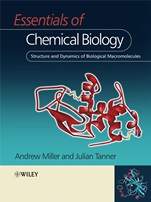
Essentials of Chemical Biology: Structure and Dynamics of Biological Macromolecules
ISBN 9780470845301
Autor: Andrew D. Miller, Julian Tanner
Wydawca: Wiley
Dostępność: 3-6 tygodni
Cena: 853,65 zł
Przed złożeniem zamówienia prosimy o kontakt mailowy celem potwierdzenia ceny.
ISBN13: |
9780470845301 |
ISBN10: |
0470845309 |
Autor: |
Andrew D. Miller, Julian Tanner |
Oprawa: |
Hardback |
Rok Wydania: |
2008-07-04 |
Ilość stron: |
596 |
Wymiary: |
254x178 |
Tematy: |
PN |
Chemical biology is a rapidly developing branch of chemistry, which sets out to understand the way biology works at the molecular level. Fundamental to chemical biology is a detailed understanding of the syntheses, structures and behaviours of biological macromolecules and macromolecular lipid assemblies that together represent the primary constituents of all cells and all organisms. The subject area of chemical biology bridges many different disciplines and is fast becoming an integral part of academic and commercial research.
Essentials of Chemical Biology is designed specifically as a key teaching resource for chemical biology that is intended to build on foundations lain down by introductory physical and organic chemistry courses. This book will be an invaluable text for advanced undergraduates taking biological, bioorganic, organic and structural chemistry courses. It will also be of interest to biochemists and molecular biologists, as well as professionals within the medical and pharmaceutical industry.A comprehensive introduction to this dynamic area of chemistry, which will equip chemists for the task of understanding and studying the underlying principles behind the functioning of biological macro molecules, macromolecular lipid assemblies and cells.Covers many basic concepts and ideas associated with the study of the interface between chemistry and biology.Includes pedagogical features such as: key examples, glossary of equations, further reading and links to websites.Clearly written and richly illustrated in full colour.
Spis treści:
Preface.
Glossary of physical terms.
1. The structures of biological macromolecules and lipid assemblies.
1.1. General introduction.
1.2. Protein structure.
1.3. Carbohydrate structure.
1.4. Nucleic and acid structure.
1.5. Macromolecular lipid assemblies.
1.6. Structural forces in biological macromolecules.
2. Chemical and bi
ological synthesis.
2.1. Introduction to synthesis in chemical biology.
2.2. Chemical synthesis of peptides and proteins.
2.3. Chemical synthesis of nucleic acids.
2.4. Chemical synthesis of oligosaccharides.
2.5. Chemical synthesis of lipids.
2.6. Biological synthesis of biological macromolecules.
2.7. Directed biological synthesis of proteins.
2.8. Biological syntheses of nucleic acids, oligosaccharides and lipids.
3. Molecular biology as a toolset for chemical biology.
3.1. Key concepts in molecular biology.
3.2. Tools and techniques in molecular biology.
3.3. Cloning and identification of genes in DNA.
3.4. Integrating cloning and expression.
3.5. Site–directed mutagenesis
4. Electronic and vibrational spectroscopy.
4.1. Electronic and vibrational spectroscopy in chemical biology.
4.2. UV–visible spectroscopy.
4.3. Circular dichroism spectroscopy.
4.4. Vibrational spectroscopy.
4.5. Fluorescence spectroscopy.
4.6. Probing metal centres by absorption spectroscopy.
5. Magnetic resonance.
5.1. Magnetic resonance in chemical biology.
5.2. Key principles of NMR.
5.3. Two–dimensional NMR.
5.4. Multi–dimensional NMR.
5.5. Biological macromolecule structural information.
5.6. EPR spectroscopy; Key Principles.
6. Diffraction and microscopy.
6.1. Diffraction and microscopy in chemical biology.
6.2. Key principles of X–ray diffraction.
6.3. Structural information from X–ray diffraction.
6.4. Neutron diffraction.
6.5. Key principles of electron microscopy.
6.6. Key principles of scanning probe microscopy.
7. Molecular recognition and binding.
7.1. Molecular recognition and binding in chemical biology.
7.2. Theoretical models of binding.
7.3. Analysing molecular recognition and binding.
7.4. Biological molecular recognition studies.
8. Kinetics and catalysis.
8.1. Catal
ysis in chemical biology.
8.2. Steady state kinetic schemes.
8.3. Pre–steady–state kinetics.
8.4. Theories of biocatalysis.
8.5. Electron transfer.
9. Mass spectrometry and proteomics.
9.1. Mass spectrometry in chemical biology.
9.2. Key principles in mass spectrometry.
9.3. Structural analysis of biological macromolecules and lipids by mass spectrometry.
9.4. The challenge of proteomics.
9.5. Genomics – assigning function to genes and proteins.
10. Molecular selection and evolution.
10.1. Chemical biology and the origins of life.
10.2. Molecular breeding; natural selection acting on self–organisation.
10.3. Directed evolution of protein function.
10.4. Directed evolution of nucleic acids.
10.5. Catalytic antibodies.
References.
Index.
References.
Index.
Okładka tylna:
Chemical biology is a rapidly developing branch of chemistry, which sets out to understand the way biology works at the molecular level. Fundamental to chemical biology is a detailed understanding of the syntheses, structures and behaviours of biological macromolecules and macromolecular lipid assemblies that together represent the primary constituents of all cells and all organisms. The subject area of chemical biology bridges many different disciplines and is fast becoming an integral part of academic and commercial research.
Essentials of Chemical Biology is designed specifically as a key teaching resource for chemical biology that is intended to build on foundations lain down by introductory physical and organic chemistry courses. This book will be an invaluable text for advanced undergraduates taking biological, bioorganic, organic and structural chemistry courses. It will also be of interest to biochemists and molecular biologists, as well as professionals within the medical and pharmaceutical industry.A comprehensive introduction to this dynamic area o
f chemistry, which will equip chemists for the task of understanding and studying the underlying principles behind the functioning of biological macro molecules, macromolecular lipid assemblies and cells.Covers many basic concepts and ideas associated with the study of the interface between chemistry and biology.Includes pedagogical features such as: key examples, glossary of equations, further reading and links to websites.Clearly written and richly illustrated in full colour.
Koszyk
Książek w koszyku: 0 szt.
Wartość zakupów: 0,00 zł
Informacje


Kontakt
Gambit
Centrum Oprogramowania
i Szkoleń Sp. z o.o.
Al. Pokoju 29b/22-24
31-564 Kraków
Siedziba Księgarni
ul. Kordylewskiego 1
31-542 Kraków
+48 12 410 5991
+48 12 410 5987
+48 12 410 5989
Subskrypcje
Administratorem danych osobowych jest firma Gambit COiS Sp. z o.o. Na podany adres będzie wysyłany wyłącznie biuletyn informacyjny.
Autoryzacja płatności

Informacje na temat autoryzacji płatności poprzez PayU.

© Copyright 2012: GAMBIT COiS Sp. z o.o. Wszelkie prawa zastrzeżone.
Projekt i wykonanie: Alchemia Studio Reklamy