


Wydawcy
Katalog tematyczny
- Archeologia (109)
- Ekonomia, finanse, business (13704)
- Filozofia (1445)
- Historia (3040)
- Języki i językoznawstwo (2356)
- Lifestyle, hobby i rozrywka (475)
- Medycyna (9704)
- Nauki humanistyczne (4)
- Nauki o Ziemi i środowisku (2638)
- Nauki ścisłe (20412)
- Astronomia (294)
- Biologia (5119)
- Chemia (6540)
- Chemia analityczna (361)
- Chemia fizyczna (346)
- Chemia nieorganiczna (137)
- Chemia organiczna (535)
- Krystalografia (27)
- Minerologia (46)
- Fizyka (3309)
- Matematyka (4574)
- Nauki ścisłe, ogólnie (503)
- Nauki społeczne (8486)
- Nauki techniczne (13450)
- Prawo (1696)
- Publikacje informacyjne i interdyscyplinarne (1288)
- Religia i wierzenia (917)
- Technika komputerowa (4067)
- Zdrowie, relacje międzyludzkie i rozwój osobisty (657)





Informacje szczegółowe o książce
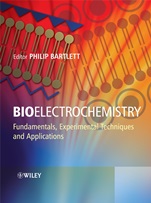
Bioelectrochemistry: Fundamentals, Experimental Techniques and Applications
ISBN 9780470843642
Autor: Philip N. Bartlett
Wydawca: Wiley
Dostępność: 3-6 tygodni
Cena: 1 072,05 zł
Przed złożeniem zamówienia prosimy o kontakt mailowy celem potwierdzenia ceny.
ISBN13: |
9780470843642 |
ISBN10: |
0470843640 |
Autor: |
Philip N. Bartlett |
Oprawa: |
Hardback |
Rok Wydania: |
2008-04-11 |
Ilość stron: |
494 |
Wymiary: |
253x198 |
Tematy: |
PN |
Bioelectrochemistry is the study and application of biological electron transfer processes. Over the last 25 years we have learnt some of the important factors which control the interaction between biological redox partners, including how to apply this knowledge and to start to design electrode surfaces, through deliberate chemical modification, so that the biological molecules will interact in a productive way with the electrode surface and facilitate efficient electron transfer. Over the same period significant parallel developments in physical electrochemistry have meant that the tools and techniques, such as in situ infrared spectroscopy, SERS, EQCM, STM and AFM, now exist to study the electrode solution interface at the molecular level. These techniques are now being used to characterise chemically modified electrode surfaces and to study their interaction with biological molecules.
Bioelectrochemistry: Fundamentals, Experimental Techniques and Applications, covers the fundamental aspects of the chemistry, physics and biology which underlie this subject area. It describes some of the different experimental techniques that can be used to study bioelectrochemical problems and it describes various applications of bioelectrochemistry including amperometric biosensors, in vivo applications and bioelectrosynthesis.
This volume provides a modern view of the field and is appropriate for graduate students and final year undergraduate students in chemistry and biochemistry as well as researchers in related disciplines including biology,physics, physiology and pharmacology.
Spis treści:
List of Contributors.
Preface.
1 Bioenergetics and Biological Electron Transport (Philip N. Bartlett).
1.1 Introduction.
1.2 Biological Cells.
1.3 Chemiosmosis.
1.3.1 The Proton Motive Force.
1.3.2 The Synthesis of ATP.
1.4 Electron Transport Chains.
1.4.1 The Mitochondrion.
1.4.2 The NADH–CoQ Reductase Complex.
1.4.3
The Succinate–CoQ Reductase Complex.
1.4.4 The CoQH2–Cyt c Reductase Complex.
1.4.5 The Cyt c Oxidase Complex.
1.4.6 Electron Transport Chains in Bacteria.
1.4.7 Electron Transfer in Photosynthesis.
1.4.8 Photosystem II.
1.4.9 Cytochrome bf Complex.
1.4.10 Photosystem I.
1.4.11 Bacterial Photosynthesis.
1.5 Redox Components.
1.5.1 Quinones.
1.5.2 Flavins.
1.5.3 NAD(P)H.
1.5.4 Hemes.
1.5.5 Iron–Sulfur Clusters.
1.5.6 Copper Centres.
1.6 Governing Principles.
1.6.1 Spatial Separation.
1.6.2 Energetics: Redox Potentials.
1.6.3 Kinetics: Electron Transfer Rate Constants.
1.6.4 Size of Proteins.
1.6.5 One–Electron and Two–Electron Couples.
1.7 ATP Synthase.
1.8 Conclusion.
References.
2 Electrochemistry of Redox Enzymes (James F. Rusling, Bingquan Wang and Sei–eok Yun).
2.1 Introduction.
2.1.1 Historical Perspective.
2.1.2 Examples of Soluble Mediators.
2.1.3 Development of Protein–Film Voltammetry and Direct Enzyme Electrochemistry.
2.2 Mediated Enzyme Electrochemistry.
2.2.1 Electron Mediation.
2.2.2 Wiring with Redox Metallopolymer Hydrogels.
2.2.3 Wiring with Conducting Polymers.
2.2.4 NAD(P)þ/NAD(P)H Dependent Enzymes.
2.2.5 Regeneration of NAD(P)H from NAD(P)þ.
2.2.6 Regeneration of NAD(P)þ from NAD(P)H.
2.3 Direct Electron Transfer between Electrodes and Enzymes.
2.3.1 Enzymes in Solution.
2.3.2 Enzyme–Film Voltammetry: Basic Theory.
2.3.3 Adsorbed and Coadsorbed Enzyme Monolayers.
2.3.4 Self–Assembled Monolayers and Covalently Attached Enzymes.
2.3.5 Enzymes on Carbon Nanotube Electrodes.
2.3.6 Enzymes in Lipid Bilayer Films.
2.3.7 Polyion Films and Layer–by–Layer Methods.
2.4 Outlook for the Future.
Acknowledgements.
References.
3 Biological Membranes and Membrane Mimics (Tibor Hianik).
3.1 Introduction.
3.2 Membrane Structure and Co
mposition.
3.2.1 Membrane Structure.
3.2.2 Membrane Lipids.
3.2.3 Membrane Proteins.
3.3 Models of Membrane Structure.
3.3.1 Lipid Monolayers.
3.3.2 Bilayer Lipid Membranes (BLM).
3.3.3 Supported Bilayer Lipid Membranes.
3.3.4 Liposomes.
3.4 Ordering, Conformation and Molecular Dynamics of Lipid Bilayers.
3.4.1 Structural Parameters of Lipid Bilayers Measured by X–ray Diffraction.
3.4.2 Interactions between Bilayers.
3.4.3 Dynamics and Order Parameters of Bilayers Determined by EPR and NMR Spectroscopy and by Optical Spectroscopy Methods.
3.5 Phase Transitions of Lipid Bilayers.
3.5.1 Lyotropic and Thermotropic Transitions.
3.5.2 Thermodynamics of Phase Transitions.
3.5.3 Trans–Gauche Isomerization.
3.5.4 Order Parameter.
3.5.5 Cooperativity of Transition.
3.5.6 Theory of Phase Transitions.
3.6 Mechanical Properties of Lipid Bilayers.
3.6.1 Anisotropy of Mechanical Properties of Lipid Bilayers.
3.6.2 The Model of an Elastic Bilayer.
3.6.3 Mechanical Properties of Lipid Bilayers and Protein–Lipid Interactions.
3.7 Membrane Potentials.
3.7.1 Diffusion Potential.
3.7.2 Electrostatic Potentials.
3.7.3 Methods of Surface Potential Measurement.
3.8 Dielectric Relaxation.
3.8.1 The Basic Principles of the Measurement of Dielectric Relaxation.
3.8.2 Application of the Method of Dielectric Relaxation to BLMs and sBLMs.
3.9 Transport Through Membranes.
3.9.1 Passive Diffusion.
3.9.2 Facilitated Diffusion of Charged Species Across Membranes.
3.9.3 Mechanisms of Ionic Transport.
3.9.4 Active Transport Systems.
3.10 Membrane Receptors and Cell Signaling.
3.10.1 Physical Reception.
3.10.2 Principles of Hormonal Reception.
3.10.3 Taste and Smell Reception.
3.11 Lipid–Film Coated Electrodes.
3.11.1 Modification of Lipid–Film Coated Electrodes by Functional Macromolecules.
3.11.2 Bioelectrochemical and Analytical Applications of
Lipid Coated Electrodes.
Acknowledgements.
References.
4 NAD(P)–Based Biosensors (L. Gorton and P. N. Bartlett).
4.1 Introduction.
4.2 Electrochemistry of NAD(P)þ/NAD(P)H.
4.3 Direct Electrochemical Oxidation of NAD(P)H.
4.3.1 General Observations.
4.3.2 Effect of Adsorption.
4.3.3 Mechanism and Kinetics.
4.4 Soluble Cofactors.
4.4.1 Implications of the Low Eo0 Value for Practical Applications.
4.4.2 Special Prerequisites for Biosensors Based on NAD(P)–Dependent Dehydrogenases.
4.5 Mediators for Electrocatalytic NAD(P)H Oxidation.
4.5.1 Other Mediating Functionalities and Metal Coated Electrodes.
4.5.2 Electropolymerisation.
4.5.3 Carbon Paste.
4.5.4 Gold Nanoparticles.
4.6 Construction of Biosensors from NAD(P)H–Dependent Dehydrogenases.
4.6.1 Entrapment Behind a Membrane.
4.6.2 Covalent Attachment to a Nylon Net or Membrane.
4.6.3 Cross–Linking.
4.6.4 Entrapment in a Polymer Film.
4.6.5 Carbon Paste.
4.6.6 Self–Assembled Monolayers.
4.7 Conclusions.
Acknowledgements.
References.
5 Glucose Biosensors (Josep M. Montornes, Mark S. Vreeke and Ioanis Katakis).
5.1 Introduction to Glucose Sensors.
5.2 Biosensors.
5.2.1 Types of Sensors.
5.2.2 Transduction Mode.
5.3 Application Areas.
5.3.1 Clinical.
5.3.2 Food and Fermentation.
5.4 Design Requirements.
5.4.1 Disposable Glucose Sensor.
5.4.2 Continuous Glucose Sensor.
5.4.3 Implantable Glucose Sensor.
5.5 Biosensor Construction.
5.5.1 Artificial Mediators.
5.5.2 Immobilization of GOx.
5.5.3 Inner and Outer Membrane Function.
5.6 From Product Design Requirements to Performance.
5.6.1 Design Exercise for the Disposable Glucose Sensor.
5.7 Conclusions.
Acknowledgement.
References.
6 Phenolic Biosensors (Ulla Wollenberger, Fred Lisdat, Andreas Rose and Katrin Streffer).
6.1 Introduction.
6.2 Enzymes Used for Phenol Biosensors.
6.2.1 Ph
Koszyk
Książek w koszyku: 0 szt.
Wartość zakupów: 0,00 zł
Informacje


Kontakt
Gambit
Centrum Oprogramowania
i Szkoleń Sp. z o.o.
Al. Pokoju 29b/22-24
31-564 Kraków
Siedziba Księgarni
ul. Kordylewskiego 1
31-542 Kraków
+48 12 410 5991
+48 12 410 5987
+48 12 410 5989
Subskrypcje
Administratorem danych osobowych jest firma Gambit COiS Sp. z o.o. Na podany adres będzie wysyłany wyłącznie biuletyn informacyjny.
Autoryzacja płatności

Informacje na temat autoryzacji płatności poprzez PayU.

© Copyright 2012: GAMBIT COiS Sp. z o.o. Wszelkie prawa zastrzeżone.
Projekt i wykonanie: Alchemia Studio Reklamy