


Wydawcy
Katalog tematyczny
- Archeologia (109)
- Ekonomia, finanse, business (13704)
- Filozofia (1445)
- Historia (3040)
- Języki i językoznawstwo (2356)
- Lifestyle, hobby i rozrywka (475)
- Medycyna (9704)
- Nauki humanistyczne (4)
- Nauki o Ziemi i środowisku (2638)
- Nauki ścisłe (20412)
- Nauki społeczne (8486)
- Edukacja (229)
- Kryminologia, opieka spełeczna (284)
- Obronność (10)
- Polityka (1389)
- Psychologia (777)
- Socjologia (410)
- Społeczeństwo i kultura (187)
- Nauki techniczne (13450)
- Prawo (1696)
- Publikacje informacyjne i interdyscyplinarne (1288)
- Religia i wierzenia (917)
- Technika komputerowa (4067)
- Zdrowie, relacje międzyludzkie i rozwój osobisty (657)





Informacje szczegółowe o książce
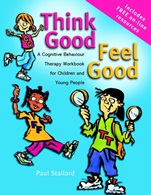
Think Good – Feel Good: A Cognitive Behaviour Therapy Workbook for Children and Young People
ISBN 9780470842904
Autor: Paul Stallard
Wydawca: Wiley
Dostępność: 3-6 tygodni
Cena: 205,80 zł
Przed złożeniem zamówienia prosimy o kontakt mailowy celem potwierdzenia ceny.
ISBN13: |
9780470842904 |
ISBN10: |
0470842903 |
Autor: |
Paul Stallard |
Oprawa: |
Paperback |
Rok Wydania: |
2002-06-27 |
Ilość stron: |
190 |
Wymiary: |
278x215 |
Tematy: |
JC |
Think Good – Feel Good is an exciting and pioneering new practical resource in print and on the internet for undertaking Cognitive Behaviour Therapy with children and young people. The materials have been developed by the author and trialled extensively in clinical work with children and young people presenting with a range of psychological problems.
Paul Stallard introduces his resource by covering the basic theory and rationale behind Cognitive Behaviour Therapy and how the workbook should be used. An attractive and lively workbook follows which covers the core elements used in Cognitive Behaviour Therapy programmes but conveys these ideas to children and young people in an understandable way and uses real life examples familiar to them. The practical series of exercises and worksheets introduce concepts that can be applied to each unique set of problems.
Think Good – Feel Good provides the clinician with a range of flexible and highly appealing materials that can be used to structure and facilitate clinical sessions. This is a "must have" resource for clinical psychologists, child and adolescent psychiatrists, community psychiatric nurses, educational psychologists and occupational therapists. Social workers, school nurses, practice counsellors and health visitors would also find this resource to be of great value.
Spis treści:
About the author.
1 Cognitive behaviour therapy: theoretical origins, rationale and techniques.
The empirical foundations of cognitive behaviour therapy.
The cognitive model.
Cognitive deficits and distortions.
Core characteristics of cognitive behaviour therapy.
The goal of cognitive behaviour therapy.
The core components of cognitive behavioural interventions.
A cautionary note.
2 Cognitive behaviour therapy with children and young people.
Cognitive behaviour therapy with children under 12 years of age.
Assessing the basic skills require
d to engage in cognitive behaviour therapy.
Cognitive behaviour therapy with adolescents.
Common problems when undertaking cognitive behaviour therapy with children and adolescents.
3 Think good – feel good: an overview of materials.
Thoughts, feelings and what you do.
Automatic thoughts.
Thinking errors.
Balanced thinking.
Core beliefs.
Controlling your thoughts.
How you feel.
Controlling your feelings.
Changing your behaviour.
Learning to solve problems.
4 Thoughts, feelings and what you do.
The magic circle.
What you think.
Core beliefs.
Beliefs and assumptions.
Important events.
Automatic thoughts.
How you feel.
What you do.
Think Good – Feel Good: Thoughts, feelings and what you do: putting it all together.
Think Good – Feel Good: The magic circle.
Think Good – Feel Good: The negative trap.
Think Good – Feel Good: The IF / THEN quiz.
Think Good – Feel Good: What I think, what I do, how I feel?
5 Automatic thoughts.
Me, what I do and my future.
Why do I listen to my negative thoughts?
The negative trap.
The negative cycle.
′Hot′ thoughts.
Think Good – Feel Good: Thoughts and feelings.
Think Good – Feel Good: My ′hot′ thoughts.
Think Good – Feel Good: Nice thoughts about myself.
Think Good – Feel Good: Nice thoughts about my future.
Think Good – Feel Good: Unpleasant thoughts about myself.
Think Good – Feel Good: Worrying thoughts about what I do.
Think Good – Feel Good: What are they thinking?
6 Thinking errors.
The downers.
Blowing things up.
Predicting failure.
Feeling thoughts.
Setting yourself up to fail.
Blame me!
Think Good – Feel Good: Identifying thinking errors.
Think Good – Feel Good: What thinking errors do you make?
7 Balanced thinking.
So how does it w
ork?
Think Good – Feel Good: Looking for evidence.
Think Good – Feel Good: Balanced thinking.
Think Good – Feel Good: Thought thermometer.
8 Core beliefs.
Identifying core beliefs.
Challenging core beliefs.
Talk with someone else.
Think Good – Feel Good: Identifying core beliefs.
Think Good – Feel Good: Challenging core beliefs.
Think Good – Feel Good: Common beliefs.
9 Controlling your thoughts.
Distraction.
Absorbing activities.
Coping self–talk.
Positive self–talk.
Thought stopping.
Turn the volume down.
Test them.
Throw them away.
Think Good – Feel Good: Test your thoughts and beliefs.
Think Good – Feel Good: The thought challenger.
Think Good – Feel Good: Looking for the positive.
Think Good – Feel Good: Positive self–talk.
Think Good – Feel Good: Coping self–talk.
Think Good – Feel Good: The ′worry safe′.
Think Good – Feel Good: Turn the tape off.
Think Good – Feel Good: Practise being successful.
Think Good – Feel Good: Thought stopping.
10 How you feel.
What feelings do I have?
Feelings and what you do.
Feelings and what you think.
Putting it all together.
Think Good – Feel Good: Thoughts and feelings.
Think Good – Feel Good: Activities and feelings.
Think Good – Feel Good: The Feeling Finder word search.
Think Good – Feel Good: What feeling goes where?
Think Good – Feel Good: My feelings.
Think Good – Feel Good: What happens when I feel sad?
Think Good – Feel Good: What happens when I feel angry?
Think Good – Feel Good: What happens when I feel anxious?
Think Good – Feel Good: What happens when I feel happy?
Think Good – Feel Good: Feelings and places.
Think Good – Feel Good: The Feeling Thermometer.
11 Controll
ing your feelings.
Learn to relax.
Physical exercise.
Controlled breathing.
Calming pictures.
Relaxing activities.
Prevention.
Think Good – Feel Good: The ′feeling strong room′.
Think Good – Feel Good: Feeling Finder: anger volcano.
Think Good – Feel Good: Learning to relax.
Think Good – Feel Good: My relaxing place.
Think Good – Feel Good: My relaxing activities.
12 Changing your behaviour.
Increase fun activities.
Map how you feel and what you do.
Small steps.
Face your fears.
Dump your habits.
Think Good – Feel Good: Activity diary.
Think Good – Feel Good: Next step up the ladder.
Think Good – Feel Good: Things that make me feel good.
Think Good – Feel Good: Things that make me feel unpleasant.
Think Good – Feel Good: Things I would like to do.
Think Good – Feel Good: Face your fears.
Think Good – Feel Good: Small steps.
Think Good – Feel Good: Dump your habits.
13 Learning to solve problems.
Why do problems happen?
Learn to stop and think.
Identify different solutions.
Think through the consequences.
Remind yourself what to do.
Practise getting it right.
Plan to be successful.
Talk yourself through it.
Think Good – Feel Good: Identifying possible solutions.
Think Good – Feel Good: What are the consequences of my solutions?
Think Good – Feel Good: Looking for solutions.
Think Good – Feel Good: Talk yourself through it.
Think Good – Feel Good: Stop, plan and go.
References.
Index.
Nota biograficzna:
Dr Paul Stallard graduated as a clinical psychologist from Birmingham University in 1980. He worked with children and young people in the West Midlands before moving to the Department of Child and Family Psychiatry, Bath, in 1988. He is a visiting research fellow at Bath Uni
versity, and has received a number of research grants exploring the effects of trauma and chronic illness on children. He has published over 50 peer–reviewed papers and is currently leading a research trial exploring the use of cognitive behaviour therapy in the treatment of post–traumatic stress disorders.
Okładka tylna:
Think Good – Feel Good is an exciting and pioneering new practical resource in print and on the internet for undertaking Cognitive Behaviour Therapy with children and young people. The materials have been developed by the author and trialled extensively in clinical work with children and young people presenting with a range of psychological problems.
Paul Stallard introduces his resource by covering the basic theory and rationale behind Cognitive Behaviour Therapy and how the workbook should be used. An attractive and lively workbook follows which covers the core elements used in Cognitive Behaviour Therapy programmes but conveys these ideas to children and young people in an understandable way and uses real life examples familiar to them. The practical series of exercises and worksheets introduce concepts that can be applied to each unique set of problems.
Think Good – Feel Good provides the clinician with a range of flexible and highly appealing materials that can be used to structure and facilitate clinical sessions. This is a "must have" resource for clinical psychologists, child and adolescent psychiatrists, community psychiatric nurses, educational psychologists and occupational therapists. Social workers, school nurses, practice counsellors and health visitors would also find this resource to be of great value.
Koszyk
Książek w koszyku: 0 szt.
Wartość zakupów: 0,00 zł
Informacje


Kontakt
Gambit
Centrum Oprogramowania
i Szkoleń Sp. z o.o.
Al. Pokoju 29b/22-24
31-564 Kraków
Siedziba Księgarni
ul. Kordylewskiego 1
31-542 Kraków
+48 12 410 5991
+48 12 410 5987
+48 12 410 5989
Subskrypcje
Administratorem danych osobowych jest firma Gambit COiS Sp. z o.o. Na podany adres będzie wysyłany wyłącznie biuletyn informacyjny.
Autoryzacja płatności

Informacje na temat autoryzacji płatności poprzez PayU.

© Copyright 2012: GAMBIT COiS Sp. z o.o. Wszelkie prawa zastrzeżone.
Projekt i wykonanie: Alchemia Studio Reklamy