


Wydawcy
Katalog tematyczny
- Archeologia (109)
- Ekonomia, finanse, business (13704)
- Filozofia (1445)
- Historia (3040)
- Języki i językoznawstwo (2356)
- Lifestyle, hobby i rozrywka (475)
- Medycyna (9704)
- Nauki humanistyczne (4)
- Nauki o Ziemi i środowisku (2638)
- Nauki ścisłe (20412)
- Nauki społeczne (8486)
- Nauki techniczne (13450)
- Prawo (1696)
- Publikacje informacyjne i interdyscyplinarne (1288)
- Religia i wierzenia (917)
- Technika komputerowa (4067)
- Zdrowie, relacje międzyludzkie i rozwój osobisty (657)



Informacje szczegółowe o książce
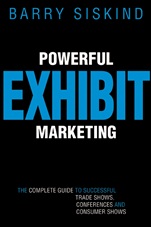
Powerful Exhibit Marketing: The Complete Guide to Successful Trade Shows, Conferences, and Consumer Shows
ISBN 9780470834695
Autor: Barry Siskind
Wydawca: Wiley
Dostępność: 3-6 tygodni
Cena: 152,25 zł
Przed złożeniem zamówienia prosimy o kontakt mailowy celem potwierdzenia ceny.
ISBN13: |
9780470834695 |
ISBN10: |
0470834692 |
Autor: |
Barry Siskind |
Oprawa: |
Paperback |
Rok Wydania: |
2005-04-19 |
Ilość stron: |
302 |
Wymiary: |
232x158 |
Tematy: |
KM |
Trade shows, consumer shows, product launches, corporate events, professional conferences and other opportunities to interact face–to–face with customers have become an important part of the marketing mix. Well chosen and executed events can shorten the sales cycle significantly and put you miles ahead of the competition, but you need to have an exhibit plan that’s well thought out, organized and executed, Powerful Exhibit Marketing provides the step–by–step advice you need to get real results from your exhibits, Learn how to:Set objectives, budget for your event, and measure its successChoose the right show and find the right audienceDevelop an action plan for working the showDesign an attractive, memorable, and effective boothCreate promotions and in–booth activities that workTurn leads into businessGather customer information and competitive intelligenceFollow up successfully
Spis treści:
Acknowledgments.
Introduction.
What Is Exhibit Management?
PART ONE: MANAGING THE FISCAL RESOURCES.
Chapter 1. Exhibiting Objectives.
Three Levels of Exhibit Objectives.
Get Focused.
Quantify Your Objectives.
In Conclusion.
Chapter 2. Budgeting and Financial Management.
Calculate the Amount of Exhibit Space Required.
The Final Budget.
Financial Management.
Exhibit Annual Report.
In Conclusion.
Chapter 3. Choosing the Right Event.
Understand Your Objectives.
Define Your Audience.
Establish a Customer Profile.
Focus on Your Market.
Rank Your Customer Profiles in Order of Priority.
Where Do You Find Places to Exhibit?
How to Choose the Right Event.
Where to Find Suitable Events.
In Conclusion.
PART TWO: MANAGING THE PHYSICAL ASPECTS.
Chapter 4. Create Your Three–Dimensional Marketing Experience.
Creating the Experience.
Interest.
Memorability.<
br>Connectivity.
Developing Your Display Needs Analysis.
Create a Request for Proposal (RFP).
The Design Schedule.
In Conclusion.
Chapter 5. Your Display—the Nuts and Bolts.
System: Custom or Hybrid?
Color.
Lighting.
Flooring.
Signs and Graphics.
Technology.
Booth Configuration.
Layouts.
Height.
Customs and Duty.
Storage.
Emergency Supplies Box.
In Conclusion.
Chapter 6. Enhancements.
Location.
Plants and Flowers.
Hospitality.
Demonstrations.
Collateral Material.
Draws.
In–Booth Activities.
Promotional Products.
Sponsorships.
In Conclusion.
Chapter 7. Pre–Show Promotion.
Invitations.
Public Relations.
Advertising.
Web Announcements.
Other Promotional Ideas.
In Conclusion.
PART THREE: MANAGING THE HUMAN RESOURCES.
Chapter 8. Pre–Show Briefing.
Attendees’ Behavior.
Booth Staff Personality.
The Third Element: The Type of Training.
In Conclusion.
Chapter 9. The Four Stages of Boothing.
Stage 1. Entry Level.
Stage 2: Better but Still a Long Way to Go.
Stage 3: The First Sign of Real Improvement.
Stage 4: Where Real Results Are Found.
The Skills.
The Six People You Are Likely to Meet at a Trade Show.
Motivate the Doers.
In Conclusion.
Chapter 10. Breaking the Ice.
Do #1: Ask Open Questions.
Do #2: Focus on Business.
Don’t #1: Don’t Ask a Question If You Don’t Want the Answer.
Don’t #2: Don’t Ask a Question If You Don’t Know What to Do with the Answer.
Don’t #3: Don’t Ask a Question That Leads to a Pitch.
Three Ice–Breaking Scenarios.
In Conclusion.
Chapter 11. Gathering Information.
A = Authority.
C = Capability.
T = Time.
I = Identity.
O = Obstacles.
N = Need.
In Conclusion.
Chapter 12. Making Effective Show Presentations.
Maintain Focus.
Good Time Management Practices.
The Presentation.
In Conclusion.
Chapter 13. Disengaging.
The Presumptive Disengagement.
The Conciliatory Disengagement.
In Conclusion.
Chapter 14. Developing Rapport with Potential Clients.
Words.
Para–Verbal.
Nonverbal.
Prior to Approaching.
Rapport during the Ice Breaker.
Rapport during Information Gathering.
What to Look for.
Maslow′s Hierarchy and the Rapport–Building Process.
Rapport during the Disengagement.
In Conclusion.
Chapter 15. Turning Leads into Business.
Sales Objectives.
Sample Letters.
Continuous Follow–up.
Stay in Touch.
Communication Objectives.
A Guideline for Creating Your Follow–up Plan.
A Note About Privacy.
In Conclusion.
Chapter 16. Gathering Strategic Intelligence at a Show.
Your Strategic Intelligence Team.
Your Strategic Intelligence Plan.
Step 1: Set Up Definitions and Objectives.
Step 2: Do the Research.
Step 3: Assign Responsibilities and Create a Schedule for Your Strategic Intelligence Team.
Step 4: Gathering the Information.
Step 5: Develop the Walking Plan.
Step 6: Strategic Intelligence Overlap.
Step 7: Combat Information Overload.
Step 8: Evaluate Your Results.
In Conclusion.
Index.
Nota biograficzna:
BARRY SISKIND, President of International Training and Management, is one of North America’s foremost trade and consumer show experts, and a sought–after professional speaker. He conducts workshops and speaks to 30,000–40,000 people across North America and internationally each year. Siskind’s clients include Nortel Networks, JDS Uniphase, Novartis, Glaxo–Smith Klein, Bank of Montreal, and Royal Bank of Canada. He is the trainer of choice for DMG World Media (one of the largest trade show operators in the world), and Nimlok (the second largest booth
manufacturer in the world). Siskind has written over 500 original articles for trade and consumer publications, including The Globe and Mail, Marketing, and Exhibitor Magazine. He is also the author of Bumblebees Can’t Fly, Eagles Must Soar, and Making Contact.
Okładka tylna:
Trade shows, consumer shows, product launches, corporate events, professional conferences and other opportunities to interact face–to–face with customers have become an important part of the marketing mix. Well chosen and executed events can shorten the sales cycle significantly and put you miles ahead of the competition, but you need to have an exhibit plan that’s well thought out, organized and executed, Powerful Exhibit Marketing provides the step–by–step advice you need to get real results from your exhibits, Learn how to:Set objectives, budget for your event, and measure its successChoose the right show and find the right audienceDevelop an action plan for working the showDesign an attractive, memorable, and effective boothCreate promotions and in–booth activities that workTurn leads into businessGather customer information and competitive intelligenceFollow up successfully
Koszyk
Książek w koszyku: 0 szt.
Wartość zakupów: 0,00 zł
Informacje


Kontakt
Gambit
Centrum Oprogramowania
i Szkoleń Sp. z o.o.
Al. Pokoju 29b/22-24
31-564 Kraków
Siedziba Księgarni
ul. Kordylewskiego 1
31-542 Kraków
+48 12 410 5991
+48 12 410 5987
+48 12 410 5989
Subskrypcje
Administratorem danych osobowych jest firma Gambit COiS Sp. z o.o. Na podany adres będzie wysyłany wyłącznie biuletyn informacyjny.
Autoryzacja płatności

Informacje na temat autoryzacji płatności poprzez PayU.

© Copyright 2012: GAMBIT COiS Sp. z o.o. Wszelkie prawa zastrzeżone.
Projekt i wykonanie: Alchemia Studio Reklamy