


Wydawcy
Katalog tematyczny
- Archeologia (109)
- Ekonomia, finanse, business (13704)
- Filozofia (1445)
- Historia (3040)
- Języki i językoznawstwo (2356)
- Lifestyle, hobby i rozrywka (475)
- Medycyna (9704)
- Nauki humanistyczne (4)
- Nauki o Ziemi i środowisku (2638)
- Nauki ścisłe (20412)
- Nauki społeczne (8486)
- Nauki techniczne (13450)
- Prawo (1696)
- Publikacje informacyjne i interdyscyplinarne (1288)
- Religia i wierzenia (917)
- Technika komputerowa (4067)
- Zdrowie, relacje międzyludzkie i rozwój osobisty (657)





Informacje szczegółowe o książce
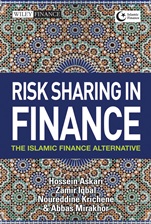
Risk Sharing in Finance: The Islamic Finance Alternative
ISBN 9780470829660
Autor: Hossein Askari, Zamir Iqbal, Noureddine Krichene, Abbas Mirakhor
Wydawca: Wiley
Dostępność: 3-6 tygodni
Cena: 476,70 zł
Przed złożeniem zamówienia prosimy o kontakt mailowy celem potwierdzenia ceny.
ISBN13: |
9780470829660 |
ISBN10: |
0470829664 |
Autor: |
Hossein Askari, Zamir Iqbal, Noureddine Krichene, Abbas Mirakhor |
Oprawa: |
Hardback |
Rok Wydania: |
2012-02-28 |
Ilość stron: |
312 |
Wymiary: |
238x167 |
Tematy: |
KF |
The arrival of Risk Sharing in Finance: The Islamic Finance Alternative with its alternative perspective on a financial system design to mitigate future financial crises could not have been better timed. We are still suffering from the perplexing 2008–2009 financial crisis of banking and credit risk, which has had a devastating impact on the United States, United Kingdom and Europe. In contrast to many proposed solutions, which have never been tested, this one draws on the considerable experience from the Islamic financial risk–sharing system. Whether prime researcher, experienced public policy maker or seasoned private–sector practitioner, the reader will find this a thought–provoking approach to address fundamental financial reform. Robert C. Merton Nobel Laureate in Economics, 1997 The School of Management Distinguished Professor of Finance at the MIT Sloan School of Management and University Professor Emeritus at Harvard University Risk Sharing in Finance: The Islamic Finance Alternative portrays how finance should ideally be done in the Islamic world. An array of different forms of equity contract substitutes for debt. The authors give a new perspective on fundamental reform of our financial system, as they also give us a vision of a future, in which financial crises are very much muted, or, like smallpox, have become a scourge of the past. George Akerlof Nobel Laureate in Economics, 2001 Koshland Professor of Economics, University of California at Berkeley The recent financial crisis has highlighted the risks of excessive debt and leverage. Could a fully equity–based financial system offer a superior alternative? This thoughtful and provocative book argues that it would. Essential reading for those who want to understand how a completely Islamized financial system might work in practice. Sir Andrew Crockett Vice Chairman of JPMorgan Chase International; Member, The Group of Thirty; and Former Head of the Bank for International Settlement (BIS) This is a beautifully written, crystal clear, and tremendously insightful book about what ails our financial system and how key features of Islamic finance could help. Every student of finance can and should learn from this financial gem. Laurence J. Kotlikoff Author, Jimmy Stewart Is Dead William Warren Fairfield Professor of Economics, Boston University
Preface ix Acknowledgments xvii Glossary xix PART ONE THE HISTORY AND CAUSES OF FINANCIAL CRISES CHAPTER 1 A Brief History of Financial Crises and Proposed Reforms 3 CHAPTER 2 Financialization and the Decoupling–Recoupling Hypotheses 31 PART TWO RISK SHARING AND THE ISLAMIC PARADIGM CHAPTER 3 A Brief History of Risk–Sharing Finance 49 CHAPTER 4 Risk Sharing and the Islamic Finance Paradigm 69 CHAPTER 5 Risk Sharing in the Islamic Financial System: The Building Blocks 95 CHAPTER 6 Risk Sharing and Vibrant Capital Markets in Islamic Finance 115 CHAPTER 7 Portfolio Theory and Asset Pricing 133 CHAPTER 8 Complementary Role of Intermediaries and Markets in Promoting Risk Sharing 159 PART THREE MOVING FORWARD CHAPTER 9 Enhanced Access to Finance, Social Welfare, and Economic Development under a Risk–Sharing System 181 CHAPTER 10 The Role of Institutions and Governance in Risk Sharing 201 CHAPTER 11 Gaps between the Theory and Practice of Islamic Finance 225 CHAPTER 12 Concluding Remarks 247 References 259 Index 277
PROF. HOSSEIN ASKARI is Iran Professor of International Business and International Affairs at the George Washington University. He served for two and a half years on the Executive Board of the IMF and was Special Advisor to the Minister of Finance of Saudi Arabia; during the mid–1980s he was director of the team that developed the first comprehensive domestic, regional and international energy models and plan for Saudi Arabia. He has written extensively on economic development in the Middle East, Islamic economics and finance, international trade and finance, agricultural economics, oil economics and on economic sanctions. He received his university education at MIT. DR. ZAMIR IQBAL works as Lead Investment Officer in the Treasury of the World Bank in Washington, D.C. He earned his Ph.D. in International Finance from the George Washington University, where he also serves as adjunct faculty of International Finance. He has extensive experience with capital markets, structured products, risk management, financial sector development, and financial modeling. His research interests include Islamic finance, financial engineering, structured finance and risk management. He is co–author of several books on Islamic banking and finance. He also serves as Professional Faculty at the John Hopkins Carey Business School where he teaches graduate level courses on investment and portfolio management and risk of financial institutions. DR. NOUREDDINE KRICHENE received his Ph.D. in economics, University of California, Los Angeles, 1980; joined the International Monetary Fund (IMF) in 1986; and held the position of advisor at the Islamic Development Bank. DR. ABBAS MIRAKHOR received his Ph.D. in Economics from Kansas State University in 1969. After teaching at various universities in the USA and in Iran he joined the staff of the Research Department of the IMF in 1984. He became an Executive Director of the IMF from 1990 until his retirement in 2008. He is the author of a number of articles and books on Islamic economics and finance. He is now the first holder of the INCEIF Chair in Islamic Finance.
Koszyk
Książek w koszyku: 0 szt.
Wartość zakupów: 0,00 zł
Informacje


Kontakt
Gambit
Centrum Oprogramowania
i Szkoleń Sp. z o.o.
Al. Pokoju 29b/22-24
31-564 Kraków
Siedziba Księgarni
ul. Kordylewskiego 1
31-542 Kraków
+48 12 410 5991
+48 12 410 5987
+48 12 410 5989
Subskrypcje
Administratorem danych osobowych jest firma Gambit COiS Sp. z o.o. Na podany adres będzie wysyłany wyłącznie biuletyn informacyjny.
Autoryzacja płatności

Informacje na temat autoryzacji płatności poprzez PayU.

© Copyright 2012: GAMBIT COiS Sp. z o.o. Wszelkie prawa zastrzeżone.
Projekt i wykonanie: Alchemia Studio Reklamy