


Wydawcy
Katalog tematyczny
- Archeologia (109)
- Ekonomia, finanse, business (13704)
- Filozofia (1445)
- Historia (3040)
- Języki i językoznawstwo (2356)
- Lifestyle, hobby i rozrywka (475)
- Medycyna (9704)
- Nauki humanistyczne (4)
- Nauki o Ziemi i środowisku (2638)
- Nauki ścisłe (20412)
- Nauki społeczne (8486)
- Nauki techniczne (13450)
- Prawo (1696)
- Publikacje informacyjne i interdyscyplinarne (1288)
- Religia i wierzenia (917)
- Technika komputerowa (4067)
- Zdrowie, relacje międzyludzkie i rozwój osobisty (657)





Informacje szczegółowe o książce
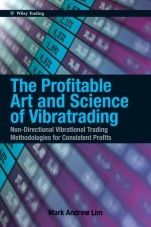
The Profitable Art and Science of Vibratrading: Non–Directional Vibrational Trading Methodologies for Consistent Profits
ISBN 9780470828748
Autor: Mark Andrew Lim
Wydawca: Wiley
Dostępność: 3-6 tygodni
Cena: 300,30 zł
Przed złożeniem zamówienia prosimy o kontakt mailowy celem potwierdzenia ceny.
ISBN13: |
9780470828748 |
ISBN10: |
0470828749 |
Autor: |
Mark Andrew Lim |
Oprawa: |
Hardback |
Rok Wydania: |
2011-10-04 |
Ilość stron: |
264 |
Wymiary: |
236x159 |
Tematy: |
KF |
An excellent book for all serious investors and traders who are looking for a more objective approach to profiting from the markets. This book teaches you how to generate returns regardless of market direction and focuses on generating vibrational returns across all price levels without worrying about balancing probabilities or win/loss ratios. This is definitely the greatest advantage of a non–expectancy based trading methodology. This book should be in every trader s library.
S.W. Wong
Former Vice President, Citibank Bhd. (M)
The author presents strategies for making consistent income that are easily implementable without the need to predict future price action. He masterfully combines vibrational, directional and bidirectional techniques within the constructs, giving traders a powerful and innovative way to maximize returns without ever having to top up trading capital since full earning potential is preserved at all times. This essentially gives a trader the opportunity to generate income for life, from a fixed initial investment that is never depleted. An indispensable book.
Conor McManus
Managing Director, C–Risk Management Sdn. Bhd
The financial world has undergone vast changes after the Lehman crisis. Among which, market volatility has increased tremendously against the headwinds from Europe and the US which inevitably affect Asia. There is a need for investors to stay invested despite mounting uncertainties in order to improve real returns while preserving capital. In this very challenging environment, author Mark Lim has shared in this book strategies designed to combat volatility and preserve earning potential which will be of interest to trading–inclined investors with a quantitative and disciplined approach.
Tan Beng Ling
Head of Research, CIO, Kumpulan Sentiasa Cemerlang
As a directional trader, I manage risk by employing a stop loss strategy, I was initially skeptical about Vibratrading′s "no stop loss" trading style. However, the author presents a comprehensive alternative that opens a fresh and different perspective. It is important for all of us to have an open mind, as the frontiers of all knowledge can only expand when we are prepared to assess new ideas. The Profitable Art and Science of Vibratrading offers a new and comprehensive approach to trading, without the stop loss method of risk control.
Jeffery Tie
Author, Aiki Traiding
Acknowledgments ix
Introduction xi
CHAPTER 1 Challenges to Conventional Trading and Investing 1
Directional vs. Non–Directional Methodology 1
Problem of Maintaining Long–Term Consistent Positive Expectancy 3
Predictive vs. Reactive Approaches to Risk in Trading 5
Trader Inactivity and Volatile Price Activity 6
Subjectivity vs. Objectivity in Trading and Investing 7
Filtering and Trade Signals 9
CHAPTER 2 Understanding the Basics of Order Entry 13
Common Trading Terminology and Definitions 13
Common Orders 15
Entry Orders for Bounded Vibrational Trading 17
CHAPTER 3 The Objectives of Vibratrading 19
Vibratrading as an Income Strategy 20
Introduction to the Components of Vibratrading 21
Main Components of Vibratrading 24
Meaning of the SISO and SOSI Acronyms 29
Basic Scaling Entries and Exits 31
CHAPTER 4 Controlling Risk in Vibratrading 35
Types of Risk 35
Risk Control Mechanisms 36
CHAPTER 5 The Mechanics of Equity–Based Price Action 47
Equity–Based Calculations 47
Market Value vs. Profit Potential 48
Price Leverage Ratio (PLR) 49
Money Leverage Ratio (MLR) 53
Buying Leverage Ratio (BLR) 53
Account Leverage Ratio (ALR) 58
Calculating the Initial and Current Market Value 62
CHAPTER 6 The Mechanics of Securitization and Monetization 63
Monetizing in Margin and Non–Margin Accounts 65
Securitizing Profits and Risk Capital 67
The Basic Principles of Price Action 68
The Effects of Negative Spread Bias on Reward to Risk Ratio 73
Hedged Price Action Principles 79
CHAPTER 7 The Principles of Boundedness 83
Capital Boundedness 86
Directional Boundedness 92
Range Boundedness 94
Order Entry Boundedness 97
CHAPTER 8 The Mechanics and Dynamics of Vibratrading 101
Vibrational Operations, Mechanisms, and Constructs 102
The Scale Factor 105
Capstone Mechanisms 108
The Macrososi Vibrational Mechanism 109
Macrosimo Mechanism (Upbuy – Upsell) 114
CHAPTER 9 Pyramidal–Based Vibrational Mechanisms 121
Microsiso 121
Interval Slip–Through 125
Macrosiso 129
Extracting Macrosiso Vibrational Profits 134
The Arbitrary Vibrational Construct 140
Upside Bounded Macrosiso and Microsiso 144
Unbounded Upside Macrosiso Mechanism 145
Unbounded Hedged Vibrational Constructs 145
CHAPTER 10 Diversification in Vibratrading 147
Bounded Versus Unbounded Zero Test Level Event 148
The Six Levels of Diversification 150
CHAPTER 11 Volatility Matching 157
Historical Range Volatility (HRV) 157
Event Trading (High Volatility Trading) 158
Range Zoning (Medium to Low Volatility Trading) 158
CHAPTER 12 Putting It All Together, Finally! 161
The Return Characteristics of Vibrational Constructs 162
A Brief Guide to Understanding the Scale Analysis Tables 162
Introduction to Vibradirectional Techniques 172
Calculating Working and Running Capital
within Vibrational Grids 176
Free Swing with Constant Capital per Level with Type 1
(Roll to Break–Even) 183
Gaps in the Grids 187
The Balance Between Opportunity Cost and Profitability 189
Free Styling across Multiple Levels without Risk Freeing 198
Unbounded Bidirectional Profit Capture Constructs 200
The "Big Hedge" Technique 202
The "Small Hedge" 203
The Upside Short Hedge 204
Zero Cost Hedging Technique for "Loading the Matrix" 205
More Constructs 206
Exiting With Profit 211
CHAPTER 13 The Vibrational Vehicles 213
Characteristics of Exchange Traded Funds (ETFs) 214
Types of Risk Associated with ETFs 215
Funds to Avoid In Vibrational Trading 217
The Replicated ETF Portfolio 222
CHAPTER 14 Comparison with Other Trading Systems 225
Vibratrading vs. Scale Trading 225
Vibratrading vs. Dollar Cost Averaging 225
Vibratrading vs. Value Averaging 226
Vibratrading vs. Buy and Hold 226
Vibratrading vs. Directional Trading 226
CHAPTER 15 Profiting from Non–Vibrational Flatline Price Action 227
The Basis for Non–Directionality 227
Riskless Short Options Trades 228
Using Short Options in Vibratrading 228
CHAPTER 16 Summary of Vibratrading 229
The Two Rules of Vibratrading 229
A Quick Recap 230
Choosing a Vibratrading Construct 234
The Importance of a Balanced Pyramidal Structure 238
Conclusion 239
Index 241
Mark Andrew Lim graduated in Special Physics from King s College London and was subsequently awarded the Bronwen Wood Memorial Prize in Technical Analysis by the Society of Technical Analysis (UK). His trading expertise includes stocks, CFDs, futures and options. Mark conducts a range of technical analysis and proprietary trading master classes covering intermediate to advanced profit extraction methodologies for both directional and non–directional trading.
Some of Mark s proprietary trading methods include vibrational, bidirectional, reactional, formational, oscillational, exclusional and transformational. He is a contributing author for The Wiley Trading Guide II and can be reached at www.tradermasterclass.com.
Koszyk
Książek w koszyku: 0 szt.
Wartość zakupów: 0,00 zł
Informacje


Kontakt
Gambit
Centrum Oprogramowania
i Szkoleń Sp. z o.o.
Al. Pokoju 29b/22-24
31-564 Kraków
Siedziba Księgarni
ul. Kordylewskiego 1
31-542 Kraków
+48 12 410 5991
+48 12 410 5987
+48 12 410 5989
Subskrypcje
Administratorem danych osobowych jest firma Gambit COiS Sp. z o.o. Na podany adres będzie wysyłany wyłącznie biuletyn informacyjny.
Autoryzacja płatności

Informacje na temat autoryzacji płatności poprzez PayU.

© Copyright 2012: GAMBIT COiS Sp. z o.o. Wszelkie prawa zastrzeżone.
Projekt i wykonanie: Alchemia Studio Reklamy