


Wydawcy
Katalog tematyczny
- Archeologia (109)
- Ekonomia, finanse, business (13704)
- Filozofia (1445)
- Historia (3040)
- Języki i językoznawstwo (2356)
- Lifestyle, hobby i rozrywka (475)
- Medycyna (9704)
- Nauki humanistyczne (4)
- Nauki o Ziemi i środowisku (2638)
- Nauki ścisłe (20412)
- Nauki społeczne (8486)
- Nauki techniczne (13450)
- Prawo (1696)
- Publikacje informacyjne i interdyscyplinarne (1288)
- Religia i wierzenia (917)
- Technika komputerowa (4067)
- Zdrowie, relacje międzyludzkie i rozwój osobisty (657)





Informacje szczegółowe o książce
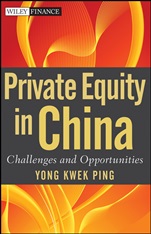
Private Equity in China: Challenges and Opportunities
ISBN 9780470826515
Autor: Kwek Ping Yong
Wydawca: Wiley
Dostępność: 3-6 tygodni
Cena: 665,70 zł
Przed złożeniem zamówienia prosimy o kontakt mailowy celem potwierdzenia ceny.
ISBN13: |
9780470826515 |
ISBN10: |
0470826517 |
Autor: |
Kwek Ping Yong |
Oprawa: |
Hardback |
Rok Wydania: |
2012-03-16 |
Ilość stron: |
336 |
Wymiary: |
233x162 |
Tematy: |
KF |
Praise for Private Equity in China "During my thirty years of involvement with Asia, I have come to know and admire Yong Kwek Ping for his extraordinary knowledge about the Chinese financial world. This book provides unique insights on what is going on in the world of private equity in the second largest economy on the planet. Yong Kwek Ping is giving us an elegant new book, well balanced, judicious, and brilliantly clear in his judgment. His unique combination of practical experience and academic insights bring us a new level of understanding of the nature of private equity in China. Tautly written, this book is a new landmark, a work of great lucidity. An absolute must–read."Dr. Dominique Turpin, President and The Nestl?e Professor, IMD "Attracted by the strong growth of the Chinese economy and superlative returns of the private equity investments in China made in the last decade, many businesses and people (both foreign and local) are rushing into private equity in China without a deep understanding of the sector. This book, written by a veteran practitioner, provides a thorough overview of the private equity landscape, market trends, challenges, and opportunities. With numerous real–life cases in each chapter, Kwek Ping also succeeds in demystifying private equity in China. A must–read for anyone interested to learn about private equity or doing business in China!"Chee–Yann Wong, Investment Principal, Actis′s Beijing office "An important compendium, demonstrating the author′s deep and adequate knowledge within the intricacies of perhaps this century′s most important arena for investments and disinvestments. The research base is outstandinga remarkable and indispensible resource for anyone already involved, and anyone who wants to become involved, with the future world champion in economic activity." Tom Preststulen, Managing Partner, Elkem, a China National BlueStar company "The Chinese private equity industry is in some respects similar to its Western counterparts, but, in others, more complex and quite different. This timely book takes a detailed view of the Chinese market and how it does, and does not, resemble private equity elsewhere."Josh Lerner, Jacob H. Schiff Professor of Investment Banking, Harvard Business School "The China private equity industry is at its nascent stage and it is evolving so quickly with huge potential untapped. This is the first book to give insights into the industry from a practitioner′s point of views with concrete examples and illustrations. It is also a pioneering book which covers Chinese RMB funds, and explains in detail the major differences of private equity investment in China to how private equity is done by its western counterparts."David Schmittlein, John C Head II Dean, MIT Sloan School of Management
Preface xiii Acknowledgments xvii CHAPTER 1 Private Equity: An Introduction 1 Overview 1 Stages of Development of a Company 2 Differences between Private Equity and Venture Capital 5 Differences between Private Equity Investments and Corporate Mergers and Acquisitions 6 Inventis Private Equity Model 8 Structure of a Private Equity Fund 11 General Partners 11 Limited Partners 12 Investment Committee/Advisors 12 Professionals 12 Private Equity Investment Process 13 Planning, Fund–Raising, and Deal Sourcing 14 Due Diligence 16 Deal Structuring 18 Portfolio Management 21 Exit Strategies 24 CHAPTER 2 Overview of the Political, Macroeconomic, and Financial Landscape in China 33 Overview 33 Regulatory Environment 35 Chinese Government Agencies and Their Relevance to Private Equity 37 China’s Macroeconomic Conditions and Trends 45 Macroeconomic Condition 1: Inflation 48 Macroeconomic Condition 2: Widening Income Disparity 49 Macroeconomic Condition 3: Accelerated Aging Population Structure 50 Macroeconomic Trend 1: Increasing Urbanization 51 Macroeconomic Trend 2: Westward Shift in Industrialization and Development 53 Macroeconomic Trend 3: Strong Growth in Domestic Consumption 54 Macroeconomic Trend 4: Shift Toward Value–Added Industries 56 China’s Financial Markets 57 Key Phases of Developments in China’s Capital Markets 58 China’s Equity Markets 62 Foreign Listings on Chinese Exchanges 65 China’s Credit Market 67 Trust Financing 72 China’s Futures Markets: Commodity Exchanges and Derivatives Exchanges 73 Summary 75 CHAPTER 3 Private Equity in China 77 Overview 77 Key Market Trends and Developments 79 Private Minority Placement Quadrant 81 Private Majority Placement Quadrant 82 PIPE Minority Deals Quadrant 83 Private Equity Funds in China 97 Foreign–Owned Private Equity Funds (FOPE) 97 Chinese–Owned Private Equity Funds (COPE) 99 State–Owned Industrial Private Equity Funds (SOPE) 100 Hybrid Foreign/Chinese USD and RMB Private Equity Fund (HOPE) 101 Private Equity Investment Structures in China 102 Red Chip Structure or Round–Trip Investment 102 Onshore Structures 108 Leveraged Buyouts 112 Valuation Adjustment Mechanism 114 VAM in China’s Private Equity Industry 114 Financial Measures 116 Non–Financial Redemption Measures and Stock Offerings 117 Stock Offering: Expiration of VAM Agreement 119 Challenges of VAM 121 Exit Strategies for Private Equity Investment in China 121 Initial Public Offerings 122 Initial Public Offerings in Domestic Markets 125 Initial Public Offerings in Overseas Markets 129 Trade Sales 130 Secondary Sales 130 Leveraged Recapitalization/Distribution of Dividend 131 Benefits of Private Equity for China 132 The Case for Demutualization of Chinese Stock Exchanges through Private Equity Investments 136 CHAPTER 4 Renminbi Private Equity Fund 137 Overview 137 Setting Up and Fund–Raising in China 138 Investing in China 142 Exit Options for the RMB Fund 143 The Renminbi Private Equity Fund 144 Types of RMB Funds 145 Domestic Limited Partners 149 Private Equity Regulations and Incentives 159 RMB Funds’ Edge in Investing in China 160 Challenges and Opportunities for FOPE–RMB Funds 161 The Future of Domestic Limited Partners 162 Qualifi ed Foreign Limited Partnership Pilot Program 163 Management of Hybrid Funds 166 Onshore Legal Structures of RMB Funds 171 Restrictions for Foreign–Invested Partnerships (FIPs) 175 Treatment of FOPE–RMB Funds: Domestic or Foreign? 176 Exit Options for RMB Funds 177 Domestic Listings on Chinese Stock Exchanges 178 Private Equity Secondary Markets in China 179 China’s Domestic Limited Partners 180 Impacts of RMB Convertibility on RMB Private Equity Funds 181 RMB Private Equity Outbound Investments 182 CHAPTER 5 Investment Opportunities for Private Equity in China 187 Overview 187 Foreign Acquisition and National Security Review 189 China’s Five–Year Plan for National Economic and Social Development 191 China’s Seven Emerging Strategic Industries 195 Energy Saving and Environmental Protection 199 Renewable Energy 205 Alternative Energy Vehicles 210 Next Generation Information Technology 213 High–End Equipment Manufacturing 215 Biotechnology 217 New Materials 221 Investment Opportunities in China’s Energy Sector 224 Key Energy Security Concerns 224 Strategies to Tackle China’s Energy Challenges 227 Trends in the Oil and Gas Sector in China 230 Relationship between the Energy Firms and the Government 233 CHAPTER 6 Challenges and the Future of Private Equity in China 235 Overview 235 Fund–Raising 236 Deal Sourcing 238 Good Deals Are Getting Scarce, Valuations Becoming Too High 239 FOPE Funds Are Competing with COPE Funds in Deal Sourcing 239 Moving West 240 Consolidation Opportunities 240 Seeking Uniqueness from Other Funding Sources 241 Due Diligence 242 Reliability of Financial Statements 243 Intellectual Property Rights 245 Deal Structuring 247 Portfolio Management 250 Change from Boss Culture to Management Culture 251 Communication and Timely Information 251 Resistance to Change 252 Fighting for Control 253 Exit 255 Valuation Obstacles 256 China’s Private Equity Secondary Sales Market Is in the Nascent Stage 257 Foreign Exchange Controls and RMB Convertibility 258 Avoiding the Restriction or Seeking Local Government’s Aid 258 Gradual Loosening of Capital Inflows, Especially for Private Equity 259 Capital Outflows Are Strict, But Less Stringent than Inflows 259 The RMB Fund Advantage—Artificial and Temporary? 260 Media Reports and Public Perception 262 Guanxi Management 264 One Party to Gain Positive Career Prospects, the Other to Gain Justice Support 265 Private Equity Firms Do Not Invest in Green Fields, So No Need to Build Complicated Relationships 266 The Company Shareholders and Management Team Already Have Guanxi for Running the Business 266 Private Equity Firms Can Engage an External Consulting or Public Relations Firm 266 FOPE–RMB Funds 268 COPE–USD Funds 269 Leveraged Buyouts 270 Private Equity Professionals in China 271 Trend 1: From Foreign to Domestic Private Equity 273 Trend 2: From Investment Banks to Private Equity 274 Trend 3: From Traditional Industries to Private Equity 275 Trend 4: From Entrepreneurs to GPs and LPs 275 Conclusion 276 APPENDIX A Government Structure of the People’s Republic of China 281 APPENDIX B Key Points in a Private Placement Memorandum 287 APPENDIX C Geography of China 289 APPENDIX D Selected Private Equity Funds in Greater China 293 About the Author 299 Index 301
YONG KWEK PING has more than ten years of private equity investment experience in China. Kwek Ping started his first USD private equity China–focused growth fund in 2001 and has since made more than thirty investments in different cities in China across various industries, including manufacturing, mining, energy, food and beverage, and the retail sector. Kwek Ping has also planned and executed many successful exits through trade sales and pre–IPO transactions. Kwek Ping launched his first Chinese RMB private equity growth fund in 2010 with a total of USD and RMB fund size of more than US$3.0 billion under management. Kwek Ping′s track record is well recognized, and he is frequently invited to speak at many international conferences and summits. Kwek Ping also teaches private equity courses at the Singapore Management University and is a Senior Fellow of the Wharton School, University of Pennsylvania, USA.
Koszyk
Książek w koszyku: 0 szt.
Wartość zakupów: 0,00 zł
Informacje


Kontakt
Gambit
Centrum Oprogramowania
i Szkoleń Sp. z o.o.
Al. Pokoju 29b/22-24
31-564 Kraków
Siedziba Księgarni
ul. Kordylewskiego 1
31-542 Kraków
+48 12 410 5991
+48 12 410 5987
+48 12 410 5989
Subskrypcje
Administratorem danych osobowych jest firma Gambit COiS Sp. z o.o. Na podany adres będzie wysyłany wyłącznie biuletyn informacyjny.
Autoryzacja płatności

Informacje na temat autoryzacji płatności poprzez PayU.

© Copyright 2012: GAMBIT COiS Sp. z o.o. Wszelkie prawa zastrzeżone.
Projekt i wykonanie: Alchemia Studio Reklamy