


Wydawcy
Katalog tematyczny
- Archeologia (109)
- Ekonomia, finanse, business (13704)
- Filozofia (1445)
- Historia (3040)
- Języki i językoznawstwo (2356)
- Lifestyle, hobby i rozrywka (475)
- Medycyna (9704)
- Nauki humanistyczne (4)
- Nauki o Ziemi i środowisku (2638)
- Nauki ścisłe (20412)
- Nauki społeczne (8486)
- Nauki techniczne (13450)
- Budownictwo lądowe (1045)
- Chemia przemysłowa (2258)
- Elektronika i telekomunikacja (3287)
- Energetyka (1122)
- Inne nauki stosowane (363)
- Inżynieria biochemiczna (507)
- Inżynieria transportu (232)
- Mechanika i materiały (3316)
- Nauka o środowisku (321)
- Rolnictwo (507)
- Technika, ogólnie (475)
- Prawo (1696)
- Publikacje informacyjne i interdyscyplinarne (1288)
- Religia i wierzenia (917)
- Technika komputerowa (4067)
- Zdrowie, relacje międzyludzkie i rozwój osobisty (657)





Informacje szczegółowe o książce
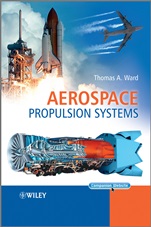
Aerospace Propulsion Systems
ISBN 9780470824979
Autor: Thomas A. Ward
Wydawca: Wiley
Dostępność: 3-6 tygodni
Cena: 592,20 zł
Przed złożeniem zamówienia prosimy o kontakt mailowy celem potwierdzenia ceny.
ISBN13: |
9780470824979 |
ISBN10: |
0470824972 |
Autor: |
Thomas A. Ward |
Oprawa: |
Hardback |
Rok Wydania: |
2010-06-08 |
Ilość stron: |
560 |
Wymiary: |
253x179 |
Tematy: |
TG |
Aerospace Propulsion Systems is a unique book focusing on each type of propulsion system commonly used in aerospace vehicles today: rockets, piston aero engines, gas turbine engines, ramjets, and scramjets. Dr. Thomas A. Ward introduces each system in detail, imparting an understanding of basic engineering principles, describing key functionality mechanisms used in past and modern designs, and provides guidelines for student design projects. With a balance of theory, fundamental performance analysis, and design, the book is specifically targeted to students or professionals who are new to the field and is arranged in an intuitive, systematic format to enhance learning.
Covers all engine types, including piston aero enginesDesign principles presented in historical order for progressive understandingFocuses on major elements to avoid overwhelming or confusing readersPresents example systems from the US, the UK, Germany, Russia, Europe, China, Japan, and IndiaRichly illustrated with detailed photographsCartoon panels present the subject in an interesting, easy–to–understand wayContains carefully constructed problems (with a solution manual available to the educator)Lecture slides and additional problem sets for instructor use
Advanced undergraduate students, graduate students and engineering professionals new to the area of propulsion will find Aerospace Propulsion Systems a highly accessible guide to grasping the key essentials. Field experts will also find that the book is a very useful resource for explaining propulsion issues or technology to engineers, technicians, businessmen, or policy makers. Post–graduates involved in multi–disciplinary research or anybody interested in learning more about spacecraft, aircraft, or engineering would find this book to be a helpful reference.
Lecture materials for instructors available at www.wiley.com/go/wardaero
S
pis treści:
Preface.
Acknowledgments.
Outline of Aerospace Propulsion History.
Nomenclature.
1 Fundamentals.
1.1 Fundamental Equations.
1.1.1 Review of Terms.
1.1.2 Equation of State for a Perfect Gas.
1.1.3 Law of the Conservation of Mass.
1.1.4 Law of the Conservation of Linear Momentum.
1.1.5 Law of the Conservation of Energy.
1.2 Isentropic Equations.
1.2.1 Isentropic Relationship between Temperature and Pressure.
1.2.2 Isentropic Relationships with Specific Volume.
1.3 Polytropic Processes.
1.4 Total (or Stagnation) Properties.
1.5 Isentropic Principles in Engine Components.
1.5.1 Ducts.
1.5.2 Turbomachinery.
1.5.3 Combustion Chambers (Combustors).
1.5.4 Nozzles.
1.6 Shock Waves.
1.6.1 Normal Shocks.
1.6.2 Oblique Shocks
1.6.3 Conical Shocks.
1.7 Summary.
References.
Problems.
2 Rockets.
2.1 Background Description.
2.2 Performance of an Ideal Rocket.
2.2.1 Rocket Thrust Equation.
2.2.2 Total and Specific Impulse.
2.2.3 Effective Exhaust Velocity.
2.2.4 Rocket Efficiencies.
2.2.5 Characteristic Velocity.
2.2.6 Thrust Coefficient.
2.3 Solid Rocket Motors.
2.3.1 Colloidal (Homogenous) Propellants.
2.3.2 Composite (Heterogeneous) Propellants.
2.3.3 Composite Modified Double–Based Propellants
2.3.4 Solid Propellant Grain Geometry.
2.3.5 Solid Rocket Motor Casing.
2.3.6 Combustion of Solid Propellants.
2.3.7 Solid Rocket Ignition Systems.
2.4 Liquid Rockets.
2.4.1 Liquid Rocket Propellants.
2.4.2 Liquid Rocket Feed Systems.
2.4.3 Liquid Rocket Injection Systems.
2.4.4 Combustion of Liquid Propellants.
2.4.5 Liquid Rocket Ignition Systems.
2.5 Hybrid Rockets.
2.6 Motor Casing.
2.7 Thrust Chamber.
2.8 Exhaust Nozzles.
2.9 Multi–staging.
2.10 Non–chemical Rockets.
2.11 Rocket Design Methodology.
2.12 Summary.
References.
Problems.
3 Piston Aer
odynamic Engines.
3.1 Background Description.
3.2 Engine Types.
3.2.1 Rotary Engines.
3.2.2 Reciprocating Engines.
3.2.3 Supercharged Reciprocating Engines.
3.2.4 Gas Turbine Propeller Engines.
3.3 Thrust.
3.4 Combustion.
3.4.1 Aviation Fuel.
3.4.2 Specific Fuel Consumption.
3.5 Propeller Design.
3.5.1 General Description.
3.5.2 Power Efficiencies.
3.5.3 Variable Pitch Blades.
3.5.4 Propeller Shapes.
3.5.5 Contra–Rotating Propellers.
3.5.6 Helicopter Rotor Blades.
3.6 Propeller Performance.
3.7 Summary.
References.
Problems.
4 Gas Turbine Engines.
4.1 Background Description.
4.2 Ideal Gas Turbine Cycle.
4.3 Types of Gas Turbine Engines.
4.3.1 Jet Propulsion Engines.
4.3.2 Shaft Power Engines.
4.4 Engine Cycle Performance.
4.4.1 Jet Propulsion Thrust.
4.4.2 Shaft Power Thrust.
4.4.3 Propulsive Efficiency.
4.4.4 Thermal Efficiency.
4.4.5 Overall Efficiency.
4.4.6 Specific Fuel Consumption.
4.5 Component Performance.
4.5.1 Intakes.
4.5.2 Compressors.
4.5.3 Turbines.
4.5.4 Combustion Chambers (Combustors).
4.5.5 Exhaust Nozzles.
4.6 Engine Performance Analysis.
4.7 Design Point Optimization.
4.8 Component Design.
4.8.1 Intake Design.
4.8.2 Compressor System Design.
4.8.3 Combustion Chambers.
4.8.4 Turbines.
4.8.5 Exhaust Systems.
4.9 Engine Control Systems.
4.10 Summary.
References.
Problems.
5 Ramjet and Scramjet Engines.
5.1 Background Description.
5.2 Ramjet Engines.
5.2.1 Conventional Ramjet Engines.
5.2.2 Turboramjet Engines.
5.2.3 Analysis of Ramjet Engines.
5.2.4 Ramjet Component Design.
5.3 Scramjet Engines.
5.3.1 Description.
5.3.2 Scramjet Component Design.
5.4 Summary.
References.
Problems.
Appendix A: Gas Tables.
Appendix B: Isentropic Flow Tables.
Appendix C: Shock Tables.
Appendix D: Rocket Propellant Tab
les.
Solutions to Even Numbered Problems.
Index.
Okładka tylna:
Aerospace Propulsion Systems is a unique book focusing on each type of propulsion system commonly used in aerospace vehicles today: rockets, piston aero engines, gas turbine engines, ramjets, and scramjets. Dr. Thomas A. Ward introduces each system in detail, imparting an understanding of basic engineering principles, describing key functionality mechanisms used in past and modern designs, and provides guidelines for student design projects. With a balance of theory, fundamental performance analysis, and design, the book is specifically targeted to students or professionals who are new to the field and is arranged in an intuitive, systematic format to enhance learning.
Covers all engine types, including piston aero enginesDesign principles presented in historical order for progressive understandingFocuses on major elements to avoid overwhelming or confusing readersPresents example systems from the US, the UK, Germany, Russia, Europe, China, Japan, and IndiaRichly illustrated with detailed photographsCartoon panels present the subject in an interesting, easy–to–understand wayContains carefully constructed problems (with a solution manual available to the educator)Lecture slides and additional problem sets for instructor use
Advanced undergraduate students, graduate students and engineering professionals new to the area of propulsion will find Aerospace Propulsion Systems a highly accessible guide to grasping the key essentials. Field experts will also find that the book is a very useful resource for explaining propulsion issues or technology to engineers, technicians, businessmen, or policy makers. Post–graduates involved in multi–disciplinary research or anybody interested in learning more about spacecraft, aircraft, or engineering would find this book to b
e a helpful reference.
Lecture materials for instructors available at www.wiley.com/go/wardaero
Koszyk
Książek w koszyku: 0 szt.
Wartość zakupów: 0,00 zł
Informacje


Kontakt
Gambit
Centrum Oprogramowania
i Szkoleń Sp. z o.o.
Al. Pokoju 29b/22-24
31-564 Kraków
Siedziba Księgarni
ul. Kordylewskiego 1
31-542 Kraków
+48 12 410 5991
+48 12 410 5987
+48 12 410 5989
Subskrypcje
Administratorem danych osobowych jest firma Gambit COiS Sp. z o.o. Na podany adres będzie wysyłany wyłącznie biuletyn informacyjny.
Autoryzacja płatności

Informacje na temat autoryzacji płatności poprzez PayU.

© Copyright 2012: GAMBIT COiS Sp. z o.o. Wszelkie prawa zastrzeżone.
Projekt i wykonanie: Alchemia Studio Reklamy