


Wydawcy
Katalog tematyczny
- Archeologia (109)
- Ekonomia, finanse, business (13704)
- Filozofia (1445)
- Historia (3040)
- Języki i językoznawstwo (2356)
- Lifestyle, hobby i rozrywka (475)
- Medycyna (9704)
- Nauki humanistyczne (4)
- Nauki o Ziemi i środowisku (2638)
- Nauki ścisłe (20412)
- Nauki społeczne (8486)
- Nauki techniczne (13450)
- Prawo (1696)
- Publikacje informacyjne i interdyscyplinarne (1288)
- Religia i wierzenia (917)
- Technika komputerowa (4067)
- Zdrowie, relacje międzyludzkie i rozwój osobisty (657)





Informacje szczegółowe o książce
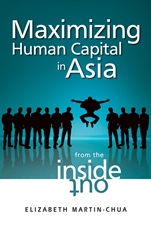
Maximizing Human Capital in Asia: From the Inside Out
ISBN 9780470824795
Autor: Elizabeth Martin–Chua
Wydawca: Wiley
Dostępność: 3-6 tygodni
Cena: 190,05 zł
Przed złożeniem zamówienia prosimy o kontakt mailowy celem potwierdzenia ceny.
ISBN13: |
9780470824795 |
ISBN10: |
0470824794 |
Autor: |
Elizabeth Martin–Chua |
Oprawa: |
Paperback |
Rok Wydania: |
2009-10-13 |
Ilość stron: |
226 |
Wymiary: |
226x152 |
Tematy: |
KM |
Organizations do not fully appreciate the link between people and business. They are too driven by short–term financial pressures, resulting in the failure to acknowledge the relationship between leadership, people management processes and business growth. Last but not least, employees’ true needs are also not satisfied.
What is the solution?
As "growth" is the objective of all parties, HR must build an employee value proposition that would achieve this. This value proposition has to premise itself on satisfying employees’ needs that will result in highly engaged employees, who in turn will deliver high–quality products and services, bringing about happy customers. This interactive process will maximize the human capital and business growth through a strong employer and product brand.
In particular, to be successful in Asia, it is important to synergize East with West in all decision making. Three approaches are recommended: Global for Local, Local for Local and Local for Global.
The first is having a mindset of a global framework allowing for local customization when necessary. The second is encouraging local for local initiatives to capitalize on local advantages. The third is sharing best experiences and strengths for global benefit. In the case of talent management, organizations should strongly encourage diversity and inclusion, to take advantage of the strengths of the talents that come from different cultures–to maximize the company′s human capital, from the inside out. This is a unique opportunity and should not be missed.
Spis treści:
Acknowledgments.
Introduction: Lessons Learned: From Personnel Management to Talent War.
Chapter 1: What is HR?
HR Evolution in Asia.
Customer Insight of Asian Employees.
The EVP: A Model Tested in China.
Building a Good EVP in Asia.
What is HR? Frequently Asked Questions.
Chapter 2: Personal Growth
and Business Growth.
Organic Growth.
Inorganic Growth: Mergers and Acquisitions.
Keys to M&A Success in Asia.
Links among Leadership, HR Processes, and Business Growth.
Personal Growth and Business Growth: Frequently Asked Questions.
Chapter 3: Leadership.
Good Leadership.
Why is Leadership High in the EVP?
Why is Engagement Important?
D&I.
Is Inclusive Leadership Becoming More Important?
What Makes Good Leaders in Asia?
How are Leaders Acquired?
360–Degree Feedback.
Succession of Leaders.
Asian Leadership Competencies.
Leadership: Frequently Asked Questions.
Chapter 4: Company Culture.
What is Company Culture?
Customers′ Experience and Employees′ Experience.
Turning Employees′ Experience into a Good Employer Brand in Asia.
Measuring the Success of a Company′s Culture.
Company Culture: Frequently Asked Questions.
Chapter 5: Acquisition.
Staffing.
Strategic Acquisition (Recruitment).
A Checklist for a Strong Acquisition Function in Asia.
Acquisition: Frequently Asked Questions.
Chapter 6: Development.
Importance of Development.
How Do Companies in Asia Do Development?
Management and Talent Development Review.
Coaching.
Why is Coaching Important?
Mentoring.
Key Elements in a Development Function in Asia.
Development: Frequently Asked Questions.
Chapter 7: Performance Management.
The Role of Performance Management.
Is Forced Ranking Necessary?
Target Setting.
Improving a Performance Management System.
Key Elements in a Performance Management System in Asia.
Performance Management: Frequently Asked Questions.
Chapter 8: Rewards Management.
The Importance of Rewards Management in Asia.
Performance Rewards: Pay for Performance.
Dos and Don′ts in Rewards Management in Asia.
Rewards Management: Frequently Asked Questions.
Cha
pter 9: How is HR Organized in Asia?
HR Roles.
Business HR.
Functional Experts.
Administrative Experts, Shared Services Centers.
Outsourcing.
Pitfalls to Avoid in Organizing HR Roles in Asia.
How is HR Organized in Asia? Frequently Asked Questions.
Chapter 10: Summary: How to Succeed in Asia.
Global Framework, Local Content (Global for Local Approach).
Local for Local Approach.
Local for Global Approach.
Concentrating on Strengths.
Labor Legislation and Good Industrial Relations.
Attractive Rewards and Incentives.
Speed and Freedom to Act.
D&I.
How to Succeed in Asia? Frequently Asked Questions.
Chapter 11: The Future of HR in Asia.
Changing Roles.
The Future of HR in Asia: Frequently Asked Questions.
Conclusion: Food for Thought.
Company Values and Culture.
Distribution of Wealth.
Job Descriptions and Rewards Packages.
Protectionism.
D&I.
Bibliography.
Index.
Nota biograficzna:
Every business is a people business
Throughout her career, Elizabeth Martin–Chua has advocated building an employee value proposition that comprises of good leadership, a clear corporate culture and four pillars: talent acquisition, people and talent development, performance management and reward management, complete with performance indicators to ensure results.
Elizabeth joined Philips Electronics Singapore in 1971, and worked through the ranks of human resources (HR) management. In 1993, in addition to her Singapore role, she assumed the global human resource management responsibilities of the company’s audio business. She was also the founder of Philips Asian Talent Pool and its Diversity and Inclusion Champion for Asia.
In 2006, Elizabeth relocated to Shanghai and was appointed Philips′ Senior Vice President (HR) for Greater China. In the subsequent year, she also took on the HR coordination
role for Asia.
In the field of human resources, Elizabeth′s primary interest is to help an organization "grow talent" and reduce human capital wastage by utilizing its human capital as a competitive advantage. In this respect, she firmly believes that businesses grow when people grow and advocates people development, talent manage¬ment, leadership competencies, employee engagement and succession planning.
Elizabeth was named best HR director in Singapore in 2005 and won the Robert Walters Award. In 2006, Philips Electronics Singapore was named the Best HR Team and Elizabeth was presented the Convergys Award for Outstanding Contributions to HR in 2007. These accolades were organized by HRM Singapore. Elizabeth was conferred a PhD in Management from the University of Southern Australia in 2002.
Okładka tylna:
Organizations do not fully appreciate the link between people and business. They are too driven by short–term financial pressures, resulting in the failure to acknowledge the relationship between leadership, people management processes and business growth. Last but not least, employees’ true needs are also not satisfied.
What is the solution?
As "growth" is the objective of all parties, HR must build an employee value proposition that would achieve this. This value proposition has to premise itself on satisfying employees’ needs that will result in highly engaged employees, who in turn will deliver high–quality products and services, bringing about happy customers. This interactive process will maximize the human capital and business growth through a strong employer and product brand.
In particular, to be successful in Asia, it is important to synergize East with West in all decision making. Three approaches are recommended: Global for Local, Local for Local and Local for Global.
The first is having a mindset of a global framework allowing for local customization when necessary. The secon
d is encouraging local for local initiatives to capitalize on local advantages. The third is sharing best experiences and strengths for global benefit. In the case of talent management, organizations should strongly encourage diversity and inclusion, to take advantage of the strengths of the talents that come from different cultures–to maximize the company′s human capital, from the inside out. This is a unique opportunity and should not be missed.
Koszyk
Książek w koszyku: 0 szt.
Wartość zakupów: 0,00 zł
Informacje


Kontakt
Gambit
Centrum Oprogramowania
i Szkoleń Sp. z o.o.
Al. Pokoju 29b/22-24
31-564 Kraków
Siedziba Księgarni
ul. Kordylewskiego 1
31-542 Kraków
+48 12 410 5991
+48 12 410 5987
+48 12 410 5989
Subskrypcje
Administratorem danych osobowych jest firma Gambit COiS Sp. z o.o. Na podany adres będzie wysyłany wyłącznie biuletyn informacyjny.
Autoryzacja płatności

Informacje na temat autoryzacji płatności poprzez PayU.

© Copyright 2012: GAMBIT COiS Sp. z o.o. Wszelkie prawa zastrzeżone.
Projekt i wykonanie: Alchemia Studio Reklamy