


Wydawcy
Katalog tematyczny
- Archeologia (109)
- Ekonomia, finanse, business (13704)
- Filozofia (1445)
- Historia (3040)
- Języki i językoznawstwo (2356)
- Lifestyle, hobby i rozrywka (475)
- Medycyna (9704)
- Nauki humanistyczne (4)
- Nauki o Ziemi i środowisku (2638)
- Nauki ścisłe (20412)
- Astronomia (294)
- Biologia (5119)
- Chemia (6540)
- Chemia analityczna (361)
- Chemia fizyczna (346)
- Chemia nieorganiczna (137)
- Chemia organiczna (535)
- Krystalografia (27)
- Minerologia (46)
- Fizyka (3309)
- Matematyka (4574)
- Nauki ścisłe, ogólnie (503)
- Nauki społeczne (8486)
- Nauki techniczne (13450)
- Prawo (1696)
- Publikacje informacyjne i interdyscyplinarne (1288)
- Religia i wierzenia (917)
- Technika komputerowa (4067)
- Zdrowie, relacje międzyludzkie i rozwój osobisty (657)





Informacje szczegółowe o książce
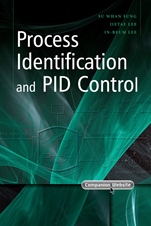
Process Identification and PID Control
ISBN 9780470824108
Autor: Su Whan Sung, Jietae Lee, In–Beum Lee
Wydawca: Wiley
Dostępność: 3-6 tygodni
Cena: 638,40 zł
Przed złożeniem zamówienia prosimy o kontakt mailowy celem potwierdzenia ceny.
ISBN13: |
9780470824108 |
ISBN10: |
0470824107 |
Autor: |
Su Whan Sung, Jietae Lee, In–Beum Lee |
Oprawa: |
Hardback |
Rok Wydania: |
2009-06-16 |
Ilość stron: |
424 |
Wymiary: |
261x171 |
Tematy: |
PN |
Process Identification and PID Control enables students and engineers to understand the essential concepts of feedback control, process identification, autotuning, and design of real feedback controllers, especially PID controllers. Sung, Lee, and Lee introduce the fundamentals of process control and dynamics, analysis tools (Bode plot, Nyquist plot), PID controllers and tuning, controller designs, along with the advances control strategies which have been widely used in industry. Included are numerous numerical examples and MATLAB codes to aid the reader in solving real problems. Readers will be able to design their own controllers, implement them, and confirm performance in real–time using real–time virtual processes.
Combines the basics with recent research, helping the novice grasp advanced topics
Brings several industrially important topics together:Finishing topics with implementation codesProcess identification and implementationPID controller tuning and implementationEnhanced control strategies and implementation
Includes all source codes and real–time virtual processes for self–practice and modeling/controller design courses
Contains problems at the end of every chapter
Written by a team of recognized experts in the area
Process Identification and PID Control is ideal for undergraduate and graduate students in process control, advanced process control, and process identification. Practicing control engineers and R&D personnel in refineries and chemical plants will find this book to be a key reference. Professionals in industry in particular will appreciate the techniques for developing process identification and control software, as well as implementing microprocessor controllers.
Source code for readers and course supplements for instructors available at www.wiley.com/go/swsung
Spis treści:
<
b>Preface.
Part One Basics of Process Dynamics.
1 Mathematical Representations of Linear Processes.
1.1 Introduction to Process Control and Identification.
1.2 Properties of Linear Processes.
1.3 Laplace Transform.
1.4 Transfer Function and State–Space Systems.
Problems.
2 Simulations.
2.1 Simulating Processes Composed of Differential Equations.
2.2 Simulating Processes Including Time Delay.
2.3 Simulating Closed–Loop Control Systems.
2.4 Useful Numerical Analysis Methods.
Problems.
3 Dynamic Behavior of Linear Processes.
3.1 Low–Order Plus Time–Delay Processes.
3.2 Process Reaction Curve Method.
3.3 Poles and Zeroes.
3.4 Block Diagram.
3.5 Frequency Responses.
Problems.
Part Two Process Control.
4 Proportional–Integral–Derivative Control.
4.1 Structure of Proportional–Integral–Derivative Controllers and Implementation in Computers/Microprocessors.
4.2 Roles of Three Parts of Proportional–Integral–Derivative Controllers.
4.3 Integral Windup.
4.4 Commercial Proportional–Integral–Derivative Controllers.
Problems.
5 Proportional–Integral–Derivative Controller Tuning.
5.1 Trial–and–Error Tuning.
5.2 Simple Process Identification Methods.
5.3 Ziegler–Nichols Tuning Rule.
5.4 Internal Model Control Tuning Rule.
5.5 Integral of the Time–Weighted Absolute Value of the Error Tunning Rule for a First–Order Plus Time–Delay Model (ITAE–1).
5.6 Integral of the Time–Weighted Absolute Value of the Error Tunning Rule for a Second–Order Plus Time–Delay Model (ITAE–2).
5.7 Optimal Gain Margin Tuning Rule for an Unstable Second–Order Plus Time–Delay Model (OGM–unstable).
5.8 Model Reduction Method for Proportional–Integral–Derivative Controller Tuni
ng.
5.9 Consideration of Modeling Errors.
5.10 Concluding Remarks.
Problems.
6 Dynamic Behavior of Closed–Loop Control Systems.
6.1 Closed–Loop Transfer Function and Characteristic Equation.
6.2 Bode Stability Criterion.
6.3 Nyquist Stability Criterion.
6.4 Gain Margin and Phase Margin.
Problems.
7 Enhanced Control Strategies.
7.1 Cascade Control.
7.2 Time–Delay Compensators.
7.3 Gain Scheduling.
7.4 Proportional–Integral–Derivative Control using Internal Feedback Loop.
Problems.
Part Three Process Identification.
8 Process Identification Methods for Frequency Response Models.
8.1 Fourier Series.
8.2 Frequency Response Analysis and Autotuning.
8.3 Describing Function Analysis.
8.4 Fourier Analysis.
8.5 Modified Fourier Transform.
8.6 Frequency Response Analysis with Integrals.
Problems.
9 Process Identification Methods for Continuous–Time Differential Equation Models.
9.1 Identification Methods Using Integral Transforms.
9.2 Prediction Error Identification Method.
Problems.
10 Process Identification Methods for Discrete–Time Difference Equation Models.
10.1 Prediction Model: Autoregressive Exogenous Input Model and Output Error Model.
10.2 Prediction Error Identification Method for the Autoregressive Exogenous Input Model.
10.3 Prediction Error Identification Method for the Output Error Model.
10.4 Concluding Remarks.
Problems.
11 Model Conversion from Discrete–Time to Continuous–Time Linear Models.
11.1 Transfer Function of Discrete–Time Processes.
11.2 Frequency Responses of Discrete–Time Processes and Model Conversion.
Problems.
Part Four Process Activation.
12 Relay Feedback Methods.
12.1 Conventional Relay Feedback Methods.
12.2 Relay Feedback Method to Reject Static Disturbances.
12.3 Relay Feedback Method
under Nonlinearity and Static Disturbances.
12.4 Relay Feedback Method for a Large Range of Operation.
Problems.
13 Modifications of Relay Feedback Methods.
13.1 Process Activation Method Using Pulse Signals.
13.2 Process Activation Method Using Sine Signals.
Problems.
Appendix Use of Virtual Control System.
A.1 Setup of the Virtual Control System.
A.2 Examples.
Index.
Nota biograficzna:
Su Whan Sung is an Assistant Professor of Chemical Engineering at Kyungpook National University, Korea. His main research interests are PID controllers, autotuning, and system identification. He has spent over 15 years researching these topics, and has published 50 related papers in SCI journals. His previous work experience includes time as a Senior Researcher with LG Chem and research professorships at Korea′s top engineering universities: KAIST and POSTECH. He holds an M.S. and PhD in Chemical Engineering from POSTECH.
Okładka tylna:
Process Identification and PID Control enables students and engineers to understand the essential concepts of feedback control, process identification, autotuning, and design of real feedback controllers, especially PID controllers. Sung, Lee, and Lee introduce the fundamentals of process control and dynamics, analysis tools (Bode plot, Nyquist plot), PID controllers and tuning, controller designs, along with the advances control strategies which have been widely used in industry. Included are numerous numerical examples and MATLAB codes to aid the reader in solving real problems. Readers will be able to design their own controllers, implement them, and confirm performance in real–time using real–time virtual processes.
Combines the basics with recent research, helping the novice grasp advanced topics
Brings several industrially important topics together:Finishing topics with implementation codesProcess
Koszyk
Książek w koszyku: 0 szt.
Wartość zakupów: 0,00 zł
Informacje


Kontakt
Gambit
Centrum Oprogramowania
i Szkoleń Sp. z o.o.
Al. Pokoju 29b/22-24
31-564 Kraków
Siedziba Księgarni
ul. Kordylewskiego 1
31-542 Kraków
+48 12 410 5991
+48 12 410 5987
+48 12 410 5989
Subskrypcje
Administratorem danych osobowych jest firma Gambit COiS Sp. z o.o. Na podany adres będzie wysyłany wyłącznie biuletyn informacyjny.
Autoryzacja płatności

Informacje na temat autoryzacji płatności poprzez PayU.

© Copyright 2012: GAMBIT COiS Sp. z o.o. Wszelkie prawa zastrzeżone.
Projekt i wykonanie: Alchemia Studio Reklamy