


Wydawcy
Katalog tematyczny
- Archeologia (109)
- Ekonomia, finanse, business (13704)
- Filozofia (1445)
- Historia (3040)
- Języki i językoznawstwo (2356)
- Lifestyle, hobby i rozrywka (475)
- Medycyna (9704)
- Nauki humanistyczne (4)
- Nauki o Ziemi i środowisku (2638)
- Nauki ścisłe (20412)
- Nauki społeczne (8486)
- Nauki techniczne (13450)
- Prawo (1696)
- Publikacje informacyjne i interdyscyplinarne (1288)
- Religia i wierzenia (917)
- Technika komputerowa (4067)
- Zdrowie, relacje międzyludzkie i rozwój osobisty (657)





Informacje szczegółowe o książce
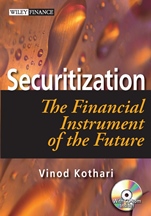
Securitization: The Financial Instrument of the Future
ISBN 9780470821954
Autor: Vinod Kothari
Wydawca: Wiley
Dostępność: 3-6 tygodni
Cena: 746,55 zł
Przed złożeniem zamówienia prosimy o kontakt mailowy celem potwierdzenia ceny.
ISBN13: |
9780470821954 |
ISBN10: |
0470821957 |
Autor: |
Vinod Kothari |
Oprawa: |
Hardback |
Rok Wydania: |
2006-08-18 |
Ilość stron: |
1026 |
Wymiary: |
264x178 |
Tematy: |
KF |
Securitization: The Financial Instrument of the Future has something for everyone who has a need to know about securitization: from the student in the university to the junior associate in the business world to someone like me who was around at the birth of Securitization – from the dominant asset classes like mortgages to the more exotic asset classes like David Bowie bonds as well as the developed US and European markets to the emerging markets. Written in simple and accessible English, I especially like the many vignettes and casual observations to supplement what otherwise could have been , dry detailed recitations of technical rules. I′ve rarely seen a book on securitization that one could read like a novel. – Marty Rosenblatt, Founding Partner, Securitization Services Group, Deloitte & Touche LLP, First Char of the Accounting and Tax Subcommittee, American Securitization Forum
This is a thoughtful and comprehensive, user–friendly text both for the business person and legal specialist. It is particularly valuable in embracing securitization on an international level, with emphasis on Asia. – Steven L. Schwarcz, Stanley A. Star Professor of Law & Business, Duke University School of Law, Founding Director, Global Capital Markets Center
Spis treści:
Preface to the Second Edition.
Preface to the First Edition.
Part 1: Securitization: Concepts & Markets.
1. Securitization and structured finance.
Basic meaning of securitization.
Securitization of receivables.
Securitization and asset–backed finance.
Securitization and structured finance.
The big picture of securitization of finance.
Securitization as a tool of risk management.
Economic impact of securitization.
The alchemy of securitization: Is the sum of parts more than the whole?
Risks inherent in securitization.
Securitization term
inology.
2. Securitization: Methodology, structures, Motivators and Demotivators.
Modus operandi of securitization briefly explained.
Economic substance of securitization: where does the alchemy lie?
Features of securitization of receivables.
Securitization and factoring.
Securitization and ring fencing.
Asset classes.
Broad types of securitization structures.
Direct portfolio transfers.
Pass–through structure.
Pay–through structure.
Collateralized mortgage obligation bonds.
Future flows of securitization.
Advantages of securitization for the issuer.
Advantages to the investors.
Threats in securitization.
3. The world of securitization.
Part II: Financial Substance and Ratings.
History of securitization.
The life cycle of securitization.
Present state of securitization (US, Europe, Central America, Asia, The Pacific).
Trends in global securitization.
4. Structuring and credit–enhancing securitization transactions.
Basics of securitization structuring.
Structuring variables.
Parties involved
Steps in a securitization transaction.
Credit enhancements.
Originator credit enhancements.
Structural credit enhancements.
Third–party credit enhancements.
Sizing of credit enhancements.
Liquidity enhancements.
Pay–down structure.
Maturity of the securities.
Profit extraction devices.
Cashflow waterfall.
5. Understanding the nature and risks of asset–backed securities.
Asset–backed securities and the underlying collateral.
Risks in asset–backed securities.
Modelling of asset risks.
6. Understanding prepayment risk in asset backed securities.
Prepayment as a risk.
Prepayment risk in asset–backed securities.
Prepayment risk in mortgage pools.
Prepayment modeling.
Static prepayment models.
The PSA prepayment model.
The CPR and the other stati
c models.
Dynamic or econometric prepayment models.
Projection of interest rates.
Prepayments for adjustable rate mortgages.
Prepayment model for commercial mortgages.
Prepayment models for non–U.S. pools.
7. Understanding default risk in asset backed securities.
Nature of default risk – default as an option.
The option to default on mortgages.
Default rates as a function of seasoning.
Default risk for different securities.
8. Cashflow modeling for asset–backed securities.
Constructing the cashflow model.
Understanding the asset and its repayment over time.
The factors that affect asset cashflows.
The factors that affect the factors that affect cashflow.
Understanding transaction structure.
Modelling a real life case.
Stress testing the model.
9. Securitization: Financial evaluation for the originator.
Securitization: The quantifiables and the non–quantifiables.
Securitization versus the unknown.
The NPV of originator’s residual interest.
Impact of prepayment.
Factors affecting originator’s residual interest.
Expected value of originator’s residual interest.
10. Investor evaluation of asset–backed securities.
Spreads inherent in asset–backed securities.
Understanding of duration.
Understanding of convexity.
Impact of prepayment on ABS investments.
Computation of option–adjusted spread.
Understanding default risk.
11. Rating of securitization transactions.
Structured finance ratings vs other fixed income ratings.
Rating agency concerns.
The rating process.
Rating models.
Differences between structured finance and corporate finance ratings.
What credit ratings do not rate.
Servicer evaluation.
Role of ratings in structured finance.
Part 2: Securitization: Asset classes and applications
12. Residential mortgage–backed securitization
.
Mortgage funding systems.
Government support to housing finance.
Why secondary mortgage markets.
Origin of the secondary mortgage markets.
Overview of the US RMBS market.
Secondary mortgage market in other countries.
Structuring of RMBS transactions.
Case studies of RMBS.
Home equity loans securitization.
Manufactured home loans.
Investing in the MBS market.
Mortgage bonds.
13. Commercial mortgage–backed securitization.
What is CMBS?
CMBS market.
Types of CMBS.
Structure of a CMBS transaction.
Case study: GMAC’s 2001WTC transaction.
Case study: Canary Wharf – a Typical UK CMBS.
Investing in CMBS: Performance of CMBS.
14. Credit cards securitization.
Nature of credit card debt.
An overview of the market.
Transaction structure.
Development of the master trust structure.
Components of a credit card structure.
15. Auto loan securitization.
Forms of car funding.
Auto loans securitization market.
Collateral quality.
Typical structures.
Specific issues in auto loan securitization.
Case Study – Daimler–Chrysler Auto Trust.
16. Equipment Lease Securitization.
Investing in equipment lease securitizations.
17. Collateralized Debt Obligations.
What is a CDO?
Types of CDOs.
Growth of the CDO market.
Balance sheet CDOs.
Arbitrage CDOs.
Market value CDOs.
Ramp up period.
The CDO manager.
The CDO investors.
The CDO trustee.
Credit enhancer ad swap counterparty.
Managing the assets of CDOs.
Asset quality tests.
Cashflow coverage tests.
Resecuritization or structured finance CDOs.
Distressed debt CDOs.
Hedge fund CDOs or fund of funds.
Investing in CDOs.
Risks in CDO investment – structure and collateral risks.
Taxation of CDOs.
Legal issues specific to CDOs.
CDOs and index trading.
Current problems facing the CDO sector.
Rating a
Koszyk
Książek w koszyku: 0 szt.
Wartość zakupów: 0,00 zł
Informacje


Kontakt
Gambit
Centrum Oprogramowania
i Szkoleń Sp. z o.o.
Al. Pokoju 29b/22-24
31-564 Kraków
Siedziba Księgarni
ul. Kordylewskiego 1
31-542 Kraków
+48 12 410 5991
+48 12 410 5987
+48 12 410 5989
Subskrypcje
Administratorem danych osobowych jest firma Gambit COiS Sp. z o.o. Na podany adres będzie wysyłany wyłącznie biuletyn informacyjny.
Autoryzacja płatności

Informacje na temat autoryzacji płatności poprzez PayU.

© Copyright 2012: GAMBIT COiS Sp. z o.o. Wszelkie prawa zastrzeżone.
Projekt i wykonanie: Alchemia Studio Reklamy