


Wydawcy
Katalog tematyczny
- Archeologia (109)
- Ekonomia, finanse, business (13704)
- Filozofia (1445)
- Historia (3040)
- Języki i językoznawstwo (2356)
- Lifestyle, hobby i rozrywka (475)
- Medycyna (9704)
- Nauki humanistyczne (4)
- Nauki o Ziemi i środowisku (2638)
- Nauki ścisłe (20412)
- Nauki społeczne (8486)
- Edukacja (229)
- Kryminologia, opieka spełeczna (284)
- Obronność (10)
- Polityka (1389)
- Psychologia (777)
- Socjologia (410)
- Społeczeństwo i kultura (187)
- Nauki techniczne (13450)
- Prawo (1696)
- Publikacje informacyjne i interdyscyplinarne (1288)
- Religia i wierzenia (917)
- Technika komputerowa (4067)
- Zdrowie, relacje międzyludzkie i rozwój osobisty (657)





Informacje szczegółowe o książce
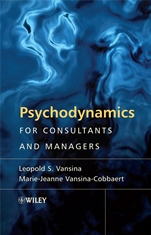
Psychodynamics for Consultants and Managers: From Understanding to Leading Meaningful Change
ISBN 9780470779316
Autor: Leopold S. Vansina, Marie–Jeanne Vansina–Cobbaert
Wydawca: Wiley
Dostępność: 3-6 tygodni
Cena: 300,30 zł
Przed złożeniem zamówienia prosimy o kontakt mailowy celem potwierdzenia ceny.
ISBN13: |
9780470779316 |
ISBN10: |
0470779314 |
Autor: |
Leopold S. Vansina, Marie–Jeanne Vansina–Cobbaert |
Oprawa: |
Hardback |
Rok Wydania: |
2008-10-13 |
Ilość stron: |
450 |
Wymiary: |
229x152 |
Tematy: |
JC |
Psychodynamics for Consultants and Managers offers an introduction to the psychodynamic approach and guidance on how to implement it in dealing with organisational issues, change and development.
The book introduces the basic work principles of psychoanalysis on which the psychodynamic approach is largely based. Subsequently, the psychodynamic approach is explored in its four major dimensions: an evolving body of knowledge, a perspective for looking at social systems, a way of inquiry and a way of taking action. Three kinds of actions are identified and explored for leading meaningful change:Creating conditions to enable healthy mental processes to take their courseThe introduction of methods and techniques that facilitate task accomplishmentCreating conditions that change the dynamics of the work system itself in a more sustainable way.
The critical issues of problem definition, locating causal factors and being personally involved are discussed along with strategies for dealing with them. Practical case examples bring key notions and principles to life.
Its jargon–free style means this book is accessible to people without any previous training in psychoanalytic work. It is a unique guide for consultants and managers who are interested in increasing the depth and effectiveness of their ways of dealing with organisational issues, change and development.
Spis treści:
About the Authors.
Contributors.
Acknowledgements.
General Introduction.
Part One: A Psychoanalytic Perspective on Groups and Organisations (Marie–Jeanne Vansina–Cobbaert).
Chapter 1: Original, Primary Mental Processes (Marie–Jeanne Vansina–Cobbaert).
Illustrations.
Stepwise transformations.
Chapter 2: Languages from Another World (Marie–Jeanne Vansina–Cobbaert).
The language of images.
The language of actions.
The language of
relations.
Putting the information from ′atlantis′ to use.
Chapter 3: Supportive ′Process Structures′ (Marie–Jeanne Vansina–Cobbaert).
Holding and containment.
Transitional phenomena.
Chapter 4: Defensive Processes and Behaviour (Marie–Jeanne Vansina–Cobbaert and Leopold Vansina).
Individual defence mechanisms.
Defence mechanisms in groups.
Social defences.
Social repression.
Defensive strategies.
Working with and through defences.
Conclusions.
Chapter 5: The Capacity for Creative Living and Its Importance in Organisational Life (Marie–Jeanne Vansina–Cobbaert).
Origins and functioning of the capacity for creative living.
Destructiveness in the context of creative living.
Part Two: A Psychodynamic Approach.
Introduction (Leopold Vansina).
Chapter 6: Psychodynamics: A Field of Study and an Approach (Leopold Vansina).
Some major differences with psychoanalysis.
An attempt to define psychodynamics.
Creating supportive process structures.
Small things that matter: a look at some neglected potential benefits of a psychodynamic approach to organisational issues.
Finalising comments.
Chapter 7: ′Me′ in the Problem Situation (Leopold Vansina).
The problem with problem definition.
Building continuation.
′Me′ in terminating a project.
What about transference and counter–transference in our practice?
Chapter 8: Groups as the Tip of an Iceberg: Locating Issues in Their Context (Leopold Vansina).
Introduction.
Management teams as the tip of an iceberg.
The iceberg in project teams.
Import and export mechanism of problems.
Chapter 9: Being in and Working with Experiences in the ′Here–and–Now′ (Leopold Vansina).
Various mental modes of being present.
The relevance of working with or without specific frames i
n the ′here–and–now′.
From interpretations to sense making.
Chapter 10: The Art of Reviewing: A Cornerstone in Organisational Learning (Leopold Vansina).
Reviewing.
What could be reviewed?
When to review and with what frequency?
Special or institutionalised reviews.
How to review?
Conditions for reviewing.
The role and stance of the person(s) leading the review.
Limits to learning from reviewing.
Part Three: The Psychodynamic Approach in Consulting and Action–Research Projects
Introduction (Leopold Vansina).
Chapter 11: Understanding and Working with Organisational Dynamics: Coping with Organisational Growth (Leopold Vansina and Gilles Amado).
Part 1: Creating Awareness and a Base for Action within the Organisation.
The pilot workshop.
The second workshop.
The third workshop.
The relevance of the design.
Part 2: Working Through the Draft Blueprint.
The six two–day workshops.
Understanding and working with organisational dynamics: discussion.
Chapter 12: Transformations: Hope, Illusions and Reality. Transformations within a Family–Owned International Corporation (Leopold Vansina and Marie–Jeanne Vansina–Cobbaert).
Part 1: The Consulting Project.
The actors within the system.
′Minimal structures′ and ′time and space′.
Part 2: Making Sense of the Work.
Transformation.
What can be learned from the consulting experience and conceptual clarifications for advancing the practices of organisation consultants and managers?
Chapter 13: Participative Redesign: Action–Research into the Strategic Restructuring of a Plant (Leopold Vansina).
Part 1: The Project.
History and context.
My role, approach and intentions.
Phase one: exploring the company in its environment.
Phase two: engaging the employees to redesign the operations to meet the new production st
rategy.
Phase three: change in ownership and implementation.
Part 2: Organisational Results and Research Findings.
Results from the participative redesign.
The process of successful organisational change.
Learning from the action–research itself.
Chapter 14: Working Across Organisational Boundaries: Understanding and Working with Intergroup Dynamics (Sandra G.L. Schruijer and Leopold Vansina).
Part 1: The Psychological Difficulties of Working Across Organisational Boundaries.
The meaning of collaboration.
The yacht club.
Part 2: Helping Groups and Organisations in Developing Successful Collaboration.
Shellfisheries: conflicts of interest between nature and economy.
Collaboration in the building sector.
Organisational change of a nursing home.
Medical call centre.
Part 3: Dynamics, Practices and Principles.
Working with the whole system.
Working with the psychodynamics of conflict and collaboration.
Leading collaboration.
Exploring the ′why?′
Concluding remarks.
References.
Glossary.
Index.
Okładka tylna:
Psychodynamics for Consultants and Managers offers an introduction to the psychodynamic approach and guidance on how to implement it in dealing with organisational issues, change and development.
The book introduces the basic work principles of psychoanalysis on which the psychodynamic approach is largely based. Subsequently, the psychodynamic approach is explored in its four major dimensions: an evolving body of knowledge, a perspective for looking at social systems, a way of inquiry and a way of taking action. Three kinds of actions are identified and explored for leading meaningful change:Creating conditions to enable healthy mental processes to take their courseThe introduction of methods and techniques that facilitate task accomplishmentCreating conditions that change the dynamics of the work system itself in
Koszyk
Książek w koszyku: 0 szt.
Wartość zakupów: 0,00 zł
Informacje


Kontakt
Gambit
Centrum Oprogramowania
i Szkoleń Sp. z o.o.
Al. Pokoju 29b/22-24
31-564 Kraków
Siedziba Księgarni
ul. Kordylewskiego 1
31-542 Kraków
+48 12 410 5991
+48 12 410 5987
+48 12 410 5989
Subskrypcje
Administratorem danych osobowych jest firma Gambit COiS Sp. z o.o. Na podany adres będzie wysyłany wyłącznie biuletyn informacyjny.
Autoryzacja płatności

Informacje na temat autoryzacji płatności poprzez PayU.

© Copyright 2012: GAMBIT COiS Sp. z o.o. Wszelkie prawa zastrzeżone.
Projekt i wykonanie: Alchemia Studio Reklamy