


Wydawcy
Katalog tematyczny
- Archeologia (109)
- Ekonomia, finanse, business (13704)
- Filozofia (1445)
- Historia (3040)
- Języki i językoznawstwo (2356)
- Lifestyle, hobby i rozrywka (475)
- Medycyna (9704)
- Nauki humanistyczne (4)
- Nauki o Ziemi i środowisku (2638)
- Nauki ścisłe (20412)
- Astronomia (294)
- Biologia (5119)
- Chemia (6540)
- Chemia analityczna (361)
- Chemia fizyczna (346)
- Chemia nieorganiczna (137)
- Chemia organiczna (535)
- Krystalografia (27)
- Minerologia (46)
- Fizyka (3309)
- Matematyka (4574)
- Nauki ścisłe, ogólnie (503)
- Nauki społeczne (8486)
- Nauki techniczne (13450)
- Prawo (1696)
- Publikacje informacyjne i interdyscyplinarne (1288)
- Religia i wierzenia (917)
- Technika komputerowa (4067)
- Zdrowie, relacje międzyludzkie i rozwój osobisty (657)





Informacje szczegółowe o książce
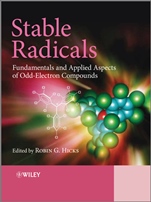
Stable Radicals: Fundamentals and Applied Aspects of Odd–Electron Compounds
ISBN 9780470770832
Autor: Robin Hicks
Wydawca: Wiley
Dostępność: 3-6 tygodni
Cena: 814,80 zł
Przed złożeniem zamówienia prosimy o kontakt mailowy celem potwierdzenia ceny.
ISBN13: |
9780470770832 |
ISBN10: |
047077083X |
Autor: |
Robin Hicks |
Oprawa: |
Hardback |
Rok Wydania: |
2010-07-09 |
Ilość stron: |
606 |
Wymiary: |
254x190 |
Tematy: |
PN |
Stable radicals – molecules with odd electrons which are sufficiently long lived to be studied or isolated using conventional techniques – have enjoyed a long history and are of current interest for a broad array of fundamental and applied reasons, for example to study and drive novel chemical reactions, in the development of rechargeable batteries or the study of free radical reactions in the body.
In Stable Radicals: Fundamentals and Applied Aspects of Odd–Electron Compounds a team of international experts provide a broad–based overview of stable radicals, from the fundamental aspects of specific classes of stable neutral radicals to their wide range of applications including synthesis, materials science and chemical biology. Topics covered include:
triphenylmethyl and related radicalspolychlorinated triphenylmethyl radicals: towards multifunctional molecular materialsphenalenyls, cyclopentadienyls, and other carbon–centered radicalsthe nitrogen oxides: persistent radicals and van der Waals complex dimersnitroxide radicals: properties, synthesis and applicationsthe only stable organic sigma radicals: di–tert–alkyliminoxyls.delocalized radicals containing the hydrazyl [R2N–NR] unitmetal–coordinated phenoxyl radicalsstable radicals containing the thiazyl unit: synthesis, chemical, and materials propertiesstable radicals of the heavy p–block elementsapplication of stable radicals as mediators in living–radical polymerizationnitroxide–catalyzed alcohol oxidations in organic synthesismetal–nitroxide complexes: synthesis and magneto–structural correlationsrechargeable batteries using robust but redox–active organic radicalsspin labeling: a modern perspectivefunctional in vivo EPR spectroscopy and imaging using nitroxides and trityl radicalsbiologically relevant chemis
try of nitroxides
Stable Free Radicals: Fundamentals and Applied Aspects of Odd–Electron Compoundsis an essential guide to this fascinating area of chemistry for researchers and students working in organic and inorganic chemistry, physical methods, materials science and chemical biology.
Spis treści:
Contents
1. Triarylmethyl and Related Radicals
Thomas T. Tidwell
1.1 Introduction
1.2 Free radical rearrangements
1.3 Other routes to triphenylmethyl radicals
1.4 The persistent radical effect
1.5 Properties of triphenylmethyl radicals
1.6 Steric effects and persistent radicals
1.7 Substituted triphenylmethyl radicals and dimers
1.8 Tri(heteroaryl)methyl and related triarylmethyl radicals and dimers
1.9 Delocalized persistent radicals: analogues of triarylmethyl radicals
1.10 Tetrathiatriarylmethyl (TAM) radicals
1.11 Perchlorinated triarylmethyl radicals
1.12 Other triarylmethyl radicals
1.13 Diradicals and polyradicals related to triphenylmethyl
1.14 Outlook
References
2. Polychlorotriphenylmethyl Radicals: Towards Multifunctional Molecular Materials
Jaume Veciana and Imma Ratera
2.1 Introduction to Polychlorotriphenylmethyl Radicals
2.2 Functional Molecular Materials based on PTM Radicals
2.3 Multifunctional Switchable Molecular Materials based on PTM Radicals
2.4 Summary
2.5 References
3. Phenalenyls, Cyclopentadienyls, and Other Carbon–Centered Radicals
Yasushi Morita and Shinsuke Nishida
3.1 Introduction
3.2 Open–shell graphene
3.3 Phenalenyl
3.4 2,5,8–Tri–tert–butylphenalenyl radical
3.5 Perchlorophenalenyl radical
3.6 Dithiophenalenyl radicals
3.7 Nitrogen–containing phenalenyl systems
3.8 Oxophenalenoxyl systems
3.9 Phenalenyl–based zwitterionic radicals
3.10 p–Extended phenalenyl systems
3.11
Curve–structured phenalenyl system
3.12 Non–alternant stable radicals
3.13 Stable triplet carbenes
3.14 Conclusion
Acknowledgement
References
4. The Nitrogen Oxides: Persistent Radicals and van der Waals Complex Dimers
D. Scott Bohle
4.1 Introduction
4.2 Synthetic access
4.3 Physical properties
4.4 Structural chemistry of the monomers and dimers
4.5 Electronic structure of the nitrogen oxides
4.6 Reactivity of NO and NO2 and their van der Waals complexes.
4.7 The kinetics of NO’s termolecular reactions
4.8 Biochemical and organic reactions of nitric oxide
4.9 General reactivity patterns
4.10 The colored species problem in NO chemistry
4.11 Conclusions
References
5. Nitroxide Radicals: Properties, Synthesis and Applications
Hakim Karoui, François Le Moigne, Olivier Ouari and Paul Tordo
5.1 Introduction
5.2 Nitroxide structure
5.3 Nitroxide Multiradicals
5.4 Nitronyl Nitroxides (NNOs)
5.5 Synthesis of Nitroxides
5.6 Chemical properties of nitroxides
5.7 Nitroxides in supramolecular entities
5.8 Nitroxides for Dynamic Nuclear Polarization (DNP) Enhanced NMR
5.9 Nitroxides as pH–sensitive spin probes
5.10 Nitroxides as prefluorescent probes
5.11 Approaches to Improve the Resistance of Nitroxides toward Bioreduction
5.12 EPR–Spin Trapping Technique
5.13 Conclusions
References
6. The Only Stable Organic Sigma Radicals: Di–tert–Alkyliminoxyls
Keith U. Ingold
6.1 Introduction
6.2 The Discovery of Stable Iminoxyls
6.3 Hydrogen Atom Abstraction by Di–tert–Butyliminoxyl
6.4 Other Reactions and Non–Reactions of Di–tert–Butyliminoxyl
6.5 Di–tert–Alkyliminoxyls More Sterically Crowded Than Di–tert–Butyliminoxyl
6.6 Di–(1–Adamantyl)iminoxyl. A Truly Stable ̵
1;Radical
References
7. Verdazyls and Related Radicals Containing the Hydrazyl [R2N–NR] Group
Robin G. Hicks
7.1 Introduction
7.2 Verdazyl radicals
7.3 Tetraazapentenyl radicals
7.4 Tetrazolinyl radicals
7.5 1,2,4–Triazolinyl radicals
7.6 1,2,4,5–Tetrazinyl radicals
7.7 Benzo–1,2,4–triazinyl radicals
7.8 Summary
References
8.Metal Coordinated Phenoxyl Radicals
Prof. Fabrice Thomas
8.1 Introduction
8.2 General properties of phenoxyl radicals
8.3 Occurrence of tyrosyl radicals in proteins
8.4 Complexes with coordinated phenoxyl radicals
8.5 Conclusions
8.6 Abbreviations
Notes and References
9. The Synthesis and Characterization of Stable Radicals Containing the Thiazyl (SN) Fragment and their use as Building Blocks for Advanced Functional Materials
Robin G. Hicks
9.1 Introduction
9.2 Radicals based exclusively on sulfur and nitrogen
9.3 “Organothiazyl” radicals
9.4 Thiazyl radicals as “advanced materials”
9.5 Summary
References
10. Stable Radicals of the Heavy p–block Elements
Jari Konu and Tristram Chivers
10.1 Introduction
10.2 Group 13 Element Radicals
10.3 Group 14 Element Radicals
10.4 Group 15 Element Radicals
10.5 Group 16 Element Radicals
10.6 Group 17 Element Radicals
10.7 Summary and Future Prospects
References
11. Application of Stable Radicals as Mediators in Living–Radical Polymerization
Andrea R. Szkurhan, Julie Lukkarila and Michael K. Georges
11.1 Introduction
11.2 Living Polymerizations
11.3 Stable Free Radical Polymerization
11.4 Non–Nitroxide–Based Radicals as Mediating Agents
11.5 Aqueous Stable Free Radical Polymerization Processes
11.6 The Application of Stable Free Radical Polymerization to New Materials
11.7 Conclusions
Reference
s
12. Nitroxide–Catalyzed Alcohol Oxidations In Organic Synthesis
Christian Bruckner
12.1 Introduction
12.2 Mechanism of TEMPO–catalyzed Alcohol Oxidations
12.3 Nitroxides Used as Catalysts
12.4 Chemoselectivity: Oxidation of Primary vs. Secondary Alcohols
12.5 Chemoselectivity: Oxidation of Primary vs. Benzylic Alcohols
12.6 Oxidation of Secondary Alcohols to Ketones
12.7 Oxidation of Alcohols to Carboxylic Acids
12.8 Stereoselective Nitroxide–catalyzed Oxidations
12.9 Secondary Oxidants Used in Nitroxide–catalyzed Reactions
12.10 Use of Nitroxide–catalyzed Oxidations in Tandem Reactions
12.11 Predictable Side Reactions
12.12 Comparison with Other Oxidation Methods
12.13 Reflections on Nitroxide–catalyzed Oxidations and Green Chemistry
Acknowledgements
References
13. Metal–nitroxide complexes: synthesis and magneto–structural correlations
Victor Ovcharenko
12.1 Introduction
12.2 Two types of nitroxide for direct coordination of the metal to the nitroxyl group
12.3 Ferro– and ferrimagnets based on metal–nitroxide complexes
12.4 Heterospin systems based on polynuclear compounds of metals with nitroxides
12.5 Breathing crystals
12.6 Other studies of metal–nitroxides
12.7 Conclusions
12.8 References
14. Rechargeable Batteries Using Robust But Redox–Active Organic Radicals
Takeo Suga and Hiroyuki Nishide
14.1 Introduction
14.2 Redox Reaction of Organic Radicals
14.3 Mechanism and Performance of Organic Radical Battery
14.4 Molecular Design and Synthesis of Redox–active Radical Polymers
14.5 A Totally Organic–based Radical Battery
14.6 Conclusion and Future Prospects
14.7 References
15. Spin Labeling: A Modern Perspective
Lawrence J. Berliner
15.1 Introduction
15.2 The early years
15.3 Advantages of nitro
xides
15.4 Applications of spin labeling to biochemical and biological systems.
15.5 Distance measurements
15.6 Site directed spin labeling (SDSL): how is it done?
15.7 Other spin labeling applications
15.8 Synopsis
References
16. Functional In Vivo EPR Spectroscopy and Imaging Using Nitroxide and Trityl Radicals
Valery V. Khramtsov and Jay L. Zweier
16.1 Introduction
16.2 Nitroxyl radicals
16.3 Triarylmethyl (trityl) radicals
16.4 In vivo EPR oximetry using nitroxyl and trityl probes
16.5 EPR spectroscopy and imaging of pH using nitroxyl and trityl probes
16.6 Redox– and thiol–sensitive nitroxide probes
16.7 Conclusions
Acknowledgments
References
17. Biologically Relevant Chemistry of Nitroxides
Sara Goldstein and Amram Samuni
17.1 Introduction
17.2 Mechanisms of nitroxide reactions with biologically relevant small radicals
17.3 Nitroxides as SOD–mimics
17.4 Nitroxides as catalytic antioxidants in biological systems
17.5 Conclusions
References
Okładka tylna:
Stable radicals – molecules with odd electrons which are sufficiently long lived to be studied or isolated using conventional techniques – have enjoyed a long history and are of current interest for a broad array of fundamental and applied reasons, for example to study and drive novel chemical reactions, in the development of rechargeable batteries or the study of free radical reactions in the body.
In Stable Radicals: Fundamentals and Applied Aspects of Odd–Electron Compounds a team of international experts provide a broad–based overview of stable radicals, from the fundamental aspects of specific classes of stable neutral radicals to their wide range of applications including synthesis, materials science and chemical biology. Topics covered include:
triphenylmethyl and related radicalspolychlorina
ted triphenylmethyl radicals: towards multifunctional molecular materialsphenalenyls, cyclopentadienyls, and other carbon–centered radicalsthe nitrogen oxides: persistent radicals and van der Waals complex dimersnitroxide radicals: properties, synthesis and applicationsthe only stable organic sigma radicals: di–tert–alkyliminoxyls.delocalized radicals containing the hydrazyl [R2N–NR] unitmetal–coordinated phenoxyl radicalsstable radicals containing the thiazyl unit: synthesis, chemical, and materials propertiesstable radicals of the heavy p–block elementsapplication of stable radicals as mediators in living–radical polymerizationnitroxide–catalyzed alcohol oxidations in organic synthesismetal–nitroxide complexes: synthesis and magneto–structural correlationsrechargeable batteries using robust but redox–active organic radicalsspin labeling: a modern perspectivefunctional in vivo EPR spectroscopy and imaging using nitroxides and trityl radicalsbiologically relevant chemistry of nitroxides
Stable Free Radicals: Fundamentals and Applied Aspects of Odd–Electron Compoundsis an essential guide to this fascinating area of chemistry for researchers and students working in organic and inorganic chemistry, physical methods, materials science and chemical biology.
Koszyk
Książek w koszyku: 0 szt.
Wartość zakupów: 0,00 zł
Informacje


Kontakt
Gambit
Centrum Oprogramowania
i Szkoleń Sp. z o.o.
Al. Pokoju 29b/22-24
31-564 Kraków
Siedziba Księgarni
ul. Kordylewskiego 1
31-542 Kraków
+48 12 410 5991
+48 12 410 5987
+48 12 410 5989
Subskrypcje
Administratorem danych osobowych jest firma Gambit COiS Sp. z o.o. Na podany adres będzie wysyłany wyłącznie biuletyn informacyjny.
Autoryzacja płatności

Informacje na temat autoryzacji płatności poprzez PayU.

© Copyright 2012: GAMBIT COiS Sp. z o.o. Wszelkie prawa zastrzeżone.
Projekt i wykonanie: Alchemia Studio Reklamy