


Wydawcy
Katalog tematyczny
- Archeologia (109)
- Ekonomia, finanse, business (13704)
- Filozofia (1445)
- Historia (3040)
- Języki i językoznawstwo (2356)
- Lifestyle, hobby i rozrywka (475)
- Medycyna (9704)
- Nauki humanistyczne (4)
- Nauki o Ziemi i środowisku (2638)
- Nauki ścisłe (20412)
- Astronomia (294)
- Biologia (5119)
- Chemia (6540)
- Chemia analityczna (361)
- Chemia fizyczna (346)
- Chemia nieorganiczna (137)
- Chemia organiczna (535)
- Krystalografia (27)
- Minerologia (46)
- Fizyka (3309)
- Matematyka (4574)
- Nauki ścisłe, ogólnie (503)
- Nauki społeczne (8486)
- Nauki techniczne (13450)
- Prawo (1696)
- Publikacje informacyjne i interdyscyplinarne (1288)
- Religia i wierzenia (917)
- Technika komputerowa (4067)
- Zdrowie, relacje międzyludzkie i rozwój osobisty (657)





Informacje szczegółowe o książce
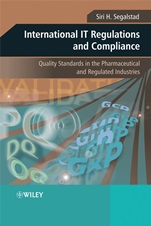
International IT Regulations and Compliance: Quality Standards in the Pharmaceutical and Regulated Industries
ISBN 9780470758823
Autor: Siri H. Segalstad
Wydawca: Wiley
Dostępność: 3-6 tygodni
Cena: 662,55 zł
Przed złożeniem zamówienia prosimy o kontakt mailowy celem potwierdzenia ceny.
ISBN13: |
9780470758823 |
ISBN10: |
0470758821 |
Autor: |
Siri H. Segalstad |
Oprawa: |
Hardback |
Rok Wydania: |
2008-10-24 |
Ilość stron: |
338 |
Wymiary: |
252x172 |
Tematy: |
PN |
After taking part in an EU Leonardo da Vinci project to create a complete curriculum for a Master′s degree in IT Validation, Siri H. Segalstad decided to write this book as she realised there was a need for a comprehensive book that rings together current thinking on the implementation of standards and regulations in relation to IT for a wide variety of industries.
This text allows the readers to acquire not only knowledge but also understanding of quality thinking and to apply this knowledge. It will allow them to use the Quality Management System (QMS) as a tool for further development in their organization and to assess QMS from other companies during a supplier audit.
This book will enable the user to understand the process of validation,how to divide validation into manageable pieces, and what is included in the validation for different types of systems.
Topics covered include:Quality standardsRegulatory requirements for IT systemsQuality Management Systems–QMSOrganization for an IT systemLegal implications of an IT systemAdvanced quality management systemsValidation process and validation techniquesValidation of IT systemsRisk assessment and risk managementLaboratory Information Management Systems (LIMS) and Building Management Systems (BMS)
This comprehensive text will be useful to those working with quality assurance and validation of IT systems and in regulated industries, regardless of which standards they are using.
Spis treści:
Preface and Acknowledgements.
1. Quality Standards.
1.1 What Quality is.
1.2 Mandatory and Voluntary Standards.
1.3 Pharmaceutical Industry Regulations.
1.4 US GXP Regulations.
1.5 European GXP Regulations.
1.6 Other GXP Regulations.
1.7 Good Manufacturing Practice – GMP.
1.8 Good Laboratory Practice – GLP.
1.9 Good Clinical Practice – GCP.
1.10 Medical Device Standards.1.11 It Systems in The GXP And Medical Device Regulations.
1.12 GAMP.
1.13 Mandatory Quality Standards in Other Industries.
1.14 Legal Issues.
1.15 ISO.
1.16 ASTM.
1.17 IEEE.
1.18 TASKS.
2. Regulatory Requirements for IT Systems.
2.1 Introduction.
2.2 US Requirements.
2.3 EU Requirements.
2.4 21 CFR Part 11.
2.5 The "Part 11 Project".
2.6 EU GMP Annex 11.
2.7 PIC Document PI 011 Recommendation on Computerised Systems In Regulated "GXP" Environments.
2.8 GAMP.
2.9 ISO 9000–Series.
2.10 Comparison Between the Standards.
2.11 Conclusion.
2.12 Tasks.
3. IT Security.
3.1 Introduction.
3.2 Continuous Connections – Wireless Networks.
3.3 Threats.
3.4 Security Policy.
3.5 Tasks.
4. Quality Management Systems.
4.1 Introduction to QMS.
4.2 Definitions.
4.3 Principles for Quality Management.
4.4 Quality Management System Levels.
4.5 Creating a QMS.
4.6 Roles and Responsibilities.
4.7 Work Processes.
4.8 Controlled Documents.
4.9 Quality Policy––QP.
4.10 Quality Manual––QM.
4.11 Standard Operating Procedures.
4.12 The Art of Writing an SOP.
4.13 Tasks.
5. IT Integrated In the QMS in a User Organization.
5.1 Introduction.
5.2 How to Integrate the IT Systems in the QMS.
5.3 Generic Standard Operating Procedures (SOPS).
5.4 Procedures for Each System.
5.5 Tasks.
6. IT Integrated in the Supplier’s QMS.
6.1 Introduction.
6.2 Which Standards to Use?
6.3 Quality Management System.
6.4 System Development Models.
6.5 Documents for the Software Development.
6.6 Customer–Supplier Relationship.
6.7 Tasks.
7. Organization for an IT System.
7.1 Introduction.
7.2 Roles and Responsibilities for a Live System.
7.3 Groups in the IT System Organization.
7.4 Roles and Responsibilities for an IT Validation Project.
7.5 Outsourcing
.
1.1 Service Level Agreement for Outsourcing.
7.6 Consultants.
8. The Legal Implications of an IT System.
8.1 Introduction.
8.2 Pharmaceutical Regulations.
8.3 Financial Systems.
8.4 Patent Systems.
8.5 Human Resource (HR) Systems.
8.6 Healthcare Systems.
8.7 Systems for Legal Information.
9. Advanced Quality Management Systems.
9.1 Introduction.
9.2 The Live QMS is a Good QMS.
9.3 Changes.
9.4 How to Keep the QMS Updated.
9.5 Training and Understanding.
9.6 How to Use A QMS Effectively As A Tool In The Organization – Not As a Straightjacket.
9.7 Tasks.
10. Audits.
10.1 Introduction.
10.2 ISO 9000 Series.
10.3 Tickit.
10.4 Why Audit?
10.5 Audit In A Risk–Based Environment.
10.6 Audit Scope.
10.7 Supplier Audit Preparations.
10.8 During the Audit.
10.9 What To Look For.
10.10 Other Issues.
10.11 Findings/Discrepancies.
10.12 Closing Meeting/Wash–Up Meeting.
10.13 Audit Report.
10.14 Conducting an Audit from the Receiving End Of The Table.
10.15 Tasks.
11. Validation of IT Systems.
11.1 Introduction.
11.2 External Requirements for Validation.
11.3 Internal Requirements for Validation.
11.4 Validation Cost.
11.5 Inspectors.
11.6 Validation Scope Is Changing.
11.7 Computer Validation Project.
11.8 Which Hardware and Software Shall Be Validated.
11.9 Network.
11.10 Software.
11.11 Risks and System Categories.
11.12 Qualifications.
11.13 DQ – Development Qualification.
11.14 IQ – Installation Qualification.
11.15 OQ – Operation Qualification.
11.16 PQ – Performance / Process Qualification.
11.17 Validation Master Plan VMP.
11.18 Validation Plan VP.
11.19 Validation Report.
11.20 Tasks.
12. Risk Assessment and Risk Management.
12.1 Introduction.
12.2 Addressing Risks.
12.3 Risk Assessment Tools.
12.4 Risk Assessment.12.5 Risk Management.
12.6 Tasks.
13. Development Qualification.
13.1 Introduction.
13.2 User’s Point Of View.
13.3 Supplier’s Point of View.
13.4 Project: The New System in the User Organization.
13.5 The Four Assessments of System Selection.
13.6 Functional Specification and System Implementation.
13.7 Tasks.
14. Installation Qualification.
14.1 Introduction.
14.2 IQ Organizational Issues.
14.3 IQ Plan.
14.4 IQ Testing.
14.5 IQ Report.
14.6 Tasks.
15. Operational Qualification.
15.1 Introduction.
15.2 OQ Framework.
15.3 What If The Supplier Has Done OQ?
15.4 OQ Plan.
15.5 OQ Testing.
15.6 Documentation of the Testing.
15.7 OQ Report.
15.8 Tasks.
16. Process/Performance Qualification.
16.1 Introduction.
16.2 PQ Plan.
16.3 PQ Test Plans.
16.4 Documentation During the Testing.
16.5 PQ Report.
16.6 Ongoing PQ.
16.7 Tasks.
17. Laboratory Instrument Systems.
17.1 Introduction.
17.2 Instruments.
17.3 Analytical Instruments in the Laboratory.
17.4 Raw Data and Meta Data.
17.5 Devices.
17.6 Biometric Devices.
17.7 Electronic Lab Notebooks ELN.
17.8 Validation of Computerized Instrument Systems.
17.9 Pure Computer Systems.
17.10 Computerized Instruments That Can Run ‘Barefoot’.
17.11 Integrated Computerized Instruments.
17.12 Qualification of Laboratory Instruments.
18. Laboratory Information Management Systems.
18.1 Introduction.
18.2 Build or Buy a New LIMS?
18.3 The Real Cost Of LIMS.
18.4 Differences Between Commercial LIMS Systems.
18.5 Static and Dynamic Data.
18.6 Static Data.
18.7 Dynamic Data.
18.8 LIMS Functionality.
18.9 Types of Production.
18.10 Analytical Methods.
18.11 Calculations in Analytical Methods.
18.12 Specifications and Limits.
18.13 Standards, Solutions and Chemicals Used In the Lab.
18.14 Instrument C
Koszyk
Książek w koszyku: 0 szt.
Wartość zakupów: 0,00 zł
Informacje


Kontakt
Gambit
Centrum Oprogramowania
i Szkoleń Sp. z o.o.
Al. Pokoju 29b/22-24
31-564 Kraków
Siedziba Księgarni
ul. Kordylewskiego 1
31-542 Kraków
+48 12 410 5991
+48 12 410 5987
+48 12 410 5989
Subskrypcje
Administratorem danych osobowych jest firma Gambit COiS Sp. z o.o. Na podany adres będzie wysyłany wyłącznie biuletyn informacyjny.
Autoryzacja płatności

Informacje na temat autoryzacji płatności poprzez PayU.

© Copyright 2012: GAMBIT COiS Sp. z o.o. Wszelkie prawa zastrzeżone.
Projekt i wykonanie: Alchemia Studio Reklamy