


Wydawcy
Katalog tematyczny
- Archeologia (109)
- Ekonomia, finanse, business (13704)
- Filozofia (1445)
- Historia (3040)
- Języki i językoznawstwo (2356)
- Lifestyle, hobby i rozrywka (475)
- Medycyna (9704)
- Nauki humanistyczne (4)
- Nauki o Ziemi i środowisku (2638)
- Nauki ścisłe (20412)
- Nauki społeczne (8486)
- Nauki techniczne (13450)
- Budownictwo lądowe (1045)
- Chemia przemysłowa (2258)
- Elektronika i telekomunikacja (3287)
- Energetyka (1122)
- Inne nauki stosowane (363)
- Inżynieria biochemiczna (507)
- Inżynieria transportu (232)
- Mechanika i materiały (3316)
- Nauka o środowisku (321)
- Rolnictwo (507)
- Technika, ogólnie (475)
- Prawo (1696)
- Publikacje informacyjne i interdyscyplinarne (1288)
- Religia i wierzenia (917)
- Technika komputerowa (4067)
- Zdrowie, relacje międzyludzkie i rozwój osobisty (657)





Informacje szczegółowe o książce
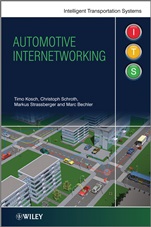
Automotive Internetworking
ISBN 9780470749791
Autor: Timo Kosch, Christoph Schroth, Markus Strassberger, Marc Bechler
Wydawca: Wiley
Dostępność: 3-6 tygodni
Cena: 483,00 zł
Przed złożeniem zamówienia prosimy o kontakt mailowy celem potwierdzenia ceny.
ISBN13: |
9780470749791 |
ISBN10: |
0470749792 |
Autor: |
Timo Kosch, Christoph Schroth, Markus Strassberger, Marc Bechler |
Oprawa: |
Hardback |
Rok Wydania: |
2012-03-16 |
Ilość stron: |
398 |
Wymiary: |
250x171 |
Tematy: |
TG |
A complete introduction to car–to–X communications networking This book introduces a range of new network and system technologies for vehicle safety, entertainment and comfort systems currently being researched and developed. In addition, the authors provide an insight into the background of technical developments, discussing the potential benefits, costs and risks. Furthermore, the book discusses the concepts related to the application of vehicle–to–vehicle and vehicle–to–infrastructure communications, offering in–depth explanations of the new applications, network and system technologies, which are valuable for the engineer developing such systems and the research expert alike. The book covers all aspects from distributed information handling, situation assessment, security, privacy, system management up to algorithms for driver assistance and vehicle control systems. Beyond technology, the book also addresses economic, organisational and political challenges. Often overlooked, their influence on the success of automotive internetworking is just as important. Key Features: Presents a comprehensive top–down approach to the newly evolving car–to–X communications networking Provides a broad overview of all relevant C2X communication topics Written by well known experts in the field Predicts the outlook of the evolvement of inter–vehicle communications in the next decades Includes illustrations and high–level technical sketches of application domains and photographs, 3D renderings and professional graphical sketches of current prototypes
Preface xi List of Abbreviations xiii 1 Automotive Internetworking: The Evolution Towards Connected and Cooperative Vehicles 1 1.1 Evolution of In–Vehicle Electronics 1 1.2 Motivation for Connected Vehicles 4 1.3 Terminology 7 1.4 Stakeholders 10 1.5 Outline of this Book 10 References 12 2 Application Classifications and Requirements 13 2.1 Classification of Applications and their Implications 14 2.1.1 Driving–Related Applications 15 2.1.2 Vehicle–Related Applications 19 2.1.3 Passenger–Related Applications 22 2.2 Requirements and Overall System Properties 25 2.3 Overview on Suitable Communication Technologies 28 2.3.1 Communication Technologies 28 2.3.2 Suitability for AutoNet Applications 31 2.4 Summary 34 References 34 3 System Architecture 37 3.1 Domain View of AutoNets 37 3.2 ISO/OSI Reference Model View 40 3.3 Profiling 42 3.4 Standardised Architectures 43 3.4.1 Architecture of the C2C Communication Consortium (C2C–CC) 44 3.4.2 ISO TC204 CALM Architecture 45 3.4.3 ETSI TC ITS Architecture: EN 302 655 47 3.4.4 IEEE WAVE Architecture Featuring IEEE802.11p and IEEE1609.x Standards 49 3.5 Subsystem Architectures 50 3.5.1 Vehicle Architecture 51 3.5.2 Roadside Architecture 55 3.5.3 Infrastructure Architecture 56 3.5.4 Mobile Device Architecture 61 3.6 Summary 62 References 63 4 Applications: Functionality and Protocols 65 4.1 Foresighted Safety Case Study: Environmental Notifications 67 4.1.1 Data Collection and Individual Situation Analysis 68 4.1.2 Cooperative Situation Analysis 71 4.1.3 Distributed Knowledge Management 73 4.1.4 Individual Relevance and Interface to the Driver 75 4.1.5 Data Security and Privacy 77 4.1.6 Reliable Estimation of the Current Driving Condition 78 4.1.7 Communication and Information Dissemination 79 4.1.8 Standardisation Issues 80 4.2 Active Safety Case Study: Cooperative Collision Avoidance and Intersection Assistance 81 4.2.1 Data Collection 82 4.2.2 Situation Analysis and Application Logic 83 4.2.3 Knowledge Management 88 4.2.4 Communication 90 4.2.5 Security and Privacy 93 4.2.6 Driver Interaction 95 4.3 Green Driving Case Study: Traffic Lights Assistance 98 4.3.1 Green Light Optimal Speed Advisory 99 4.3.2 Example: TRAVOLUTION 107 4.4 Business and Convenience Case Study: Insurance and Financial Services 107 4.4.1 Accident Management Services 108 4.4.2 Examples for Insurance and Financial Services (IFS) 116 References 118 5 Application Support 121 5.1 Application Support in the AutoNet Generic Reference Protocol Stack 121 5.2 Communication Aspects in the Application Support 123 5.2.1 CAM: Cooperative Awareness Messages 123 5.2.2 DENM: Decentralised Environmental Notification Messages 125 5.3 AutoNet Facilities 125 5.3.1 Application Plane 126 5.3.2 Information Plane 128 5.3.3 Communication Plane 130 5.4 Implementation Issues for the Application Support Layer 131 5.5 Summary 133 References 133 6 Transport Layer 135 6.1 Transport Layer Integration in the AutoNet Generic Reference Protocol Stack 135 6.1.1 AutoNet Transport 137 6.1.2 TCP, UDP 138 6.2 TCP in AutoNets 139 6.2.1 Congestion Control in TCP 140 6.2.2 Impact of AutoNets 141 6.2.3 Enhancements of TCP and Technical Requirements for AutoNet Scenarios 143 6.2.4 The MOCCA Transport Protocol 144 6.2.5 Evaluation Results 148 6.3 Summary 151 References 152 7 Networking 155 7.1 Networking Principles in the AutoNet Generic Reference Protocol Stack 155 7.1.1 Network Layer Functionality in AutoNets 155 7.1.2 Network Protocol Data Units 158 7.2 AutoNet Ad–Hoc Networking 160 7.2.1 AutoNet Ad–Hoc Network Characteristics 160 7.2.2 AutoNet Ad–Hoc Network Addressing and Routing 165 7.2.3 Beaconing 176 7.2.4 Network Utility Maximisation in AutoNets 177 7.3 AutoNet Cellular Networking 187 7.3.1 Communication Architecture for AutoNet Cellular Networking 189 7.3.2 Deployment Strategies 190 7.3.3 Interactions and Cross–Layer Optimisations 192 7.4 IPv6 and Mobility Extensions 192 7.4.1 IPv6 193 7.4.2 Mobility Extensions 194 7.4.3 Deployment Issues 197 References 200 8 Physical Communication Technologies 205 8.1 Wireless Networks in the AutoNet Generic Reference Protocol Stack 206 8.2 Automotive WLAN and DSRC 208 8.2.1 Spectrum Policies 209 8.2.2 IEEE 802.11p 213 8.2.3 ETSI G5A 221 8.3 Utility–Centric Medium Access in IEEE 802.11p 221 8.3.1 Data Differentiation 221 8.3.2 Inter–Vehicle Contention 222 8.3.3 Cross–Layer Issues 223 8.3.4 Evaluation of Utility–Centric Medium Access 225 8.4 Technology Comparison 230 8.5 Conclusion 231 References 231 9 Security and Privacy 233 9.1 Stakes, Assets, Threats and Attacks 235 9.1.1 Stakeholders and Assets 235 9.1.2 Threats and Attacks 236 9.2 Challenges and Requirements 238 9.3 AutoNet Security Architecture and Management 241 9.4 Security Services 244 9.4.1 Cryptographic Mechanisms 244 9.4.2 Digital Signatures 246 9.5 Certification 247 9.5.1 Trust 247 9.5.2 Trusted Third Platforms: Certificate Authorities 249 9.5.3 Certificate Generation and Distribution 250 9.5.4 Certificate Revocation 253 9.6 Securing Vehicles 253 9.7 Secure Communication 254 9.7.1 Secure Messaging 254 9.7.2 Secure Routing and Forwarding 255 9.7.3 Secure Group Communication 255 9.7.4 Plausibility Checks 255 9.8 Privacy 256 9.8.1 Secret Information 256 9.9 Conclusion 258 References 259 10 System Management 261 10.1 System Management in the AutoNet Generic Reference Protocol Stack 261 10.2 Functional Management Building Blocks 263 10.3 Selected Management Issues of an AutoNet Station 264 10.3.1 Cost/Benefit Management 264 10.3.2 Congestion Control 265 10.3.3 Mobility Management 265 10.3.4 TCP Management 268 10.4 Implementation Issues of the Management Layer 270 10.5 Summary 271 References 271 11 Research Methodologies 273 11.1 Early Activities to Investigate AutoNets 274 11.1.1 Activities at the University of Duisburg 274 11.1.2 Activities at the Ohio State University 275 11.2 Methodologies 277 11.2.1 Model Domains for AutoNets 278 11.2.2 Dependency Examples 280 11.3 Simulation Methodology 282 11.3.1 Communication Network Simulation 284 11.3.2 Traffic Simulation 287 11.3.3 Implementation Issues 290 11.4 Field Operational Testing Methodology 298 11.4.1 Applications and Requirements 300 11.4.2 System Architecture 302 11.4.3 Trials 304 11.4.4 Analysis 306 11.5 Summary 307 References 307 12 Markets 309 12.1 Current Market Developments 310 12.1.1 Technological Push 311 12.1.2 Economic Pull 311 12.1.3 Stakeholder Analysis 312 12.2 Challenges 327 12.2.1 Harmonisation and Standardisation 328 12.2.2 Life Cycle 330 12.2.3 Costs and Revenues in an Emerging Business Ecosystem 330 12.2.4 Customer Acceptance 331 12.3 Driving the Emergence of a Coherent Business Ecosystem 333 12.3.1 Strategies for the Development of a Modular Business Ecosystem 333 12.3.2 Early Examples of Telematic Business Ecosystems 339 12.4 Summary 342 References 342 13 Impact and Future Projections 345 A Appendix 351 A.1 Standardisation Bodies for AutoNets 351 A.1.1 ETSI 351 A.1.2 CEN 352 A.1.3 ISO 353 A.1.4 IETF 354 A.1.5 IEEE 354 A.1.6 Car2Car Communication Consortium 354 A.2 Research Projects on AutoNets 355 A.2.1 Early Activities 355 A.2.2 The eSafety Initiative 358 A.2.3 COMeSafety 360 A.2.4 COOPERS 361 A.2.5 CVIS 361 A.2.6 SAFESPOT 363 A.2.7 SeVeCom 363 A.2.8 GeoNet 363 A.2.9 FRAME, E–FRAME 364 A.2.10 VII and IntelliDrive 364 A.2.11 Travolution 365 A.2.12 Aktiv 365 A.2.13 PRE–DRIVE C2X 366 A.2.14 simTD 367 References 368 Index 369
Koszyk
Książek w koszyku: 0 szt.
Wartość zakupów: 0,00 zł
Informacje


Kontakt
Gambit
Centrum Oprogramowania
i Szkoleń Sp. z o.o.
Al. Pokoju 29b/22-24
31-564 Kraków
Siedziba Księgarni
ul. Kordylewskiego 1
31-542 Kraków
+48 12 410 5991
+48 12 410 5987
+48 12 410 5989
Subskrypcje
Administratorem danych osobowych jest firma Gambit COiS Sp. z o.o. Na podany adres będzie wysyłany wyłącznie biuletyn informacyjny.
Autoryzacja płatności

Informacje na temat autoryzacji płatności poprzez PayU.

© Copyright 2012: GAMBIT COiS Sp. z o.o. Wszelkie prawa zastrzeżone.
Projekt i wykonanie: Alchemia Studio Reklamy