


Wydawcy
Katalog tematyczny
- Archeologia (109)
- Ekonomia, finanse, business (13704)
- Filozofia (1445)
- Historia (3040)
- Języki i językoznawstwo (2356)
- Lifestyle, hobby i rozrywka (475)
- Medycyna (9704)
- Nauki humanistyczne (4)
- Nauki o Ziemi i środowisku (2638)
- Nauki ścisłe (20412)
- Astronomia (294)
- Biologia (5119)
- Biochemia (575)
- Biologia człowieka (14)
- Biologia komórkowa (377)
- Biologia molekularna (398)
- Biologia rozwoju (130)
- Biologia, ogólnie (1277)
- Botanika (280)
- Hydrobiologia (92)
- Mikrobiologia (363)
- Mykologia (22)
- Zoologia (303)
- Chemia (6540)
- Fizyka (3309)
- Matematyka (4574)
- Nauki ścisłe, ogólnie (503)
- Nauki społeczne (8486)
- Nauki techniczne (13450)
- Prawo (1696)
- Publikacje informacyjne i interdyscyplinarne (1288)
- Religia i wierzenia (917)
- Technika komputerowa (4067)
- Zdrowie, relacje międzyludzkie i rozwój osobisty (657)





Informacje szczegółowe o książce
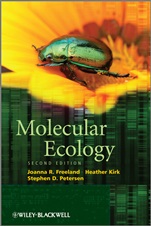
Molecular Ecology
ISBN 9780470748343
Autor: Joanna R. Freeland, Heather Kirk, Stephen D. Petersen
Wydawca: Wiley
Dostępność: 3-6 tygodni
Cena: 702,45 zł
Przed złożeniem zamówienia prosimy o kontakt mailowy celem potwierdzenia ceny.
ISBN13: |
9780470748343 |
ISBN10: |
0470748346 |
Autor: |
Joanna R. Freeland, Heather Kirk, Stephen D. Petersen |
Oprawa: |
Hardback |
Rok Wydania: |
2011-04-12 |
Numer Wydania: |
2nd Edition |
Ilość stron: |
464 |
Wymiary: |
245x177 |
Tematy: |
PS |
Molecular Ecology, 2nd Edition provides an accessible introduction to the many diverse aspects of this subject. The book takes a logical and progressive approach to uniting theory with examples from a wide range of taxonomic groups. The straightforward writing style offers in–depth analysis whilst making often challenging subjects such as population genetics and phylogenetics highly comprehensible to the reader.
The first part of the book introduces the essential underpinnings of molecular ecology, and includes a review of genetics, a discussion of the molecular markers that are most frequently used in ecological research, and a chapter devoted to the newly emerging field of ecological genomics. The second half of the book covers specific applications of molecular ecology, covering phylogeography, behavioural ecology and conservation genetics.
The new edition provides a thoroughly up–to–date introduction to the field, emphasising new types of analyses and including current examples and techniques whilst also retaining the information–rich, highly readable style which set the first edition apart.
• Incorporates both theoretical and applied perspectives
• Highly accessible, user–friendly approach and presentation
• Includes links to online self–assessment activities with hypothetical cases based on actual species and realistic data sets
• Uses case studies to place the theory in context
• Provides coverage of population genetics, genomics, phylogeography, behavioural ecology and conservation genetics.
Spis treści:
1 Molecular Genetics in Ecology
What is Molecular Ecology?
The Emergence of Molecular Ecology
Protein allozymes
Allozymes as genetic markers
An Unlimited Source of Data
Mutation and recombination
Is genetic variation adaptive?
Polymerase chain reaction
Getting data from PCR
Rea
l–time PCR
Overview
Chapter Summary
Useful Websites and Software
Further Reading
Review Questions
2 Molecular Markers in Ecology
Understanding Molecular Markers
Modes of Inheritance
Nuclear versus organelle
Haploid chromosomes
Identifying hybrids
Uniparental markers: A cautionary note
Molecular Markers
Co–dominant markers
Dominant markers
Overview
Chapter Summary
Useful Websites and Software
Further Reading
Review Questions
3 Genetic Analysis of Single Populations
Why Study Single Populations?
What is a population?
Quantifying Genetic Diversity
Hardy–Weinberg equilibrium
Estimates of genetic diversity
Haploid diversity
Choice of marker
What Influences Genetic Diversity?
Genetic drift
What is effective population size?
Quantifying census population size
Quantifying effective population size
Demographic influences on Ne
Ne, genetic drift and genetic diversity
Population bottlenecks
Founder effects and invasive species
Natural selection
The major histocompatibility complex
Reproduction
Overview
Chapter Summary
Useful Websites and Software
Further Reading
Review Questions
4 Genetic Analysis of Multiple Populations
Why Study Multiple Populations?
Quantifying Population Subdivision
Genetic distance
F–statistics
Interpreting FST
Non–a priori identification of populations
Quantifying Gene Flow
Direct methods
Indirect methods
Assignment tests
What Influences Gene Flow?
Barriers to dispersal
Landscape genetics
Metapopulations
Interspecific interactions
Hybridization
Population Differentiation: Genetic Drift and Natural Selection
Gene flow and genetic drift
Gene flow and local adaptation
Overview
Chapter Summary
Usefu
l Websites and Software
Further Reading
Review Questions
5 Studying Ecologically Important Traits: Ecogenomics, QTL Analysis, and Reverse Genetics
Studying Ecologically Important Traits
cDNA libraries and ESTs
Microarrays
How do microarrays work?
Probes
Verifying differences in gene expression
Microarray applications
Microarrays and community ecology of microorganisms
Microarrays and genotyping
Connecting Genotype to Phenotype
Reverse genetics
QTL Analysis
Linkage mapping
QTL mapping
QTL mapping of ecologically important traits
Overview
Chapter Summary
Useful Websites and Software
Further Reading
Review Questions
6 Phylogeography
What is Phylogeography?
Molecular markers in phylogeography
Organelle versus nuclear markers
Repetitive versus non–repetitive markers
Molecular Clocks
Bifurcating Trees
The Coalescent
Applying the coalescent
Networks
NCPA and Statistical Phylogeography
The Distributions of Genetic Lineages
Subdivided populations
Dispersal and vicariance
Comparative Phylogeography
Regional concordance
Continental concordance
European post–glacial recolonization routes
Dispersal and invasive species
Allele Sharing Between Species
Lineage sorting
Hybridization
Overview
Chapter Summary
Useful Websites and Software
Further Reading
Review Questions
7 Behavioural Ecology
Why Use Molecules to Study Behaviour?
Mating Systems
Parentage analysis
Extra–pair fertilizations
Social breeding
Social insects
Manipulating Sex Ratios
Sex Ratio Conflicts
Sex–biased Dispersal
Nuclear and mitochondrial markers
Relatedness
FST values
Assignment tests
Spatial autocorrelation
Concordant results
Predators and Prey
Identifying prey
Predation and conservation
Overview
Chapter Summary
Useful Websites and Software
Further Reading
Review Questions
8 Conservation Genetics
The Need for Conservation
Taxonomy
Species concepts
DNA barcoding
Subspecies
Conservation units
Hybrids
Population Size, Genetic Diversity and Inbreeding
Inbreeding depression
Heterozygosity fitness correlations
Self–fertilization
Inbreeding avoidance
Outbreeding depression
Translocations
Genetic rescue
Source populations
Restoration genetics
Captive Breeding
Maximizing genetic diversity
Captive inbreeding and outbreeding
Genetic Diversity Banks
Overview
Chapter Summary
Useful Websites and Software
Further Reading
Review Questions
Glossary
References
Answers to Review Questions
Index
Okładka tylna:
Molecular Ecology, 2nd Edition provides an accessible introduction to the many diverse aspects of this subject. The book takes a logical and progressive approach to uniting theory with examples from a wide range of taxonomic groups. The straightforward writing style offers in–depth analysis whilst making often challenging subjects such as population genetics and phylogenetics highly comprehensible to the reader.
The first part of the book introduces the essential underpinnings of molecular ecology, and includes a review of genetics, a discussion of the molecular markers that are most frequently used in ecological research, and a chapter devoted to the newly emerging field of ecological genomics. The second half of the book covers specific applications of molecular ecology, covering phylogeography, behavioural ecology and conservation genetics.
The new edition provides a thoroughly up–to–date introduction to the field, emphasising new types of analyses and including current examples and techniques whilst
also retaining the information–rich, highly readable style which set the first edition apart.
• Incorporates both theoretical and applied perspectives
• Highly accessible, user–friendly approach and presentation
• Includes links to online self–assessment activities with hypothetical cases based on actual species and realistic data sets
• Uses case studies to place the theory in context
• Provides coverage of population genetics, genomics, phylogeography, behavioural ecology and conservation genetics.
Koszyk
Książek w koszyku: 0 szt.
Wartość zakupów: 0,00 zł
Informacje


Kontakt
Gambit
Centrum Oprogramowania
i Szkoleń Sp. z o.o.
Al. Pokoju 29b/22-24
31-564 Kraków
Siedziba Księgarni
ul. Kordylewskiego 1
31-542 Kraków
+48 12 410 5991
+48 12 410 5987
+48 12 410 5989
Subskrypcje
Administratorem danych osobowych jest firma Gambit COiS Sp. z o.o. Na podany adres będzie wysyłany wyłącznie biuletyn informacyjny.
Autoryzacja płatności

Informacje na temat autoryzacji płatności poprzez PayU.

© Copyright 2012: GAMBIT COiS Sp. z o.o. Wszelkie prawa zastrzeżone.
Projekt i wykonanie: Alchemia Studio Reklamy