


Wydawcy
Katalog tematyczny
- Archeologia (109)
- Ekonomia, finanse, business (13704)
- Filozofia (1445)
- Historia (3040)
- Języki i językoznawstwo (2356)
- Lifestyle, hobby i rozrywka (475)
- Medycyna (9704)
- Nauki humanistyczne (4)
- Nauki o Ziemi i środowisku (2638)
- Nauki ścisłe (20412)
- Astronomia (294)
- Biologia (5119)
- Chemia (6540)
- Chemia analityczna (361)
- Chemia fizyczna (346)
- Chemia nieorganiczna (137)
- Chemia organiczna (535)
- Krystalografia (27)
- Minerologia (46)
- Fizyka (3309)
- Matematyka (4574)
- Nauki ścisłe, ogólnie (503)
- Nauki społeczne (8486)
- Nauki techniczne (13450)
- Prawo (1696)
- Publikacje informacyjne i interdyscyplinarne (1288)
- Religia i wierzenia (917)
- Technika komputerowa (4067)
- Zdrowie, relacje międzyludzkie i rozwój osobisty (657)





Informacje szczegółowe o książce
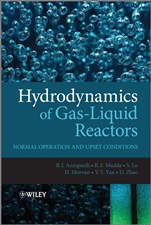
Hydrodynamics of Gas–Liquid Reactors: Normal Operation and Upset Conditions
ISBN 9780470747711
Autor: Barry Azzopardi, Donglin Zhao, Y. Yan, H. Morvan, R. F. Mudde, Simon Lo
Wydawca: Wiley
Dostępność: 3-6 tygodni
Cena: 746,55 zł
Przed złożeniem zamówienia prosimy o kontakt mailowy celem potwierdzenia ceny.
ISBN13: |
9780470747711 |
ISBN10: |
0470747714 |
Autor: |
Barry Azzopardi, Donglin Zhao, Y. Yan, H. Morvan, R. F. Mudde, Simon Lo |
Oprawa: |
Hardback |
Rok Wydania: |
2011-07-01 |
Ilość stron: |
344 |
Wymiary: |
251x175 |
Tematy: |
PN |
Hydrodynamics, the study of fluids in motion, is a crucial consideration when designing multiphase chemical reactors, particularly those involving gas–liquid reactions. The design of chemical reactors and their safety are as critical to the success of a chemical process as the actual chemistry taking place within the reactor.
Hydrodynamics of Multiphase Reactors addresses both practical and theoretical aspects of this topic. Providing a comprehensive overview of the practical aspects of multiphase reactor design and operation with an emphasis on safety and clean technology, it considers not only standard operation conditions, but also the problems of runaway reaction conditions and protection against ensuing over–pressure.
Divided into three parts, covering the methods used for design calculation, upset conditions, and measurement techniques, the contents include:Bubble ColumnsSparged Stirred VesselsThin Film ReactorsMacroscale and Mesoscale ModellingUpset ConditionsBehaviour of Vessel Contents and Outflow CalculationsChoked Flow
This text will be of great interest to industrial practitioners and academic researchers, as well as being suitable for MSc and PhD students in chemical engineering and chemical sciences.
Spis treści:
List of Figures.
List of Tables.
Preface.
Nomenclature.
1. Introduction.
Part One.
2. Bubble Columns.
2.1 Introduction 6
2.2 Types of Bubble Columns.
2.3 Introduction of Gas.
2.3.1 Methodology of Gas Injection.
2.3.2 Bubble Formation and Size Change.
2.3.3 Bubble Movement.
2.3.3.1 Bubble Shape.
2.3.3.2 Bubble Motion.
2.3.3.3 Bubble Velocity.
2.3.3.4 Effect of Multiple Bubbles.
2.3.4 Void Fraction Prediction.
2.3.5 Detailed Behaviour of the Flow.
2.3.6 Gas–Liquid Mass Transfer.
2.3.7 Design of Gas Introduction Arrangement.
2.3.8 Worked Example.
2.4 Disengagement of L
iquid from Gas.
2.4.1 Mechanisms of Drop Formation.
2.4.2 Drop Capture.
2.4.3 Wave Plate Mist Eliminators.
2.4.4 Mesh Mist Eliminators.
3. Sparged Stirred Vessels.
3.1 Introduction.
3.2 Flow Regimes.
3.3 Variations.
3.4 Spargers.
3.5 Impellers.
3.5.1 Disc Turbines.
3.5.2 Pitched Blade Turbines.
3.5.3 Hydrofoil Impellers.
3.5.4 Multiple Impellers.
3.6 Baffles.
3.7 Power Requirements.
3.7.1 Single Impellers.
3.7.2 Multiple Impellers.
3.7.3 Single–Phase Power.
3.8 Gas Fraction.
3.9 Mass Transfer.
3.9.1 Bubble Size.
3.9.2 Interfacial Area.
3.9.3 Mass Transfer.
3.10 Mixing Times.
4. Thin Film Reactors.
4.1 Introduction.
4.2 Falling Film Reactors.
4.2.1 Film Thickness.
4.2.2 Interfacial Waves.
4.2.3 Heat and Mass Transfer.
4.3 Rotating Disc Reactors.
4.3.1 Film Thickness.
4.3.2 Interfacial Waves.
4.3.3 Mass Transfer.
4.4 Two–Phase Tubular Reactors.
4.5 Monolith Reactors.
4.5.1 Micro–Channels.
4.5.2 Flow Phenomena in Micro–Channels.
4.5.3 Numerical Modelling.
5. Macroscale Modelling.
5.1 Introduction.
5.2 Eulerian Multiphase Flow Model.
5.2.1 Definition.
5.2.2 Transport Equations.
5.2.2.1 Continuity Equation.
5.2.2.2 Momentum Equation.
5.2.2.3 Energy Equation.
5.2.3 Interfacial Forces.
5.2.3.1 Drag Force.
5.2.3.2 Lift Force.
5.2.3.3 Virtual Mass Force.
5.2.3.4 Turbulent Drag Force.
5.2.3.5 Basset Force.
5.2.3.6 Wall Lubrication Force.
5.2.4 Turbulence Models.
5.2.5 Case Study – Cylindrical Bubble Column.
5.2.6 Homogenous and Mixture Modelling.
5.2.6.1 General Formulation.
5.2.6.2 Mixture Model.
5.3 Poly–Dispersed Flows.
5.3.1 Methods of Moments.
5.3.1.1 Breakup Model.
5.3.1.2 Coalescence Model.
5.3.2 Case Study – Hibiki′s Bubble Column.
5.3.2.1 Numerical Solution Method.
5.3.2.2 Results and Discussion.
5
.3.2.3 Summary of Case Study.
5.4 Gassed Stirred Vessels.
5.4.1 Impeller Model.
5.4.2 Multiple Reference Frame.
5.4.3 Multiple Impellers.
5.5 Summary.
6. Mesoscale Modelling Using the Lattice Boltzmann Method.
6.1 Introduction.
6.2 Lattice Boltzmann Method and the Advantages.
6.3 Numerical Simulation of Single–Phase Flow and Heat Transfer.
6.3.1 LBM Model.
6.3.2 Treatment for a Curved Boundary.
6.3.3 Numerical Simulation and Results.
6.4 Numerical Simulation of Two–Phase Flow.
6.4.1 Two–Phase Lattice Boltzmann Model.
6.4.2 Vortices Merging in a Two–Phase Spatially Growing Mixing Layer.
6.4.3 Viscous Fingering Phenomena of Immiscible Two–Fluid Displacement.
6.4.4 Bubbles/Drops Flow Behaviour.
6.4.4.1 LBM Method.
6.4.4.2 Correction of Pressure.
6.4.4.3 Boundary Treatment.
6.4.4.4 Results of Two Rising Bubbles Coalescence.
6.4.4.5 Results of Droplet Spreading on Partial Wetting Surface.
Part Two.
7. Upset Conditions.
7.1 Introduction.
7.2 Active Relief Methods.
7.3 Passive Relief Methods.
8. Behaviour of Vessel Contents and Outflow Calculations.
8.1 Introduction.
8.1.1 Physics of Venting Processes.
8.1.2 Typical Reactions.
8.1.3 Trends and Observations.
8.1.4 Summary of Observations and Measurements of the Level Swell Process.
8.2 Modelling of the Level Swell Process.
8.3 Vent Sizing and Vent Performance Calculations.
8.4 Computer Codes for Level Swell and Venting Calculations.
8.5 Obtaining Necessary Data.
8.6 Performance of Models and Codes.
9. Choked Flow.
9.1 Introduction.
9.2 Single–Phase Flow.
9.3 Two–Phase Flow.
9.4 Effect of Vent Pipework.
Part Three.
10. Measurement Techniques.
10.1 Bubble Columns.
10.1.1 Gas Hold–Up.
10.1.2 Local Probes: Conductance or Refraction Index.
10.1.2.1 Gas Fraction.
10.1.2.2 Bubble Size an
d Velocity.
10.1.3 Wire Mesh Sensors.
10.1.4 Photographic Techniques.
10.1.5 Laser Doppler Anemometry (LDA).
10.1.6 Particle Image Velocimetry (PIV).
10.1.7 Electrical Tomography Methods (ECT and ERT).
10.1.8 c and X–Ray Tomography.
10.1.9 CARPT and PEPT.
10.1.10 Acoustic Methods.
10.1.11 Mass Transfer Coefficient.
10.2 Sparged Stirred Tanks.
10.2.1 Power Draw.
10.2.1.1 Strain Gauges.
10.2.1.2 Measurement of Motor Power.
10.2.1.3 Modified Rheometer Method.
10.2.2 Velocity Field.
10.2.3 Void Fraction.
10.2.4 Mixing Time.
10.2.5 Mass Transfer Coefficient.
10.3 Falling Film Reactors.
10.3.1 Film Thickness.
10.3.2 Heat and Mass Transfer.
Questions.
References.
Index.
Okładka tylna:
Hydrodynamics, the study of fluids in motion, is a crucial consideration when designing multiphase chemical reactors, particularly those involving gas–liquid reactions. The design of chemical reactors and their safety are as critical to the success of a chemical process as the actual chemistry taking place within the reactor.
Hydrodynamics of Multiphase Reactors addresses both practical and theoretical aspects of this topic. Providing a comprehensive overview of the practical aspects of multiphase reactor design and operation with an emphasis on safety and clean technology, it considers not only standard operation conditions, but also the problems of runaway reaction conditions and protection against ensuing over–pressure.
Divided into three parts, covering the methods used for design calculation, upset conditions, and measurement techniques, the contents include:Bubble ColumnsSparged Stirred VesselsThin Film ReactorsMacroscale and Mesoscale ModellingUpset ConditionsBehaviour of Vessel Contents and Outflow CalculationsChoked Flow
This text will be of great interest to industrial practitioners and academic researchers, as w
ell as being suitable for MSc and PhD students in chemical engineering and chemical sciences.
Koszyk
Książek w koszyku: 0 szt.
Wartość zakupów: 0,00 zł
Informacje


Kontakt
Gambit
Centrum Oprogramowania
i Szkoleń Sp. z o.o.
Al. Pokoju 29b/22-24
31-564 Kraków
Siedziba Księgarni
ul. Kordylewskiego 1
31-542 Kraków
+48 12 410 5991
+48 12 410 5987
+48 12 410 5989
Subskrypcje
Administratorem danych osobowych jest firma Gambit COiS Sp. z o.o. Na podany adres będzie wysyłany wyłącznie biuletyn informacyjny.
Autoryzacja płatności

Informacje na temat autoryzacji płatności poprzez PayU.

© Copyright 2012: GAMBIT COiS Sp. z o.o. Wszelkie prawa zastrzeżone.
Projekt i wykonanie: Alchemia Studio Reklamy