


Wydawcy
Katalog tematyczny
- Archeologia (109)
- Ekonomia, finanse, business (13704)
- Filozofia (1445)
- Historia (3040)
- Języki i językoznawstwo (2356)
- Lifestyle, hobby i rozrywka (475)
- Medycyna (9704)
- Nauki humanistyczne (4)
- Nauki o Ziemi i środowisku (2638)
- Nauki ścisłe (20412)
- Nauki społeczne (8486)
- Nauki techniczne (13450)
- Prawo (1696)
- Publikacje informacyjne i interdyscyplinarne (1288)
- Religia i wierzenia (917)
- Technika komputerowa (4067)
- Zdrowie, relacje międzyludzkie i rozwój osobisty (657)





Informacje szczegółowe o książce
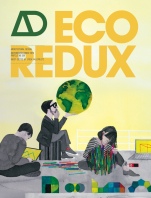
EcoRedux: Design Remedies for an Ailing Planet (Architectural Design)
ISBN 9780470746622
Autor: Kallipoliti Lydia
Wydawca: Wiley
Dostępność: 3-6 tygodni
Cena: 190,05 zł
Przed złożeniem zamówienia prosimy o kontakt mailowy celem potwierdzenia ceny.
ISBN13: |
9780470746622 |
ISBN10: |
0470746629 |
Autor: |
Kallipoliti Lydia |
Oprawa: |
Paperback |
Rok Wydania: |
2010-11-12 |
Ilość stron: |
136 |
Wymiary: |
271x208 |
Tematy: |
AM |
This issue of AD explores the remarkable resurgence of ecological strategies in architectural imagination. As a symptom of a new sociopolitical reality inundated with environmental catastrophes, sudden climatic changes, garbage–packed metropolises and para–economies of non–recyclable e–waste, environmental consciousness and the image of the earth re–emerges, after the 1960s, as an inevitable cultural armature for architects; now faced with the urgency to heal an ill–managed planet that is headed towards evolutionary bankruptcy. At present though, in a world that has suffered severe loss of resources, the new wave of ecological architecture is not solely directed to the ethics of the world′s salvation, yet rather upraises as a psycho–spatial or mental position, fuelling a reality of change, motion and action. Coined as EcoRedux′, this position differs from utopia in that it does not explicitly seek to be right; it recognises pollution and waste as generative potentials for design. In this sense, projects that may appear at first sight as science–fictional are not part of a foreign sphere, unassociated with the real, but an extrusion of our own realms and operations.
Contributors include: Matthias Hollwich and Marc Kushner (HWKN), Fabiola López–Durán and Nikki Moore, Anthony Vidler and Mark Wigley.
Featured architects: Anna Pla Catalá, Jonathan Enns, Eva Franch–Gilabert. Mitchell Joachim (Terreform One), François Roche (R&Sie(n)), Rafi Segal, Alexandros Tsamis and Eric Vergne.
Editorial (
Helen Castle).
About the Guest–Editor (Lydia Kallipoliti).
Spotlight: Visual highlights of the issue.
Introduction: No More Schisms (Lydia Kallipoliti).
Whatever Happened to Ecology? (John McHale and the Bucky Fuller Revival Anthony Vidler).
The Soft Cosmos of AD′s ′Cosmorama′ in the 1960s and 1970s (Lydia Kallipoliti).
Guest–editor Lydia Kallipoliti revives the seminal AD Cosmorama section with a ′soft cosmos′: a genealogy of ecological material experimentation from the 1960s and 1970s.
(Ut)opiates: Rethinking Nature (Fabiola López–Durán and Nikki Moore).
The Architecture of the Mouse (Mark Wigley).
MEtreePOLIS 1901–2111 (Matthias Hollwich and Marc Kushner).
(Science) Fiction, Ecosophical Apparatus and Skizoid Machines: Animism, Vitalism and Machinism as a Way to Rearticulate the Need to Confront the Unknown in a Contradictory Manner (François Roche).
Ecologies of Excess: An Excerpt from a 22nd–Century Architecture History Class (Eva Franch i Gilabert).
Projecting herself into the 22nd century, Eva Franch i Gilabert asks what would happen if culture was predicated on ecologies of excess.
Go Brown: Inner–Disciplinary Conjectures (Alexandros Tsamis).
Numerical Ecosystems (Anna Pla Catalá).
Dystopian Farming (Eric Vergne).
Dross City (Lydia Kallipoliti).
A Well–Cultivated House (Rafi Segal).
Intelligent Wood Assemblies: Incorporating Found Geometry and Natural Material Complexity (Jonathan Enns).
Rapid Re(f)use: 3–D Fabricated Positive Waste Ecologies (Mitchell Joachim).
Counterpoint: Comings and Goings (Brian Carter).
Lydia Kallipoliti is a practising architect and a writer, currently teaching as an assistant professor adjunct at the Cooper Union school of architecture in New York. She holds a Diploma in Architecture and Engineering from the Aristotle University of Thessaloniki (AUTh) in Greece, a SMArchS from MIT and an MA from Princeton University, and is completing her PhD at Princeton on recycling material experiments and the intersection of cybernetic and ecological theories in the postwar period.
Her design work has received awards in several international architectural competitions, and has been exhibited at venues including the Royal Institute of British Architects (RIBA), the Biennial Miami+ Beach, the Venice Biennale, the Byzantine Museum of Athens, the Biennale of Young Greek Architects, the 5th National Exhibition of Greek Architectural Work and the ′Non–Standard Praxis′ digital design conference. Her theoretical work has been published widely in Log, Thresholds, 306090, ArcPlus, Pidgin, Future Anterior, The Cornell Journal of Architecture and Routledge′s Urbanism Reader, and presented in lectures internationally. She is the recipient of awards including the Woodrow Wilson Fellowship, the Lawrence Anderson award for the creative documentation of architectural history, the High Meadows Sustainability Fund, the Marvin E Goody award for excellence in the creative use of materials and a Fulbright scholarship.
This issue of AD is part of a larger research project that Kallipoliti designed and curated. EcoRedux′ is also an exhibition installation which was hosted at the Byzantine Museum of Athens, at Columbia University and at the Cooper Union in New York, and is forthcoming with 1/1 prototype installations at the Design Hub of Barcelona in March 2011. EcoRedux′ is accompanied by an online non–profit educational resource for ecological experiments in the 1960s and 1970s and their potential creative reuse in contemporary design culture (www.ecoredux.com). The website received an honour at the 14th International Webby Awards of 2010. As an open–source database, EcoRedux online has a dual function: first, to explore the history of the period in assembling a genealogical archive and second, to reuse the archive as a generative device for design. Given the open–source nature of the project, architects and designers are able to actively participate in the expansion of the website by submitting for upload their own interpretations of ecological experiments that are documented in the archive. EcoRedux is an expanding, growing resource: a wikipedia for designers to expand their knowledge and trigger new ecological projects.
Special thanks to Laura Serejo Genes for her invaluable organisation assistance in editing this issue.
Koszyk
Książek w koszyku: 0 szt.
Wartość zakupów: 0,00 zł
Informacje


Kontakt
Gambit
Centrum Oprogramowania
i Szkoleń Sp. z o.o.
Al. Pokoju 29b/22-24
31-564 Kraków
Siedziba Księgarni
ul. Kordylewskiego 1
31-542 Kraków
+48 12 410 5991
+48 12 410 5987
+48 12 410 5989
Subskrypcje
Administratorem danych osobowych jest firma Gambit COiS Sp. z o.o. Na podany adres będzie wysyłany wyłącznie biuletyn informacyjny.
Autoryzacja płatności

Informacje na temat autoryzacji płatności poprzez PayU.

© Copyright 2012: GAMBIT COiS Sp. z o.o. Wszelkie prawa zastrzeżone.
Projekt i wykonanie: Alchemia Studio Reklamy