


Wydawcy
Katalog tematyczny
- Archeologia (109)
- Ekonomia, finanse, business (13704)
- Filozofia (1445)
- Historia (3040)
- Języki i językoznawstwo (2356)
- Lifestyle, hobby i rozrywka (475)
- Medycyna (9704)
- Nauki humanistyczne (4)
- Nauki o Ziemi i środowisku (2638)
- Nauki ścisłe (20412)
- Astronomia (294)
- Biologia (5119)
- Chemia (6540)
- Chemia analityczna (361)
- Chemia fizyczna (346)
- Chemia nieorganiczna (137)
- Chemia organiczna (535)
- Krystalografia (27)
- Minerologia (46)
- Fizyka (3309)
- Matematyka (4574)
- Nauki ścisłe, ogólnie (503)
- Nauki społeczne (8486)
- Nauki techniczne (13450)
- Prawo (1696)
- Publikacje informacyjne i interdyscyplinarne (1288)
- Religia i wierzenia (917)
- Technika komputerowa (4067)
- Zdrowie, relacje międzyludzkie i rozwój osobisty (657)





Informacje szczegółowe o książce
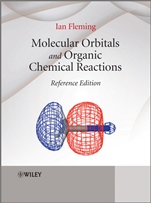
Molecular Orbitals and Organic Chemical Reactions
ISBN 9780470746585
Autor: Ian Fleming
Wydawca: Wiley
Dostępność: 3-6 tygodni
Cena: 694,05 zł
Przed złożeniem zamówienia prosimy o kontakt mailowy celem potwierdzenia ceny.
ISBN13: |
9780470746585 |
ISBN10: |
0470746580 |
Autor: |
Ian Fleming |
Oprawa: |
Hardback |
Rok Wydania: |
2010-03-05 |
Ilość stron: |
528 |
Wymiary: |
246x189 |
Tematy: |
PN |
Molecular orbital theory is used by chemists to describe the arrangement of electrons in chemical structures. It is also a theory capable of giving some insight into the forces involved in the making and breaking of chemical bonds—the chemical reactions that are often the focus of an organic chemist’s interest. Organic chemists with a serious interest in understanding and explaining their work usually express their ideas in molecular orbital terms, so much so that it is now an essential component of every organic chemist’s skills to have some acquaintance with molecular orbital theory.
Molecular Orbitals and Organic Chemical Reactions is both a simplified account of molecular orbital theory and a review of its applications in organic chemistry; it provides a basic introduction to the subject and a wealth of illustrative examples. In this book molecular orbital theory is presented in a much simplified, and entirely non–mathematical language, accessible to every organic chemist, whether student or research worker, whether mathematically competent or not. Topics covered include:
Molecular Orbital TheoryMolecular Orbitals and the Structures of Organic MoleculesChemical Reactions — How Far and How FastIonic Reactions — ReactivityIonic Reactions — StereochemistryPericyclic ReactionsRadical ReactionsPhotochemical Reactions
This expanded Reference Edition of Molecular Orbitals and Organic Chemical Reactions takes the content and the same non–mathematical approach of the Student Edition, and adds extensive extra coverage, detail and over 1800 references. The additional material adds a deeper understanding of the models used, and includes a broader range of applications and case studies. Providing a complete reference for an advanced audience, this edition will find a place on the bookshelves of researchers and advanced students of organic, physical o
rganic and computational chemistry
Spis treści:
Preface
1. Molecular Orbital Theory
1.1 The Atomic Orbitals of a Hydrogen Atom
1.2 Molecules Made from Hydrogen Atoms
1.3 C—H and C—C Bonds
1.4 Conjugation—Hückel Theory
1.5 Aromaticity
1.6 Strained s Bonds—Cyclopropanes and Cyclobutanes
1.7 Heteronuclear Bonds, C—M, C—X and C=O
1.8 The Tau Bond Model
1.9 Spectroscopic Methods
2. Molecular Orbitals and the Structures of Organic Molecules
2.1 The Effects of p–Conjugation
2.2 Hyperconjugation—p–Conjugation
2.3 The Configurations and Conformations of Molecules
2.4 The Effect of Conjugation on Electron Distribution
2.5 Other Non–covalent Interactions
3 Chemical Reactions—How Far and How Fast
3.1 Factors Affecting the Position of an Equilibrium
3.2 The Principle of Hard and Soft Acids and Bases (HSAB)
3.3 Transition Structures
3.4 The Perturbation Theory of Reactivity
3.5 The Salem–Klopman Equation
3.6 Hard and Soft Nucleophiles and Electrophiles
3.7 Other Factors Affecting Chemical Reactivity
4 Ionic Reactions—Reactivity
4.1 Single Electron Transfer (SET) in Ionic Reactions
4.2 Nucleophilicity
4.3 Ambident Nucleophiles
4.4 Electrophilicity
4.5 Ambident Electrophiles
4.6 Carbenes
5 Ionic Reactions—Stereochemistry
5.1 The Stereochemistry of the Fundamental Organic Reactions
5.2 Diastereoselectivity
6 Pericyclic Reactions
6.1 The Four Classes of Pericyclic Reactions
6.2 Evidence for the Concertedness of Bond Making and Breaking
6.3 Symmetry–allowed and Symmetry–forbidden Reactions
6.4 Explanations for the Woodward–Hoffmann Rules
6.5 Secondary Effects
7 Radical Reactions
7.1 Nucleophilic and Electrophilic Radicals
7.2 The Abstraction of H
ydrogen and Halogen Atoms
7.3 The Addition of Radicals to p–Bonds
7.4 Synthetic Applications of the Chemoselectivity of Radicals
7.5 Stereochemistry in some Radical Reactions
7.6 Ambident Radicals
7.7 Radical Coupling
8 Photochemical Reactions
8.1 Photochemical Reactions in General
8.2 Photochemical Ionic Reactions
8.3 Photochemical Pericyclic Reactions and Related Stepwise Reactions
8.4 Photochemically–Induced Radical Reactions
8.5 Chemiluminescence
References
Index
Okładka tylna:
Molecular orbital theory is used by chemists to describe the arrangement of electrons in chemical structures. It is also a theory capable of giving some insight into the forces involved in the making and breaking of chemical bonds—the chemical reactions that are often the focus of an organic chemist’s interest. Organic chemists with a serious interest in understanding and explaining their work usually express their ideas in molecular orbital terms, so much so that it is now an essential component of every organic chemist’s skills to have some acquaintance with molecular orbital theory.
Molecular Orbitals and Organic Chemical Reactions is both a simplified account of molecular orbital theory and a review of its applications in organic chemistry; it provides a basic introduction to the subject and a wealth of illustrative examples. In this book molecular orbital theory is presented in a much simplified, and entirely non–mathematical language, accessible to every organic chemist, whether student or research worker, whether mathematically competent or not. Topics covered include:
Molecular Orbital TheoryMolecular Orbitals and the Structures of Organic MoleculesChemical Reactions — How Far and How FastIonic Reactions — ReactivityIonic Reactions — StereochemistryPericyclic ReactionsRadical Reaction
sPhotochemical Reactions
This expanded Reference Edition of Molecular Orbitals and Organic Chemical Reactions takes the content and the same non–mathematical approach of the Student Edition, and adds extensive extra coverage, detail and over 1800 references. The additional material adds a deeper understanding of the models used, and includes a broader range of applications and case studies. Providing a complete reference for an advanced audience, this edition will find a place on the bookshelves of researchers and advanced students of organic, physical organic and computational chemistry
Koszyk
Książek w koszyku: 0 szt.
Wartość zakupów: 0,00 zł
Informacje


Kontakt
Gambit
Centrum Oprogramowania
i Szkoleń Sp. z o.o.
Al. Pokoju 29b/22-24
31-564 Kraków
Siedziba Księgarni
ul. Kordylewskiego 1
31-542 Kraków
+48 12 410 5991
+48 12 410 5987
+48 12 410 5989
Subskrypcje
Administratorem danych osobowych jest firma Gambit COiS Sp. z o.o. Na podany adres będzie wysyłany wyłącznie biuletyn informacyjny.
Autoryzacja płatności

Informacje na temat autoryzacji płatności poprzez PayU.

© Copyright 2012: GAMBIT COiS Sp. z o.o. Wszelkie prawa zastrzeżone.
Projekt i wykonanie: Alchemia Studio Reklamy