


Wydawcy
Katalog tematyczny
- Archeologia (109)
- Ekonomia, finanse, business (13704)
- Filozofia (1445)
- Historia (3040)
- Języki i językoznawstwo (2356)
- Lifestyle, hobby i rozrywka (475)
- Medycyna (9704)
- Nauki humanistyczne (4)
- Nauki o Ziemi i środowisku (2638)
- Nauki ścisłe (20412)
- Nauki społeczne (8486)
- Nauki techniczne (13450)
- Budownictwo lądowe (1045)
- Chemia przemysłowa (2258)
- Elektronika i telekomunikacja (3287)
- Energetyka (1122)
- Inne nauki stosowane (363)
- Inżynieria biochemiczna (507)
- Inżynieria transportu (232)
- Mechanika i materiały (3316)
- Nauka o środowisku (321)
- Rolnictwo (507)
- Technika, ogólnie (475)
- Prawo (1696)
- Publikacje informacyjne i interdyscyplinarne (1288)
- Religia i wierzenia (917)
- Technika komputerowa (4067)
- Zdrowie, relacje międzyludzkie i rozwój osobisty (657)





Informacje szczegółowe o książce
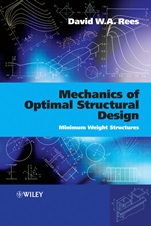
Mechanics of Optimal Structural Design: Minimum Weight Structures
ISBN 9780470746233
Autor: David W. A. Rees
Wydawca: Wiley
Dostępność: 3-6 tygodni
Cena: 589,05 zł
Przed złożeniem zamówienia prosimy o kontakt mailowy celem potwierdzenia ceny.
ISBN13: |
9780470746233 |
ISBN10: |
0470746238 |
Autor: |
David W. A. Rees |
Oprawa: |
Hardback |
Rok Wydania: |
2009-10-02 |
Ilość stron: |
582 |
Wymiary: |
254x177 |
Tematy: |
TG |
In a global climate where engineers are increasingly under pressure to make the most of limited resources, there are huge potential financial and environmental benefits to be gained by designing for minimum weight. With Mechanics of Optimal Structural Design, David Rees brings the original approach of weight optimization to the existing structural design literature, providing a methodology for attaining minimum weight of a range of structures under their working loads. He addresses the current gap in education between formal structural design teaching at undergraduate level and the practical application of this knowledge in industry, describing the analytical techniques that students need to understand before applying computational techniques that can be easy to misuse without this grounding. Shows engineers how to approach structural design for minimum weight in clear, concise termsContains many new least–weight design techniques, taking into consideration different manners of loading and including new topics that have not previously been considered within the least–weight themeConsiders the demands for least–weight road, air and space vehicles for the futureEnhanced by illustrative worked examples to enlighten the theory, exercises at the end of each chapter that enable application of the theory covered, and an accompanying website with worked examples and solutions housed at www.wiley.com/go/rees (TBC)
The least–weight analyses of basic structural elements ensure a spread of interest with many applications in mechanical, civil, aircraft and automobile engineering. Consequently, this book fills the gap between the basic material taught at undergraduate level and other approaches to optimum design, for example computer simulations and the finite element method.
Spis treści:
Preface.
Glossary of Terms.
Key Symbols.
Chapter 1 Compression of Slender Struts.
1.1 Introduction.
1.2 Failure Criteria.
1.3 Solid Cross–Sections.
1.4 Thin–Walled, Tubular Sections.
1.5 Thin–Walled, Open Sections.
1.6 Summary of Results.
References.
Exercises.
Chapter 2 Compression of Wide Struts.
2.1 Introduction.
2.2 Failure Criteria.
2.3 Cellular Sections.
2.4 Open Sections.
2.5 Corrugated Sandwich Panel.
2.6 Summary of Results.
References.
Exercise.
Chapter 3 Bending of Slender Beams.
3.1 Introduction.
3.2 Solid Cross–Sections.
3.3 Thin–Walled, Tubular Sections.
3.4 Open Sections.
3.5 Summary of Results.
References.
Exercises.
Chapter 4 Torsion of Bars and Tubes.
4.1 Introduction.
4.2 Solid Cross–Sections.
4.3 Thin–Walled, Open Sections.
4.4 Thin–Walled, Closed Tubes.
4.5 Multi–Cell Tubes.
References.
Exercises.
Chapter 5 Shear of Solid Bars, Tubes and Thin Sections.
5.1 Introduction.
5.2 Bars of Solid Section.
5.3 Thin–Walled Open Sections.
5.4 Thin–Walled, Closed Tubes.
5.5 Concluding Remarks.
References.
Exercise.
Chapter 6 Combined Shear and Torsion in Thin–Walled Sections.
6.1 Introduction.
6.2 Thin–Walled, Open Sections.
6.3 Thin–Walled, Closed Tubes.
6.4 Concluding Remarks.
References.
Exercises.
Chapter 7 Combined Shear and Bending in Idealised Sections.
7.1 Introduction.
7.2 Idealised Beam Sections.
7.3 Idealised Open Sections.
7.4 Idealised Closed Tubes.
References.
Exercises.
Chapter 8 Shear in Stiffened Webs.
8.1 Introduction.
8.2 Castellations in Shear.
8.3 Corrugated Web.
8.4 Flat Web with Stiffeners.
References.
Exercises.
Chapter 9 Frame Assemblies.
9.1 Introduction.
9.2 Double–Strut Assembly.
9.3 Multiple–Strut Assembly.
9
.4 Cantilevered Framework.
9.5 Tetrahedron Framework.
9.6 Cantilever Frame with Two Struts.
9.7 Cantilever Frame with One Strut.
References.
Exercises.
Chapter 10 Simply Supported Beams and Cantilevers.
10.1 Introduction.
10.2 Variable Bending Moments.
10.3 Cantilever with End–Load.
10.4 Cantilever with Distributed Loading.
10.5 Simply Supported Beam with Central Load.
10.6 Simply Supported Beam with Uniformly Distributed Load.
10.7 Additional Failure Criteria.
References.
Exercises.
Chapter 11 Optimum Cross–Sections for Beams.
11.1 Introduction.
11.2 Approaching Optimum Sections.
11.3 Generalised Optimum Sections.
11.4 Optimum Section, Combined Bending and Shear.
11.5 Solid, Axisymmetric Sections.
11.6 Fully Optimised Section.
11.7 Fully Optimised Weight.
11.8 Summary.
References.
Exercises.
Chapter 12 Structures under Combined Loading.
12.1 Introduction.
12.2 Combined Bending and Torsion.
12.3 Cranked Cantilever.
12.4 Cranked Strut with End–Load.
12.5 Cranked Bracket with End–Load.
12.6 Portal Frame with Central Load.
12.7 Cantilever with End and Distributed Loading.
12.8 Centrally Propped Cantilever with End–Load.
12.9 End–Propped Cantilever with Distributed Load.
12.10 Simply Supported Beam with Central–Concentrated and Distributed Loadings.
12.11 Centrally Propped, Simply Supported Beam with Distributed Load.
References.
Exercises.
Chapter 13 Encastré Beams.
13.1 Introduction.
13.2 Central–Concentrated Load.
13.3 Uniformly Distributed Load.
13.4 Combined Loads.
References.
Exercises.
Chapter 14 Plastic Collapse of Beams and Frames.
14.1 Introduction
14.2 Plane Frames.
14.3 Beam Plasticity.
14.4 Collapse of Simple Beams.
14.5 Encastré Beams.
14.6 Continuous Beams.
14.7 Portal Frames.
14.8 Effect of Axial
Loading upon Collapse.
14.9 Effect of Shear Force upon Collapse.
14.10 Effect of Hardening upon Collapse.
References.
Exercises.
Chapter 15 Dynamic Programming.
15.1 Introduction.
15.2 Single–Span Beam.
15.3 Two–Span Beam.
15.4 Three–Span Beam.
15.5 Design Space.
Reference.
Exercises.
Appendix A Mechanical Properties.
A.1 Non–Metals.
A.2 Metals and Alloys.
References.
Appendix B Plate Buckling Under Uniaxial Compression.
B.1 Wide and Slender Struts.
B.2 Plates with Supported Sides.
B.3 Inelastic Buckling.
B.4 Post–Buckling.
References.
Appendix C Plate Buckling Under Biaxial Compression and Shear.
C.1 Biaxial Compression.
C.2 Pure Shear.
C.3 Inelastic Shear Buckling.
References.
Appendix D Secondary Buckling.
D.1 Buckling Modes.
D.2 Local Compressive Buckling.
D.3 Global Buckling.
D.4 Local Shear Buckling.
References.
Bibliography.
Index.
Okładka tylna:
In a global climate where engineers are increasingly under pressure to make the most of limited resources, there are huge potential financial and environmental benefits to be gained by designing for minimum weight. With Mechanics of Optimal Structural Design, David Rees brings the original approach of weight optimization to the existing structural design literature, providing a methodology for attaining minimum weight of a range of structures under their working loads. He addresses the current gap in education between formal structural design teaching at undergraduate level and the practical application of this knowledge in industry, describing the analytical techniques that students need to understand before applying computational techniques that can be easy to misuse without this grounding. Shows engineers how to approach structural design for minimum weight in clear, concise termsContains man
y new least–weight design techniques, taking into consideration different manners of loading and including new topics that have not previously been considered within the least–weight themeConsiders the demands for least–weight road, air and space vehicles for the futureEnhanced by illustrative worked examples to enlighten the theory, exercises at the end of each chapter that enable application of the theory covered, and an accompanying website with worked examples and solutions housed at www.wiley.com/go/rees (TBC)
The least–weight analyses of basic structural elements ensure a spread of interest with many applications in mechanical, civil, aircraft and automobile engineering. Consequently, this book fills the gap between the basic material taught at undergraduate level and other approaches to optimum design, for example computer simulations and the finite element method.
Koszyk
Książek w koszyku: 0 szt.
Wartość zakupów: 0,00 zł
Informacje


Kontakt
Gambit
Centrum Oprogramowania
i Szkoleń Sp. z o.o.
Al. Pokoju 29b/22-24
31-564 Kraków
Siedziba Księgarni
ul. Kordylewskiego 1
31-542 Kraków
+48 12 410 5991
+48 12 410 5987
+48 12 410 5989
Subskrypcje
Administratorem danych osobowych jest firma Gambit COiS Sp. z o.o. Na podany adres będzie wysyłany wyłącznie biuletyn informacyjny.
Autoryzacja płatności

Informacje na temat autoryzacji płatności poprzez PayU.

© Copyright 2012: GAMBIT COiS Sp. z o.o. Wszelkie prawa zastrzeżone.
Projekt i wykonanie: Alchemia Studio Reklamy