


Wydawcy
Katalog tematyczny
- Archeologia (109)
- Ekonomia, finanse, business (13704)
- Filozofia (1445)
- Historia (3040)
- Języki i językoznawstwo (2356)
- Lifestyle, hobby i rozrywka (475)
- Medycyna (9704)
- Nauki humanistyczne (4)
- Nauki o Ziemi i środowisku (2638)
- Nauki ścisłe (20412)
- Nauki społeczne (8486)
- Edukacja (229)
- Kryminologia, opieka spełeczna (284)
- Obronność (10)
- Polityka (1389)
- Psychologia (777)
- Socjologia (410)
- Społeczeństwo i kultura (187)
- Nauki techniczne (13450)
- Prawo (1696)
- Publikacje informacyjne i interdyscyplinarne (1288)
- Religia i wierzenia (917)
- Technika komputerowa (4067)
- Zdrowie, relacje międzyludzkie i rozwój osobisty (657)





Informacje szczegółowe o książce
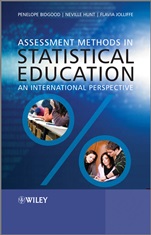
Assessment Methods in Statistical Education: An International Perspective
ISBN 9780470745328
Autor: Penelope Bidgood, Neville Hunt, Flavia Jolliffe
Wydawca: Wiley
Dostępność: 3-6 tygodni
Cena: 431,55 zł
Przed złożeniem zamówienia prosimy o kontakt mailowy celem potwierdzenia ceny.
ISBN13: |
9780470745328 |
ISBN10: |
0470745320 |
Autor: |
Penelope Bidgood, Neville Hunt, Flavia Jolliffe |
Oprawa: |
Paperback |
Rok Wydania: |
2010-03-26 |
Ilość stron: |
304 |
Wymiary: |
238x154 |
Tematy: |
JD |
Assessment Methods in Statistical Education: An International Perspective provides a modern, international perspective on assessing students of statistics in higher education. It is a collection of contributions written by some of the leading figures in statistical education from around the world, drawing on their personal teaching experience and educational research. The book reflects the wide variety of disciplines, such as business, psychology and the health sciences, which include statistics teaching and assessment. The authors acknowledge the increasingly important role of technology in assessment, whether it be using the internet for accessing information and data sources or using software to construct and manage individualised or online assessments.
Key Features:Presents successful assessment strategies, striking a balance between formative and summative assessment, individual and group work, take–away assignments and supervised tests.Assesses statistical thinking by questioning students’ ability to interpret and communicate the results of their analysis.Relates assessment to the real world by basing it on real data in an appropriate context.Provides a range of individualised assessment methods, including those that deter plagiarism and collusion by providing each student with a unique problem to solve or dataset to analyse.
This book is essential reading for anyone involved in teaching statistics at tertiary level or interested in statistical education research.
Spis treści:
Contributors.
Foreword.
Preface.
Acknowledgements.
PART A: SUCCESSFUL ASSESSMENT STRATEGIES.
1 Assessment and feedback in statistics (Neville Davies and John Marriott).
2 Variety in assessment for learning statistics (Helen MacGillivray).
3 Assessing for success: An evidence–based approach that promotes learning in diverse, non–specialist student grou
ps (Rosemary Snelgar and Moira Maguire).
4 Assessing statistical thinking and data presentation skills through the use of a poster assignment with real–world data (Paula Griffiths and Zoe Sheppard).
5 A computer–based approach to statistics teaching and assessment in psychology (Mike Van Duuren and Alistair Harvey).
PART B: ASSESSING STATISTICAL LITERACY.
6 Assessing statistical thinking (Flavia Jolliffe).
7 Assessing important learning outcomes in introductory tertiary statistics courses (Joan Garfield, Robert delMas and Andrew Zieffler).
8 Writing about findings: Integrating teaching and assessment (Mike Forster and Chris J. Wild).
9 Assessing students’ statistical literacy (Stephanie Budgett and Maxine Pfannkuch).
10 An assessment strategy to promote judgement and understanding of statistics in medical applications (Rosie McNiece).
11 Assessing statistical literacy: Take CARE (Milo Schield).
PART C: ASSESSMENT USING REAL–WORLD PROBLEMS.
12 Relating assessment to the real world (Penelope Bidgood).
13 Staged assessment: A small–scale sample survey (Sidney Tyrrell).
14 Evaluation of design and variability concepts among students of agriculture (Marıa Virginia Lopez, Mar´ıa del Carmen Fabrizio and Mar´ıa Cristina Plencovich).
15 Encouraging peer learning in assessment instruments (Ailish Hannigan).
16 Inquiry–based assessment of statistical methods in psychology (Richard Rowe, Pam McKinney and Jamie Wood).
PART D: INDIVIDUALISED ASSESSMENT.
17 Individualised assessment in statistics (Neville Hunt).
18 An adaptive, automated, individualised assessment system for introductory statistics (Neil Spencer).
19 Random computer–based exercises for teaching statistical skills and concepts (Doug Stirling).
20 Assig
nments made in heaven? Computer–marked, individualised coursework in an introductory level statistics course (Vanessa Simonite and Ralph Targett).
21 Individualised assignments on modelling car prices using data from the Internet (Houshang Mashhoudy).
References.
Index.
Okładka tylna:
Assessment Methods in Statistical Education: An International Perspective provides a modern, international perspective on assessing students of statistics in higher education. It is a collection of contributions written by some of the leading figures in statistical education from around the world, drawing on their personal teaching experience and educational research. The book reflects the wide variety of disciplines, such as business, psychology and the health sciences, which include statistics teaching and assessment. The authors acknowledge the increasingly important role of technology in assessment, whether it be using the internet for accessing information and data sources or using software to construct and manage individualised or online assessments.
Key Features:Presents successful assessment strategies, striking a balance between formative and summative assessment, individual and group work, take–away assignments and supervised tests.Assesses statistical thinking by questioning students’ ability to interpret and communicate the results of their analysis.Relates assessment to the real world by basing it on real data in an appropriate context.Provides a range of individualised assessment methods, including those that deter plagiarism and collusion by providing each student with a unique problem to solve or dataset to analyse.
This book is essential reading for anyone involved in teaching statistics at tertiary level or interested in statistical education research.
Koszyk
Książek w koszyku: 0 szt.
Wartość zakupów: 0,00 zł
Informacje


Kontakt
Gambit
Centrum Oprogramowania
i Szkoleń Sp. z o.o.
Al. Pokoju 29b/22-24
31-564 Kraków
Siedziba Księgarni
ul. Kordylewskiego 1
31-542 Kraków
+48 12 410 5991
+48 12 410 5987
+48 12 410 5989
Subskrypcje
Administratorem danych osobowych jest firma Gambit COiS Sp. z o.o. Na podany adres będzie wysyłany wyłącznie biuletyn informacyjny.
Autoryzacja płatności

Informacje na temat autoryzacji płatności poprzez PayU.

© Copyright 2012: GAMBIT COiS Sp. z o.o. Wszelkie prawa zastrzeżone.
Projekt i wykonanie: Alchemia Studio Reklamy