


Wydawcy
Katalog tematyczny
- Archeologia (109)
- Ekonomia, finanse, business (13704)
- Filozofia (1445)
- Historia (3040)
- Języki i językoznawstwo (2356)
- Lifestyle, hobby i rozrywka (475)
- Medycyna (9704)
- Nauki humanistyczne (4)
- Nauki o Ziemi i środowisku (2638)
- Nauki ścisłe (20412)
- Astronomia (294)
- Biologia (5119)
- Chemia (6540)
- Fizyka (3309)
- Elektryczność i magnetyzm (90)
- Fizyka atomowa i molekularna (110)
- Fizyka cząstek elementarnych (36)
- Fizyka jądra atomowego (36)
- Fizyka kwantowa (210)
- Fizyka matematyczna (121)
- Fizyka relatywistyczna (36)
- Fizyka statystyczna (51)
- Fizyka stosowana (498)
- Mechanika klasyczna (186)
- Optyka i światło (133)
- Stany materii (202)
- Matematyka (4574)
- Nauki ścisłe, ogólnie (503)
- Nauki społeczne (8486)
- Nauki techniczne (13450)
- Prawo (1696)
- Publikacje informacyjne i interdyscyplinarne (1288)
- Religia i wierzenia (917)
- Technika komputerowa (4067)
- Zdrowie, relacje międzyludzkie i rozwój osobisty (657)





Informacje szczegółowe o książce
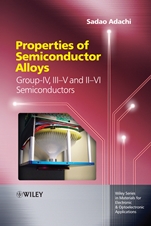
Properties of Semiconductor Alloys: Group–IV, III–V and II–VI Semiconductors
ISBN 9780470743690
Autor: Sadao Adachi, Peter Capper, Safa Kasap, Arthur Willoughby
Wydawca: Wiley
Dostępność: 3-6 tygodni
Cena: 926,10 zł
Przed złożeniem zamówienia prosimy o kontakt mailowy celem potwierdzenia ceny.
ISBN13: |
9780470743690 |
ISBN10: |
0470743697 |
Autor: |
Sadao Adachi, Peter Capper, Safa Kasap, Arthur Willoughby |
Oprawa: |
Hardback |
Rok Wydania: |
2009-03-20 |
Ilość stron: |
422 |
Wymiary: |
244x170 |
Tematy: |
PH |
Semiconductor alloys provide a natural means of tuning the magnitude of the band–gap energy and other material properties so as to optimize and widen the application of semiconductor devices. Current research and development on these alloys is focused on areas of improved materials growth and development of unique materials characterization and suitable process technologies. Such materials have already found application in various electronic and optoelectronic devices such as photodiodes and semiconductor lasers.
The main purpose of this book is to provide a comprehensive treatment of the materials aspects of group–IV, III – V and II – VI semiconductor alloys used in various electronic and optoelectronic devices. The topics covered in this book include the structural, thermal, mechanical, lattice vibronic, electronic optical, and carrier transport properties of such semiconductor alloys. The book reviews not only commonly known alloys (SiGe and ZnCdTe) but also new alloys, such as dilute–carbon alloys (CSiGe and CSiSn), III – N alloys, dilute–nitride alloys (GaNAs and GaInNAs) and Mg– or Be–based II–VI semiconductor alloys. Finally there is an extensive bibliography included for those who wish to find additional information as well as tabulated values and graphical information on the properties of semiconductor alloys.
Written by a recognized expert and experienced author in the field, this book will appeal to semiconductor materials and device engineers and also solid–state/condensed matter physicists and materials scientists as well as graduate students, R&D staff and researchers in academia.
Spis treści:
Series Preface.
Preface.
Abbreviations and Acronyms.
Introductory Remarks.
A.1 An Alloy and a Compound.
A.2 Grimm–Sommerfeld Rule.
A.3 An Interpolation Scheme.
References.
1 Structural Properties.
1.1 Ionicity.
1.2 Elemental I
sotopic Abundance and Molecular Weight.
1.3 Crystal Structure.
1.4 Lattice Constant and Related Parameters.
1.5 Coherent Epitaxy and Strain Problem.
1.6 Structural Phase Transition.
1.7 Cleavage Plane.
References.
2 Thermal Properties.
2.1 Melting Point and Related Parameters.
2.2 Specific Heat.
2.3 Debye Temperature.
2.4 Thermal Expansion Coefficient.
2.5 Thermal Conductivity and Diffusivity.
References.
3 Elastic Properties.
3.1 Elastic Constant.
3.2 Third–order Elastic Constant.
3.3 Young’s Modulus, Poisson’s Ratio and Similar Properties.
3.4 Microhardness.
3.5 Sound Velocity.
References.
4 Lattice Dynamic Properties.
4.1 Phonon Dispersion Relationships.
4.2 Phonon Frequency.
4.3 Mode Grüneisen Parameter.
5 Collective Effects and Some Response Characteristics.
5.1 Piezoelectric Constant.
5.2 Fröhlich Coupling Constant.
References.
6 Energy–band Structure: Energy–band Gaps.
6.1 Introductory Remarks.
6.2 Group–IV Semiconductor Alloy.
6.3 III–V Semiconductor Ternary Alloy.
6.4 III–V Semiconductor Quaternary Alloy.
6.5 II–VI Semiconductor Alloy.
References.
7 Energy–band Structure: Effective Masses.
7.1 Introductory Remarks.
7.2 Group–IV Semiconductor Alloy.
7.3 III–V Semiconductor Ternary Alloy.
7.4 III–V Semiconductor Quaternary Alloy.
7.5 II–VI Semiconductor Alloy.
7.6 Concluding Remarks.
References.
8 Deformation Potentials.
8.1 Intravalley Deformation Potential: I Point.
8.2 Intravalley Deformation Potential: High–symmetry Points.
8.3 Intervalley Deformation Potential.
References.
9 Heterojunction Band Offsets and Schottky Barrier Height.
9.1 Heterojunction Band Offsets.
9.2 Schottky Barrier Height.
References.
10 Optical Properties.
10.1 Introductory Remarks.
10.2 Group–IV Semiconductor Al
loy.
10.3 III–V Semiconductor Ternary Alloy.
10.4 III–V Semiconductor Quaternary Alloy.
10.5 II–VI Semiconductor Alloy.
References.
11 Elasto–optic, Electro–optic and Nonlinear Optical Properties.
11.1 Elasto–optic Effect.
11.2 Linear Electro–optic Constant.
11.3 Quadratic Electro–optic Constant.
11.4 Franz–Keldysh Effect.
11.5 Nonlinear Optical Constant.
References.
12 Carrier Transport Properties.
12.1 Introductory Remarks.
12.2 Low–field Mobility.
12.3 High–field Transport.
12.4 Minority–carrier Transport.
12.5 Impact Ionization Coefficient.
References.
Index.
Okładka tylna:
Semiconductor alloys provide a natural means of tuning the magnitude of the band–gap energy and other material properties so as to optimize and widen the application of semiconductor devices. Current research and development on these alloys is focused on areas of improved materials growth and development of unique materials characterization and suitable process technologies. Such materials have already found application in various electronic and optoelectronic devices such as photodiodes and semiconductor lasers.
The main purpose of this book is to provide a comprehensive treatment of the materials aspects of group–IV, III – V and II – VI semiconductor alloys used in various electronic and optoelectronic devices. The topics covered in this book include the structural, thermal, mechanical, lattice vibronic, electronic optical, and carrier transport properties of such semiconductor alloys. The book reviews not only commonly known alloys (SiGe and ZnCdTe) but also new alloys, such as dilute–carbon alloys (CSiGe and CSiSn), III – N alloys, dilute–nitride alloys (GaNAs and GaInNAs) and Mg– or Be–based II–VI semiconductor alloys. Finally there is an extensive bibliography included for th
ose who wish to find additional information as well as tabulated values and graphical information on the properties of semiconductor alloys.
Written by a recognized expert and experienced author in the field, this book will appeal to semiconductor materials and device engineers and also solid–state/condensed matter physicists and materials scientists as well as graduate students, R&D staff and researchers in academia.
Koszyk
Książek w koszyku: 0 szt.
Wartość zakupów: 0,00 zł
Informacje


Kontakt
Gambit
Centrum Oprogramowania
i Szkoleń Sp. z o.o.
Al. Pokoju 29b/22-24
31-564 Kraków
Siedziba Księgarni
ul. Kordylewskiego 1
31-542 Kraków
+48 12 410 5991
+48 12 410 5987
+48 12 410 5989
Subskrypcje
Administratorem danych osobowych jest firma Gambit COiS Sp. z o.o. Na podany adres będzie wysyłany wyłącznie biuletyn informacyjny.
Autoryzacja płatności

Informacje na temat autoryzacji płatności poprzez PayU.

© Copyright 2012: GAMBIT COiS Sp. z o.o. Wszelkie prawa zastrzeżone.
Projekt i wykonanie: Alchemia Studio Reklamy